
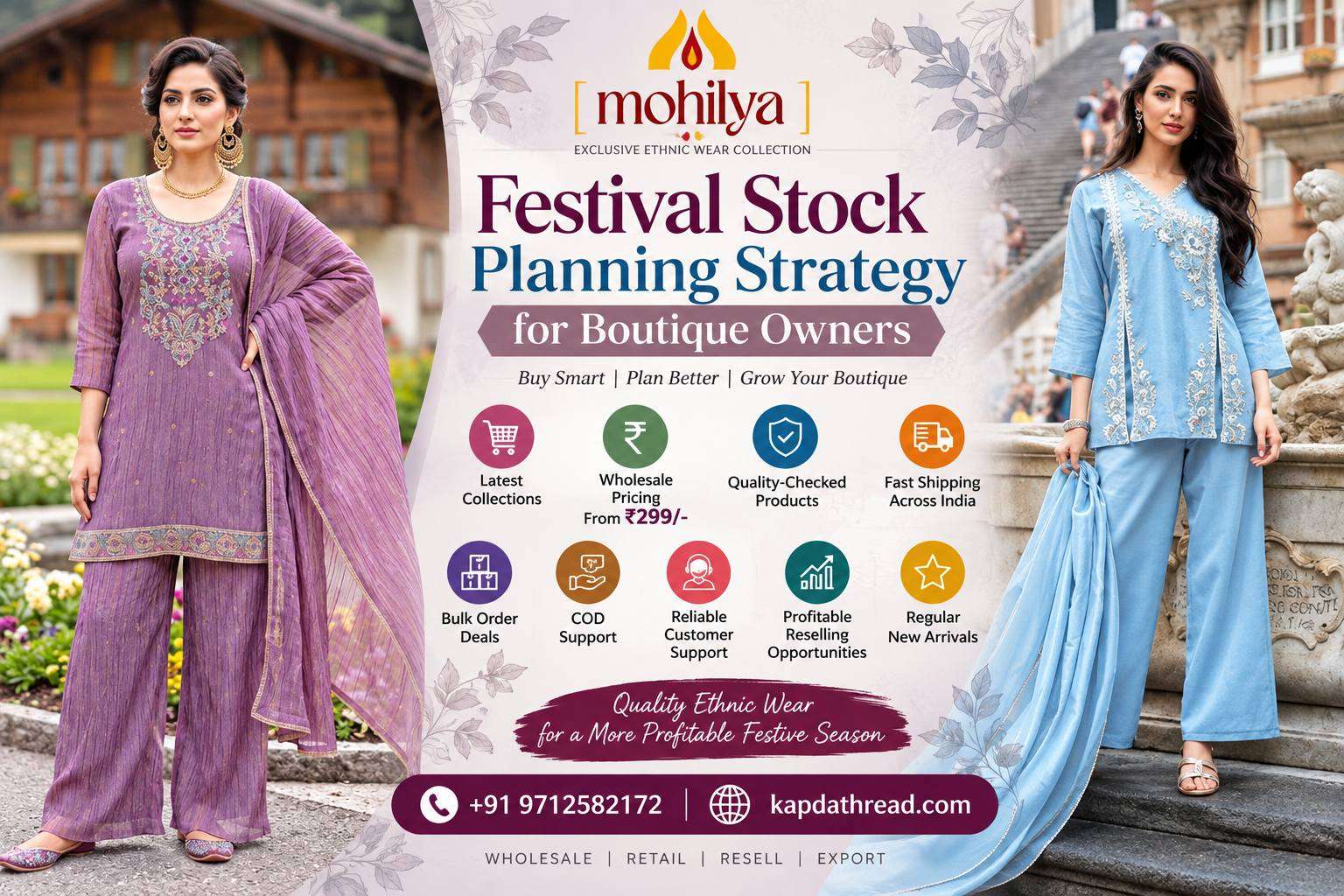
Best Festival Stock Planning Strategy for Boutique Owners
Best Festival Stock Planning Strategy for Boutique Owners in 2026
Festival sales can create some of the strongest buying opportunities for an ethnic wear boutique, but profitable festive business starts much earlier than the actual celebration. Boutique owners need to purchase the right products, in the right quantity, at the right price and early enough to promote them before customer demand reaches its peak. A carefully planned mix of kurtis, kurti sets, sarees, festive suits and other ethnic wear can help turn seasonal demand into faster stock rotation instead of leaving working capital blocked in unsold inventory.
Introduction
The Best Festival Stock Planning Strategy for Boutique Owners is not simply to purchase more products before a festival. The objective is to buy stock that matches the boutique's actual customer profile and can be sold within the strongest demand window at a commercially useful margin.
For 2026 festival stock planning, boutique owners should work backwards from expected customer buying dates. Product sourcing, supplier confirmation, transportation, photography, merchandising, WhatsApp promotion, social media campaigns and repeat-customer follow-ups all require time before peak sales begin.
This becomes especially important for boutique owners sourcing products from the surat textile market. Surat offers extensive choices across kurtis, sarees, kurti sets, ethnic suits and other women's wear categories, but greater choice can also encourage unnecessary buying. The best collection is not necessarily the largest collection. It is the collection most likely to convert into profitable retail sales.
Buyers can explore wholesale ethnic wear through kapdathread.com and shortlist products according to price, category and customer demand. Before making payment, boutique owners should confirm current availability, MOQ, catalogue conditions and dispatch terms for the selected products.
Start Festival Stock Buying with a Clear Sales Target
Before ordering a single catalogue, decide what you expect the festival period to contribute to your business. A purchasing budget becomes much more useful when it is connected to a realistic sales target.
If your boutique has previous festival sales data, review the number of pieces sold, average bill value, strongest categories, popular sizes, preferred colours and price bands. Use these figures as the foundation of your next boutique festival stock purchase rather than beginning from zero every season.
Set Your Festival Purchasing Budget First
Decide how much working capital you can comfortably allocate to festive inventory without affecting regular business expenses. Do not use the entire available cash balance simply because suppliers are launching attractive new collections.
Your budget should leave room for replenishment. If you invest everything in the first purchase, you may have no buying capacity left when you discover which designs are actually selling fastest.
Divide the Budget by Product Category
Instead of placing one large speculative order, divide the buying budget across categories according to proven demand. A boutique selling women's ethnic wear might allocate separate amounts for wholesale kurtis, kurti sets, sarees, festive suits, premium collections and experimental new styles.
The percentage assigned to each category should depend on your own customer history. If kurti sets generated most of your previous festive revenue, they may deserve a larger allocation than a category that produced only occasional sales.
Keep a Reorder Reserve
Keeping part of the purchasing budget uncommitted gives boutique owners the ability to respond to real customer behaviour. Once the first festive collection starts selling, you can identify the winning designs, colours and price points and place follow-up orders where stock remains available.
This can be more efficient than trying to predict every bestseller before the season begins.
Buy Festival Stock According to the Customer, Not the Trend
Fashion trends can generate interest, but a boutique's actual customer base should remain the main purchasing reference. A style trending nationally or on social media may not necessarily match the age group, budget or preferences of customers who regularly buy from your boutique.
Identify Your Core Festive Customer
Look at who purchases from you during festival periods. Are they primarily young customers looking for fashionable kurti sets? Families shopping for traditional outfits? Working women wanting elegant festive wear? Customers purchasing sarees for functions and gifting?
The answer should influence your festival ethnic wear wholesale order. Buying becomes much easier when you know exactly who the product is intended for.
Buy for Multiple Price Points
Festival customers do not all have the same budget. Maintaining several retail price bands can prevent your boutique from losing customers because every product is either too inexpensive or too premium.
An entry-level festive section can attract price-sensitive buyers, while a strong mid-range collection can serve regular boutique customers. A smaller premium section can provide higher-ticket options for customers seeking richer fabrics, detailed work or more distinctive designs.
Do Not Overbuy One Viral Style
A viral fashion trend can produce quick demand, but trend-led inventory carries greater risk if customer attention moves elsewhere. Test such styles in commercially manageable quantities where purchasing conditions allow.
If confirmed sales show strong demand, reorder while stock is available. This protects working capital while still allowing the boutique to participate in current fashion trends.
Choose the Right Festive Product Mix for Your Boutique
A strong festive collection gives customers enough variety without making the store look disconnected. Boutique owners should combine dependable categories with selected new designs so that repeat customers see something fresh while still finding products they already like buying.
Wholesale Kurtis for Fast-Moving Festival Sales
Kurti wholesale collections can serve customers looking for ethnic styling at accessible price points. Straight kurtis, printed styles, embroidered designs and festive fabrics can be selected according to your target customer.
Before ordering, check available sizes, fabric, length, work details and the number of pieces included in the catalogue. Size distribution becomes particularly important when buying ready-made products because sales can slow if popular sizes are unavailable.
Kurti Sets for Higher Average Order Value
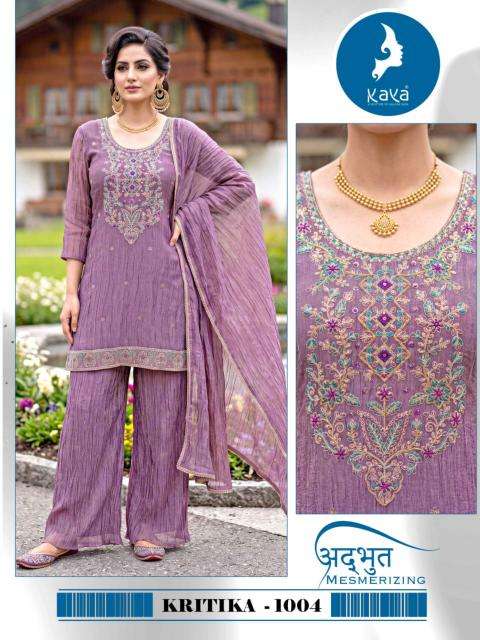
Coordinated kurti-pant sets and three-piece sets can provide a complete look, making them useful for festive customers who prefer ready-to-wear combinations. Boutique owners should compare the complete wholesale price with the realistic retail price their customers will accept.
For sets that include dupattas, examine how much visual value the dupatta adds. An attractive contrast or festive dupatta can significantly change how customers perceive the complete outfit.
Sarees for Traditional Festival Demand
Sarees can complement a boutique's ready-made collection, particularly when customers shop for traditional occasions. Rather than buying every saree category, select designs aligned with your existing customer base.
A boutique can combine selected regular-selling sarees with more festive designs, richer borders or distinctive colour combinations. Calculate the final retail positioning before placing a larger order.
Premium Ethnic Wear for Higher-Ticket Customers
A premium festive section can help boutiques serve customers who value fabric, finishing, detailing and exclusivity more than the lowest possible price. These products should be purchased more selectively because higher unit cost means more working capital is tied to every unsold piece.
Premium product quality should be visible enough to justify the intended retail positioning. The customer should be able to understand why one outfit commands a higher price than another.
Use a 60-25-15 Festival Stock Buying Formula
A practical starting framework for boutiques is to divide planned festive purchasing into three inventory groups. This is not a fixed industry rule; boutique owners should adjust the percentages using their own sales history.
60% Proven Fast-Moving Categories
Approximately 60% of the planned stock budget can be directed toward categories, price points and silhouettes that have already sold successfully for your boutique. This forms the commercial foundation of the festive collection.
Proven products do not need to mean old designs. You can buy new arrivals within product types your customers have repeatedly purchased.
25% Fresh Seasonal Collections
Around 25% can be used for fresh festival-specific designs. This gives regular customers a reason to revisit your store and provides new content for social media, WhatsApp and window displays.
Choose products that complement the boutique's established identity rather than introducing random categories simply because they are new.
15% Trend Experiments
The remaining portion can be used to test emerging styles, colours or fashion directions. If they sell quickly, increase the quantity through reorders. If demand is weak, the boutique has limited its exposure.
This type of controlled experimentation is particularly useful in 2026, when fashion trends can spread rapidly through reels and short-form social content but may also change quickly.

Buy Festival Stock Early Enough to Sell Before the Festival
A common purchasing mistake is treating the festival date as the deadline. Retail customers often start shopping well before the actual celebration, so your stock should ideally be ready for sale before the strongest buying period begins.
The Best Festival Stock Planning Strategy for Boutique Owners works backwards from the customer shopping window rather than from the festival itself.
Allow Time for Wholesale Selection
Shortlisting should begin early enough to compare multiple collections without making rushed decisions. Review designs, price, fabric, sizes, MOQ and stock before payment.
Rushed purchasing increases the likelihood of buying whatever happens to be available rather than what genuinely fits your boutique.
Allow Time for Shipping and Receiving
After ordering, factor in supplier processing and transportation. Once stock arrives, inspect the received products according to the supplier's applicable process before placing them into retail inventory.
International buyers in markets such as Nepal, Canada and Australia should plan even earlier because export orders can require additional shipping and destination processing time.
Allow Time for Photography and Promotion
Stock sitting unopened in the boutique cannot generate festival sales. Once inventory is ready, photograph or record the products, prepare WhatsApp communication, update social channels and start reaching previous customers.
The objective is to create customer demand while the complete festive selection is available, not after popular sizes and designs have already sold.
Source Festival Stock from Surat with a Buying Plan
Surat is a major sourcing destination for women's ethnic wear, with extensive activity across fabric, printing, processing, garment manufacturing, wholesale distribution and trading. Buyers visiting the surat textile market can encounter a huge range of products, which makes advance planning especially useful.
Commercial textile areas around Ring Road and Sahara Darwaza are familiar to many wholesale buyers. Whether purchasing physically or remotely, prepare a category budget and product requirement before exploring suppliers.
Do Not Let Variety Break Your Budget
One challenge of sourcing from a large textile market is that another attractive collection always seems to be available. Boutique owners can easily exceed their intended budget by adding one catalogue after another.
Maintain a written buying limit for each category. When the allocated amount has been reached, additional purchasing should require a clear commercial reason.
Compare Complete Cost, Not Just Wholesale Price
A low supplier rate does not automatically make a product profitable. Calculate product cost together with applicable shipping and other purchasing expenses to understand the effective landed price.
Then compare that cost with your realistic customer selling price. If the remaining margin is too narrow for your business expenses, the product may not be commercially suitable even if the wholesale price initially looks attractive.
Confirm Stock Before Final Payment
Festival collections can move quickly, especially as peak buying approaches. Confirm current availability and applicable order conditions before making payment.
Retailers using kapdathread.com can shortlist wholesale ethnic wear collections and then verify the commercial details of the selected products before placing an order.
Protect Cash Flow During Festival Stock Purchasing
Festival turnover can be attractive, but overstocking can create cash-flow pressure after the season. Boutique owners should therefore treat inventory as invested working capital rather than simply as merchandise.
Buy Depth Only in Proven Products
If a particular product type has a consistent sales history, purchasing greater depth may make commercial sense. New or uncertain categories should generally receive more controlled investment until customer demand is demonstrated.
This approach allows boutiques to maintain variety without committing equal quantities to every design.
Keep Money Available for Winning Reorders
The first weeks of festive selling can reveal which products customers genuinely want. Maintaining a reorder reserve allows the boutique to put additional money behind these proven sellers rather than relying entirely on predictions made before the season.
This is one of the simplest ways to make festival inventory planning more responsive to actual demand.
Set a Stock Exit Plan Before the Festival Ends
Decide in advance how you will handle products that remain as the strongest selling period approaches its end. Depending on margin and customer strategy, this may involve targeted customer offers, coordinated product bundles or other planned promotions.
Waiting until long after the festival to think about slow stock can leave valuable working capital blocked during the next buying cycle.
Turn Festival Inventory into Faster Retail Sales
Buying the right collection is only the first half of festival stock planning. Once products arrive, the boutique needs a clear selling plan so that inventory begins generating cash flow quickly. Waiting until the final week before a festival to start promotion can waste valuable selling days.
A better approach is to launch new arrivals in stages. Start with selected hero products, follow with fresh catalogue drops, and keep additional designs ready for customers who return later in the shopping period. This helps maintain a feeling of newness without displaying every product on the first day.
Launch New Arrivals in Multiple Drops
If your complete festive order contains several collections, avoid promoting everything simultaneously. Divide stock into planned launches. One week might focus on kurti sets, followed by festive kurtis, sarees and premium ethnic wear.
This approach gives home-based sellers, boutique owners and showroom owners more opportunities to contact customers without repeatedly sharing the same products. It also provides more content for WhatsApp, Instagram, Facebook and in-store promotion.
Promote Fast-Moving Products More Aggressively
Once actual orders start coming in, identify the products generating the strongest response. Give these designs greater visibility while relevant sizes and colours remain available.
Do not distribute your marketing effort equally across every product simply because you purchased it. Put more attention behind collections demonstrating real buying intent.
Use Limited Stock Messaging Only When It Is Genuine
If a fast-moving design genuinely has limited availability, communicate this clearly to customers. Avoid artificial urgency. Accurate stock communication protects trust and gives interested customers a practical reason to make their purchase decision sooner.
Plan Festival Stock by Size, Colour and Price
Ready-made festive wear requires more detailed inventory planning than simply selecting attractive designs. A catalogue can perform well overall while still leaving slow-moving sizes or colours behind.
Track Your Best-Selling Sizes
Boutique owners should review previous sales to understand which sizes move fastest. If your customers regularly request particular sizes, make those requirements part of the wholesale buying decision.
For wholesale kurtis and kurti sets, confirm the available size range before purchasing. If a catalogue's size ratio does not match your customers, an attractive wholesale price may not compensate for inventory that is difficult to sell.
Build a Balanced Colour Mix
Festival collections often include strong colours, but customers do not all want the same palette. A balanced assortment can include traditional festive shades alongside softer, deeper or contemporary colours.
Use previous sales rather than personal preference as your primary guide. The colours you personally like are not automatically the colours your customers will purchase.
Maintain More Than One Retail Price Band
A boutique should be prepared when customers ask, “Do you have something similar in a different budget?” Maintaining multiple price bands makes it easier to retain that customer instead of losing the sale.
Your festive buying can therefore include accessible products, a strong middle range and selected premium pieces. Each segment should still meet the quality expectations associated with its retail price.
Internal Linking for Boutique Wholesale Sourcing
Boutique owners preparing ready-made festive inventory can explore kurtis manufacturers in Surat when comparing new designs, wholesale price points and collections suitable for their target customers.
Businesses planning to add traditional drapes alongside ready-made ethnic wear can also explore a saree manufacturer in Surat category and shortlist products according to their festive buying budget.
Related-category sourcing should remain intentional. A boutique does not need every ethnic wear category simply because it is available. Add a category when it complements your existing customers, retail positioning and expected festival demand.
Use Customer Pre-Booking to Improve Festival Stock Decisions
For boutiques with an established customer base, early previews can provide useful purchase signals before committing heavily to a new collection. Selected catalogue previews can be shared with repeat customers to understand which styles are generating serious enquiries.
Show Selected Upcoming Collections
Share a controlled number of products rather than hundreds of catalogue images. Ask interested customers about preferred design, size and budget. This gives the boutique more actionable information than general social-media engagement.
Where your business model supports pre-booking, clearly communicate the applicable payment, availability and delivery conditions before confirming the customer's order.
Separate Enquiries from Confirmed Demand
A customer saying “nice collection” is different from a customer asking for price, size and availability. Track serious enquiries separately from reactions and views.
This distinction can improve festival stock planning for boutique owners because purchasing decisions become based on stronger buying signals rather than online popularity alone.
Create a Reorder System During Peak Festival Sales
A profitable festival strategy should not end when the first wholesale parcel arrives. During peak sales, review stock frequently so that winning products can be replenished while the selling window is still open.
Review Sales Every Few Days
Track which designs, sizes, colours and price bands are selling. For a smaller boutique, even a basic spreadsheet or daily sales record can reveal useful patterns.
Products receiving repeated enquiries but losing sales because of unavailable sizes should be treated differently from products receiving views but no serious buying interest.
Reorder Only While Enough Selling Time Remains
A bestseller is worth replenishing only if new stock can arrive while customer demand remains strong. Before reordering, confirm supplier availability and expected dispatch timing.
This is particularly important for international export buyers. Retailers in Nepal, Canada or Australia should consider transit and destination delivery time before placing late-season repeat orders.
Do Not Chase Sold-Out Products Indefinitely
If a successful design is no longer available, look for commercially similar alternatives rather than allowing the entire sales process to depend on one catalogue. A good wholesale sourcing network should give buyers enough variety to replace unavailable designs with relevant options.
Festival Stock Strategy for Home-Based Sellers and Resellers
Home-based sellers generally need tighter inventory control because their purchasing capital and physical storage may be more limited. Their advantage is flexibility: they can test selected products, monitor enquiries and increase purchasing according to demand.
Start with High-Confidence Products
Prioritise designs that match your existing customer profile. Avoid spending the complete festival budget on unfamiliar premium products simply because the catalogue looks impressive.
Use customer order history to identify the price points and product types that already convert well.
Calculate Profit Before Posting a Product
Know the wholesale cost, applicable shipping expense and desired margin before advertising the final customer price. This prevents situations where a customer confirms an order but the actual profit is too low to make the transaction worthwhile.
Use WhatsApp for Targeted Festival Selling
Instead of sending every new catalogue to every contact, segment customers according to previous interest. Share premium products with premium buyers, sarees with saree customers and kurti sets with customers who have previously purchased ready-made ethnic wear.
More relevant communication can reduce catalogue overload and make your festival marketing feel more personalised.
Festival Stock Strategy for Shop and Showroom Owners
Retail shops and showrooms generally need greater depth because more customers may visit during the peak period. However, larger buying capacity should not become an excuse for uncontrolled inventory.
Plan Floor Space Before Buying
Consider how products will actually be displayed. If your showroom cannot present another large category effectively, purchasing it may create storage rather than sales.
Assign display space to high-priority festive categories and keep replenishment stock organised so staff can quickly access requested sizes and colours.
Give Sales Staff Clear Price Segments
Organise inventory so staff can quickly show products within a customer's stated budget. A shopper asking for a ₹1,500–₹2,000 outfit should not need to search through products across every price level.
Better inventory organisation can improve customer experience and make festival rush periods easier to manage.
Plan Export Festival Stock Earlier Than Domestic Stock
International boutique owners sourcing Indian ethnic wear should build additional lead time into their buying calendar. Product selection is only one stage; dispatch, international transportation, import processes where applicable and local delivery can all affect the final arrival date.
Calculate the Complete Landed Price
International buyers should evaluate product cost together with freight and other applicable destination expenses. A product that appears profitable at the Indian wholesale rate may produce a different margin after the complete landed cost is calculated.
Buy for Local Festival Demand
Customer preferences in Nepal, Canada and Australia may differ. Do not duplicate an Indian retail assortment automatically. Use your own local sales data to determine the appropriate fabric, styling, price and quantity.
Vastralife's wholesale and export experience since 2017 brings industry knowledge of women's ethnic wear and wholesale requirements. For repeat business, premium product quality and commercially appropriate sourcing remain important alongside attractive designs.
Final Festival Buying Checklist Before Making Payment
Before confirming a major festive wholesale purchase, review the order one final time. This simple step can prevent avoidable buying errors during the busiest sourcing period.
Confirm Product and Commercial Details
Verify the product name, designs, fabric, available sizes, catalogue quantity, MOQ, wholesale price and live stock. For ready-made products, confirm the size assortment rather than assuming every catalogue follows the same ratio.
Confirm Your Expected Retail Price
Calculate the realistic retail selling price before buying. Make sure the difference between your landed cost and expected selling price leaves a commercially suitable margin for your business.
Confirm Dispatch Timing
Ask whether the order can reach you with enough time remaining for photography, promotion and customer selling. If arrival is likely to be too late, reconsider the quantity or select a product with a more suitable delivery timeline.
Confirm That You Still Have Reorder Capital
After the purchase, ideally you should retain enough working capital to respond when actual festival bestsellers become clear. The ability to reorder winning products can be more valuable than spending the entire budget during the first buying round.
Customer FAQs
1. How much festival stock should a boutique owner buy?
The appropriate quantity depends on previous sales, available working capital, customer base, stock turnover and supplier lead time. Boutique owners should use historical sales as their starting point and avoid buying large quantities of completely untested products.
2. When should boutiques start buying festival stock?
Buying should begin early enough for product selection, dispatch, delivery, merchandising and promotion before customers enter their main shopping period. International orders require additional lead time.
3. Which ethnic wear products should boutiques stock for festivals?
The exact mix should reflect customer demand. Wholesale kurtis, kurti sets, sarees, festive suits and selected premium ethnic wear can be combined according to the boutique's historical sales and target price range.
4. How can a boutique avoid overstocking during festivals?
Set a fixed purchasing budget, allocate most of it to proven categories, test trends in controlled quantities and retain money for reorders. Monitor sales throughout the season instead of purchasing the entire expected requirement at once.
5. Is the 60-25-15 stock formula compulsory?
No. It is a practical planning framework rather than a fixed rule. Boutique owners should adjust the percentages according to their own sales data, customer profile and risk tolerance.
6. Should boutiques buy premium festival collections?
Premium products can be useful when the boutique already serves customers willing to pay for better fabric, finishing, design or detailing. Purchase premium inventory selectively and calculate the intended retail price before ordering.
7. Can home-based sellers follow the same festival strategy?
Yes, but home-based sellers may benefit from smaller initial quantities and tighter working-capital control. They can use customer enquiries and confirmed orders to guide repeat purchasing.
8. Can festival ethnic wear be sourced online from Surat?
Yes. Buyers can shortlist wholesale collections online and confirm price, stock, MOQ and dispatch conditions remotely. kapdathread.com can be used to explore relevant women's ethnic wear collections for wholesale sourcing.
9. What should international boutique owners check before ordering?
International buyers should consider product price, quantity, shipping, applicable destination costs, expected transit time and the local selling window. Orders intended for a specific festival should be placed with sufficient lead time.
10. How should slow-moving festival stock be handled?
Track slow stock before the festival period ends and consider commercially appropriate promotions or product combinations while customer demand still exists. The goal is to improve stock turnover without unnecessarily damaging margin.
Order Your 2026 Festival Collection with a Smarter Stock Plan
The Best Festival Stock Planning Strategy for Boutique Owners combines disciplined buying with fast selling. Set the budget first, prioritise proven products, introduce fresh collections selectively, retain capital for reorders and track sales throughout the festival period.
For home-based sellers, shop owners, boutique owners, showroom owners, resellers and wholesale buyers, kapdathread.com provides access to women's ethnic wear sourcing options connected with Surat's wholesale textile ecosystem.
Explore Latest Collections, competitive Wholesale Pricing and Trendy Ethnic Wear. Enquire about Fast Shipping, available COD Support, Bulk Order Deals and Quality Products Starting From ₹299.
Wholesale & Bulk Order Enquiries
Contact: +91 9712582172
Website: kapdathread.com
Plan your festival inventory before peak demand, shortlist products according to your customers, confirm current stock and wholesale terms, and invest your buying budget where it has the strongest opportunity to convert into profitable retail sales.