
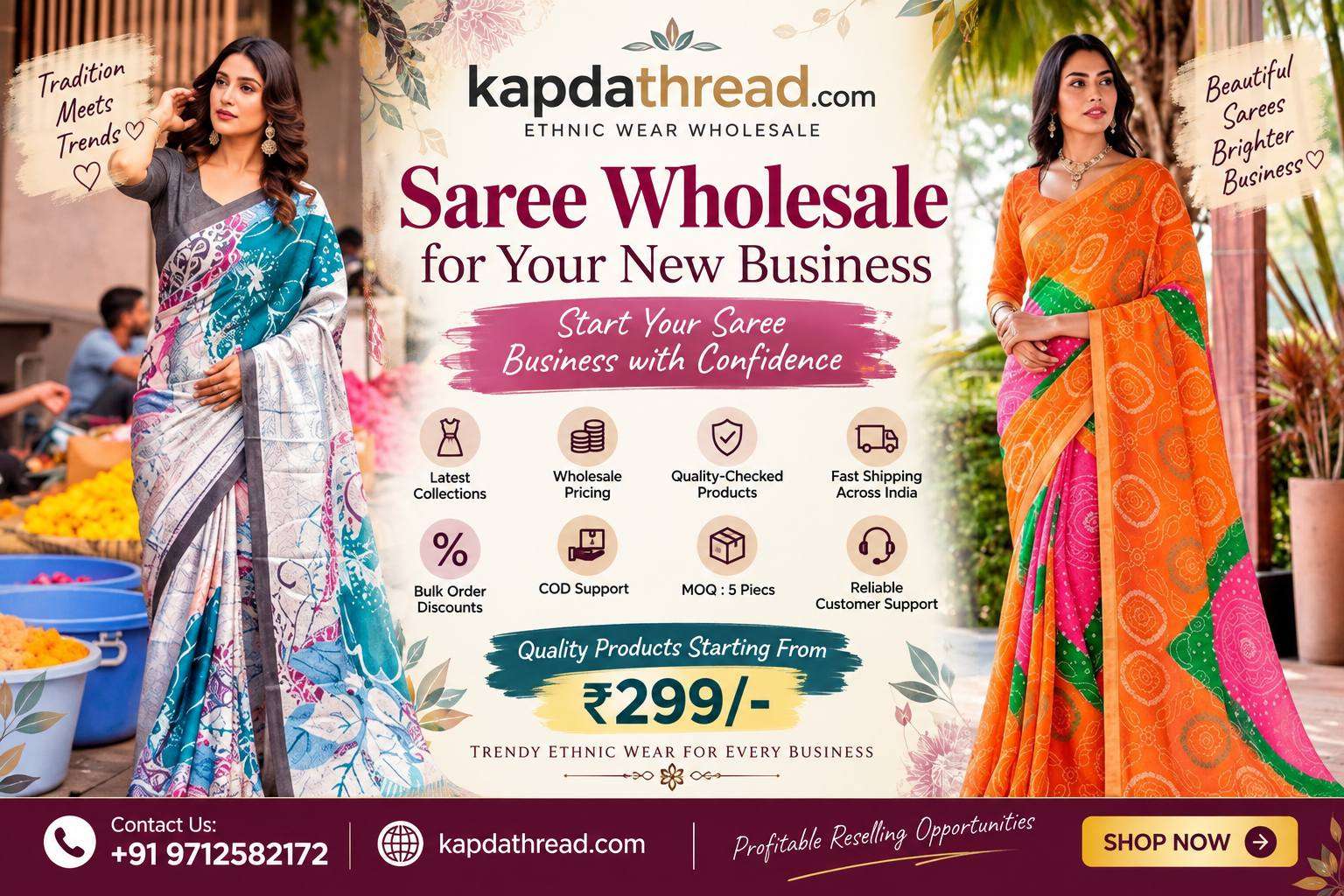
Best saree wholesaler for startups
Best Saree Wholesaler for Startups in Surat – Low MOQ & Wholesale Price 2026
Starting a saree business does not require a huge showroom or a massive opening inventory. With the right product selection, controlled purchasing and dependable Surat sourcing, even a new reseller can begin with a practical budget and gradually increase stock according to actual customer demand. The most important decision is choosing collections that offer the right combination of design, quality, selling potential and margin.
Introduction
The saree market offers opportunities for different types of entrepreneurs, from Home-Based Sellers operating through WhatsApp and Instagram to Boutique Owners, Shop Owners and larger Wholesale Buyers. The challenge for a startup is not simply finding sarees at a low price. A new business needs products that customers actually want to buy and a sourcing system that allows fresh inventory to be added without unnecessarily blocking working capital.
For buyers searching for the best saree wholesaler for startups, Surat remains an important sourcing destination. Its textile ecosystem offers affordable sarees, designer collections, festive styles, printed sarees, silk-look designs and premium occasion wear across multiple price segments.
Kapdathread.com gives business buyers another way to access Surat-based ethnic fashion collections without depending completely on repeated physical market visits. This can be particularly useful for startups in India, Nepal and Canada that want to test products before scaling their inventory.
Buy Wholesale Sarees for a New Business with Controlled Investment
One of the biggest mistakes a new saree seller can make is spending the entire starting budget on inventory. A startup also needs working capital for packaging, marketing, shipping, customer acquisition and repeat purchases. The first wholesale order should therefore be planned around stock rotation rather than maximum quantity.
Start with More Designs and Lower Duplication
A new retailer generally benefits from variety. Instead of purchasing a very large quantity of one saree design, a startup can begin with more colours, patterns and price points in controlled quantities.
This strategy makes the collection look larger to customers and gives the seller useful information about which styles generate enquiries. Once a design proves successful, the business can consider a larger reorder.
Build Three Practical Price Segments
A startup saree collection can be divided into affordable, mid-range and premium sections. Entry-level sarees can generate faster transactions, while mid-range designer collections can improve margins. Selected premium sarees can attract customers shopping for weddings and important occasions.
Rather than competing only on the cheapest price, sellers should consider how premium a saree looks compared with its final retail value. A strong price-to-look ratio can make a product easier to sell.
Reserve Money for Reorders
A startup should avoid using 100% of its buying budget in the first purchase. Fresh designs will continue to arrive, and customer behaviour may be different from initial expectations. Keeping money available for successful reorders allows the business to respond quickly when a particular fabric, colour or price range starts selling.
Which Wholesale Sarees Should Startups Buy in 2026?
Choosing the right product mix can reduce inventory risk. A startup does not need every saree category available in the market. It needs categories that fit its customers and selling channel.
Printed Sarees Wholesale
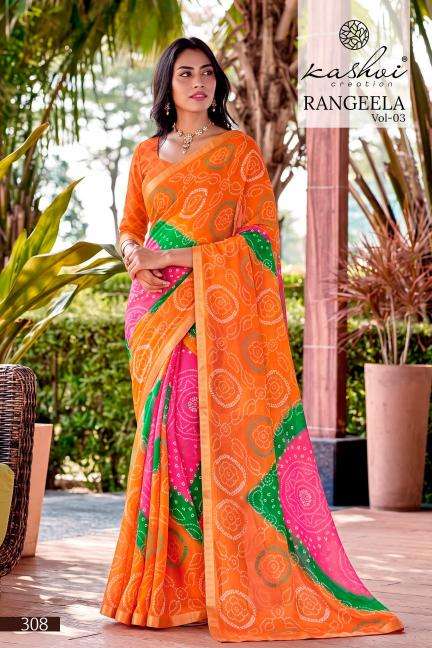
Printed sarees wholesale collections can be practical for new businesses because they often provide extensive design variety and accessible price points. Floral prints, bandhani-inspired designs, geometric patterns, traditional motifs and contemporary prints can serve everyday, festive and casual occasion demand.
Home-Based Sellers can use printed sarees to create regular catalogue updates without requiring a very high investment per piece.
Designer Sarees Wholesale
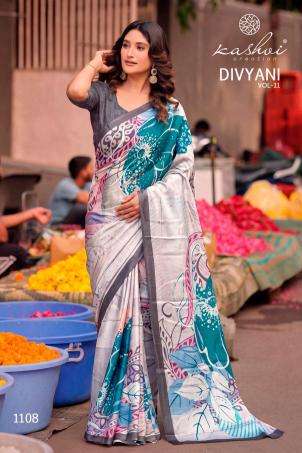
Designer sarees wholesale collections can help startups attract customers searching for wedding, festive and party wear. Sequins, embroidered borders, decorative pallus, coordinated blouses and modern fabric combinations can create stronger visual appeal in online promotions.
New sellers should initially choose designer products carefully rather than buying every new catalogue. Designs that match the spending capacity of the target customer should receive priority.
Silk and Traditional Sarees
Traditional-looking sarees can help a startup serve weddings, festivals and family functions. Silk-look fabrics, zari-style borders, jacquard patterns and rich colour combinations can create a premium appearance at different wholesale price levels.
Maroon, red, rani pink, royal blue, green, mustard and wine can be mixed with newer shades according to the customer base.
Lightweight Sarees for Online Reselling
Georgette-style, chiffon-look and other lightweight sarees can be useful for online resellers because they are visually attractive, easy to showcase and suitable for customers who prefer manageable drapes.
Startups can include lightweight festive products alongside printed everyday sarees to serve more than one buying occasion.
Why Startups Buy Sarees from Surat Textile Market
The surat textile market is one of the most recognised sourcing ecosystems for sarees and women's ethnic wear in India. The city's combination of textile processing, trading, designing and manufacturing gives buyers access to collections across many budgets.
For startups, this variety is important because the first product strategy often changes after real customers begin purchasing. A broad sourcing ecosystem allows sellers to adjust their inventory rather than remaining dependent on one category.
Ring Road Wholesale Saree Market
The ring road textile area is a major part of Surat's wholesale ecosystem. Buyers can find multiple textile markets and suppliers offering sarees and related ethnic categories at different commercial price points.
New Shop Owners visiting Surat can compare products before deciding which designs match their local customers. Sellers who operate remotely can combine online sourcing with occasional market visits as their business grows.
Sahara Darwaza Textile Sourcing
Sahara darwaza and surrounding textile areas are also important for wholesale buyers visiting Surat. The wider market gives entrepreneurs access to multiple product categories, making it possible to expand beyond sarees later without completely changing the sourcing ecosystem.
Online Wholesale Saree Buying from Surat
Not every startup can travel to Surat repeatedly. Travel, accommodation and time can add to the real cost of purchasing. Online wholesale sourcing can therefore be useful when a seller wants regular access to fresh collections.
Kapdathread.com allows buyers to explore wholesale ethnic wear online and select products according to their business requirements. This is especially relevant for sellers located outside Gujarat and buyers planning export or cross-border orders.
How Home-Based Sellers Can Start a Saree Business
A home-based saree business can begin without the fixed costs associated with a traditional retail showroom. The seller can use WhatsApp, Instagram, Facebook and personal customer networks to promote products and gradually build repeat buyers.
Create a Focused Opening Collection
Instead of presenting hundreds of unrelated products, begin with a recognisable product identity. For example, the opening assortment can focus on affordable designer sarees, festive sarees and a small wedding collection.
A focused range helps customers understand what the business sells and makes promotional content easier to manage.
Use WhatsApp Catalogues for Selling
Products can be grouped according to price, fabric or occasion. Separate catalogues such as “Under ₹1,000 Retail,” “Festive Sarees,” “Wedding Collection” and “New Arrivals” can make purchasing easier for customers.
Clear images, product information and transparent selling prices can reduce unnecessary enquiries and improve conversion.
Reinvest in Proven Products
Early profits can be used to expand categories that customers are already buying. This creates a demand-led inventory system instead of purchasing according to assumptions.
Wholesale Sarees for Boutique Owners and Shop Owners
A physical boutique or shop requires a somewhat different buying strategy because customers expect products to be available for immediate viewing and purchase. A wider colour range and multiple price segments become more important.
Boutique Owners Should Focus on Selection
Boutique Owners can create value through curation. Instead of stocking only mass-market designs, boutiques can combine selected designer sarees, traditional collections, premium-looking fabrics and limited pieces that create a more distinctive presentation.
This approach can also reduce direct price comparison because customers are purchasing a curated assortment rather than seeing the same designs everywhere.
Shop Owners Need Fast-Moving Inventory
Shop Owners typically need a larger proportion of fast-moving products. Affordable and mid-range sarees can form the foundation of the inventory, supported by premium collections for wedding and festival demand.
Tracking actual sales by fabric, colour and price can improve the quality of every future wholesale order.
Startup Saree Business Opportunities in India, Nepal and Canada
The right wholesale strategy can vary by destination. Startups selling in India may require a broader product range, while sellers in Nepal and Canada may benefit from more targeted purchasing based on their customer community and local selling costs.
India Saree Reselling Business
India offers opportunities across metropolitan cities, smaller cities and home-based selling networks. Regional tastes vary significantly, so a startup should study local demand before purchasing deep inventory.
Festive sarees, wedding collections, lightweight styles, printed sarees and traditional designs can be mixed according to the target customer.
Nepal Wholesale Saree Business
Startups supplying customers in Nepal can select sarees suitable for weddings, festivals and family occasions. Bright festive colours, attractive borders and traditional-modern combinations can help create versatile stock.
Cross-border buyers should calculate transportation and other applicable costs before fixing the final retail price.
Canada Saree Reselling Business
A startup serving South Asian customers in Canada can build a curated collection around weddings, festivals, cultural events and family functions. Lightweight designer sarees and premium occasion wear can complement traditional styles.
For international sourcing, the purchase cost should always be considered together with shipping and other landed expenses before a seller decides the final quantity.
Vastralife Wholesale and Export Experience Since 2017
A new business needs a supplier relationship that can continue after the first purchase. Vastralife brings wholesale and export experience since 2017, along with practical textile industry expertise developed through working with ethnic wear products and business buyers.
The focus is on providing market-relevant collections while maintaining attention to premium product quality and wholesale buying requirements. Through Kapdathread.com, Home-Based Sellers, Resellers, Boutique Owners, Shop Owners, Showroom Owners and Wholesale Buyers can explore products for different customer segments.
For a startup, dependable sourcing can be more valuable than chasing a small difference in purchase price. Consistent access to fresh products, practical order planning and quality-conscious selection can support long-term growth.
How to Select the Best Saree Wholesaler for Startups
The best saree wholesaler for startups should fit the business model of a new seller rather than simply offering the largest catalogue. Before confirming an order, buyers should evaluate product range, pricing, quantity requirements, quality and future reorder possibilities.
Compare Product Quality with Wholesale Price
Do not compare two sarees only by their quoted rates. Fabric, finishing, print quality, border work, blouse details and overall presentation can change the retail potential significantly.
A slightly higher-cost saree that looks more premium may sometimes provide a stronger selling opportunity than the lowest-priced product.
Check Whether the Collection Fits Your Customers
A catalogue can be attractive and still be unsuitable for your market. Before buying, ask whether your customers are likely to purchase the fabric, colour and expected retail price.
Prioritise Fresh Collections and Reorder Potential
Startups need the flexibility to refresh their assortment. Working with a wholesale source that regularly introduces new designs gives sellers more opportunities to keep customers interested while continuing to reorder proven categories.
Once a startup understands these fundamentals, the next step is to optimise inventory rotation, margins, supplier selection and scaling decisions before increasing order volumes.
Internal Linking Section – Expand Your Startup Product Range
A startup can grow faster when its sourcing strategy is connected to reliable product categories instead of depending on random catalogue purchases. Sellers planning to specialise in sarees can explore options from a saree manufacturer in Surat and compare collections according to fabric, design, customer budget and expected resale margin.
Once regular customers begin asking for additional ethnic wear, sellers can gradually diversify beyond sarees. Adding dress materials wholesale collections can help boutiques and resellers increase product variety without completely changing their target customer base.
How Startups Can Improve Saree Inventory Rotation
Inventory rotation is one of the most important factors in a new saree business. A product with a high theoretical margin is not necessarily profitable if it remains unsold for months. Startups should focus on how quickly invested capital returns to the business.
Identify Fast-Selling Sarees Early
Keep a simple record of enquiries and actual sales. Track which colours, fabrics, designs and price points customers request most frequently. Within a few weeks, this information can begin revealing which categories deserve larger reorders.
If several customers enquire about the same type of saree but do not purchase because a particular colour is unavailable, that information is also valuable. It can guide the next wholesale purchase.
Separate Proven Stock from Experimental Stock
A practical startup inventory can contain two types of products: proven sellers and experimental new arrivals. Proven products can receive a larger share of the purchasing budget, while experimental designs can be tested in smaller quantities.
This approach allows the business to follow trends without putting too much capital at risk. If a new collection receives strong customer response, it can move into the proven-stock category for the next purchase.
Refresh Products Instead of Discounting Too Quickly
Slow-selling products do not always need an immediate discount. Sellers can try new photographs, different styling, occasion-based promotions or product combinations before reducing the retail price.
For example, a saree initially promoted as general festive wear may receive better customer attention when presented specifically for a wedding function, family celebration or gifting requirement.
How to Calculate Profit Before Buying Wholesale Sarees
New sellers sometimes calculate profit by subtracting the wholesale rate from the retail price. In reality, the business should consider the complete landed and selling cost before deciding whether a product offers an attractive margin.
Calculate Your Complete Product Cost
Include the saree purchase amount, transportation, packaging and other applicable selling expenses. Online sellers may also have advertising, payment or delivery-related costs. International buyers should consider export freight and destination-related expenses where applicable.
After calculating these costs, set a selling price that remains attractive to the customer while protecting the business margin.
Do Not Compete Only on Lowest Price
A startup does not have to become the cheapest seller in the market. Customers also evaluate design, product presentation, service, trust, quality and convenience.
Constantly reducing prices can make future growth difficult. Instead, sellers should source products that provide a good balance between wholesale cost and perceived retail value.
Consider Profit Per Month, Not Only Profit Per Saree
A smaller margin on a saree that sells repeatedly can sometimes be more useful than a larger margin on a product that moves very slowly. Inventory turnover should therefore be considered together with individual product margin.
This is particularly important for startups working with limited capital because faster stock rotation makes funds available for fresh purchases.
Low MOQ Saree Wholesale Buying for Startups
For a new seller, manageable quantities can make it easier to test demand. Instead of concentrating the entire budget in one catalogue, startups can look for purchasing options that allow them to build greater variety within the available investment.
Why Controlled Quantity Helps New Sellers
Customer preferences cannot always be predicted before a business starts. Controlled opening quantities allow the seller to test several product categories and identify what actually works.
This strategy can be especially useful for Home-Based Sellers and Resellers who are building their first customer base.
Increase Quantity After Demand Is Proven
Once a saree category begins generating repeat sales, larger purchasing can be considered. The business can then use actual sales data rather than assumptions to make buying decisions.
Wholesale Buyers and Showroom Owners with established customer traffic may naturally require higher quantities, but the same principle remains useful when testing a completely new design range.
How to Sell Wholesale-Sourced Sarees Online
Online selling gives startups the opportunity to reach customers without immediately investing in an expensive retail location. However, simply posting product photographs is rarely enough. Presentation, consistency and customer trust influence conversions.
Create Occasion-Based Product Catalogues
Instead of sending every product to every customer, organise collections around clear buying needs. Categories can include wedding sarees, festive sarees, daily wear sarees, designer sarees, traditional collections and budget-friendly new arrivals.
This makes browsing easier and allows the seller to promote a relevant collection when a customer explains what she needs.
Use Clear Pricing and Product Information
Customers are more likely to enquire seriously when basic information is clear. Include fabric details, available colours, selling price and other important product information wherever practical.
Promote Fresh Arrivals Regularly
New products create a reason for existing customers to revisit a seller's WhatsApp status, Instagram page or online catalogue. Rather than uploading a large number of products once and becoming inactive, startups can maintain a steady flow of fresh content.
Scale from Home-Based Seller to Boutique or Shop
A saree startup does not need to begin with a physical store. Sellers can first prove their product-market fit through home-based or online selling and consider a retail location after developing repeat demand.
Build Repeat Customers Before Increasing Fixed Costs
Repeat customers provide a more stable foundation for expansion. Before taking on showroom rent, interiors and staffing expenses, a seller can evaluate whether monthly sales are consistent enough to support additional fixed costs.
Expand Categories Gradually
A seller who begins with sarees can later introduce kurtis, dress materials, ethnic sets and other complementary categories according to customer enquiries. Expansion should follow demand rather than simply increasing the number of products available.
Use Customer Data for Future Wholesale Orders
Keep records of the products customers purchase. Over time, the seller can identify patterns such as preferred price ranges, favourite colours and strong seasonal categories.
This information makes future wholesale buying more precise and can reduce unsold stock.
Common Mistakes New Saree Resellers Should Avoid
Buying Too Much Stock in the First Order
Large opening inventory may look impressive, but it can lock capital into products that have not yet been tested. Start with enough variety to understand demand and scale successful categories gradually.
Buying Only the Cheapest Sarees
The lowest wholesale rate does not guarantee the highest profit. Poor presentation or inconsistent quality can reduce customer trust and repeat business. Evaluate fabric, finishing and overall resale potential together with price.
Copying Another Seller's Inventory
A product that performs well for one retailer may not necessarily work for another. Location, customer income, selling channel and regional preference can all influence demand.
Ignoring Seasonal Demand
Wedding seasons, festivals and regional celebrations can influence saree purchases significantly. Buying before demand begins gives the seller more time to promote stock and sell at healthy margins.
Spending the Complete Budget on Premium Products
Premium sarees can generate attractive order values but may rotate more slowly. Startups generally benefit from balancing premium designs with affordable and mid-range fast-moving products.
Changing Suppliers Only for a Small Price Difference
Supplier reliability, product quality and continuity can matter more than a minor price difference. Constantly changing sources may create inconsistent quality and make repeat purchasing more difficult.
Buy Sarees Wholesale for India, Nepal and Canada
Startup buyers in India, Nepal and Canada can use the same core inventory principles while adapting product selection to local customer demand. The objective is not to send identical collections everywhere but to purchase products suitable for each market.
India Startup Orders
Indian sellers can take advantage of extensive regional demand and the proximity of Surat's manufacturing and wholesale ecosystem. Startups should select products according to local festivals, weddings, climate and customer budgets.
Nepal Startup Orders
For Nepal, sellers can build collections around wedding and festive demand while considering cross-border logistics when calculating final retail pricing. Controlled opening quantities can help identify which Surat styles receive the strongest response locally.
Canada Startup Orders
Home-Based Sellers and Boutique Owners in Canada can focus on curated Indian ethnic collections for weddings, festivals and community occasions. Because shipping contributes to landed cost, product selection and order consolidation should be planned carefully.
Why Supplier Reliability Matters for a Startup
The best saree wholesaler for startups is not simply a seller offering a large number of catalogues. New businesses need dependable sourcing because product inconsistency can affect customer trust at a stage when the business is still building its reputation.
Vastralife's wholesale and export experience since 2017 brings practical industry expertise to the sourcing process. Attention to market-relevant designs, business-focused purchasing and premium product quality can help retailers create a stronger foundation for long-term selling.
Kapdathread.com gives startups a way to explore wholesale collections online while remaining connected to Surat's textile sourcing ecosystem. For buyers who cannot regularly visit ring road, sahara darwaza or the broader surat textile market, online purchasing can make fresh inventory easier to access.
Customer FAQs
1. Where can a startup buy sarees wholesale in Surat?
Startups can source through Surat's textile markets or online wholesale platforms such as Kapdathread.com. Buyers should compare designs, quality, quantity requirements and overall landed cost before purchasing.
2. How much stock should I buy when starting a saree business?
There is no single quantity suitable for every startup. Begin according to your available capital, customer base and supplier ordering conditions. Greater design variety with controlled duplication can be useful when demand is still unknown.
3. Which sarees are good for a new reselling business?
Printed sarees, lightweight styles, affordable festive sarees, designer collections and selected traditional sarees can create a balanced opening assortment. Choose categories according to your target customers.
4. Can I start a saree business from home?
Yes. Home-Based Sellers can promote products through WhatsApp, Instagram and customer referrals while keeping initial fixed expenses relatively controlled.
5. Is Surat good for wholesale saree buying?
Surat has a large textile manufacturing, processing and trading ecosystem, giving buyers access to numerous saree categories and price segments.
6. Can startups buy sarees online instead of visiting Surat?
Yes. Online wholesale sourcing can help sellers outside Surat explore new collections and place orders without travelling for every purchase.
7. How should a startup calculate saree selling price?
Consider the purchase price together with shipping, packaging, marketing and other applicable selling expenses. The final retail price should provide a workable margin while remaining suitable for the target customer.
8. Can sarees be purchased for export and overseas reselling?
Wholesale and export requirements can be discussed according to destination and order needs. International buyers should consider shipping and applicable landed costs before confirming quantities.
9. Should I buy premium sarees when starting?
A limited premium assortment can be useful for weddings and special occasions, but new sellers should avoid putting the entire opening budget into slow-moving high-value inventory.
10. How can I grow a small saree reselling business?
Track actual customer demand, reorder proven products, maintain fresh arrivals, protect working capital and gradually add categories. Consistent customer service and dependable product quality can also encourage repeat purchases.
Start Your Saree Business with Wholesale Collections from Kapdathread.com
If you are planning a new saree business in 2026, focus on smart buying rather than simply purchasing the largest possible inventory. Choose products according to customer demand, maintain multiple price segments and keep enough working capital available for fresh arrivals and successful reorders.
- Latest Collections – Explore fresh saree and ethnic wear designs for your business.
- Wholesale Pricing – Source products at business-focused wholesale rates.
- Trendy Ethnic Wear – Build a modern collection for boutiques, shops and online selling.
- Fast Shipping – Convenient dispatch support for eligible orders.
- COD Support – Available for eligible orders as per applicable terms.
- Bulk Order Deals – Ask about available options for larger wholesale requirements.
- Quality Products Starting From ₹299 – Explore value-focused products along with premium collections.
Contact Number: +91 9712582172
Website: kapdathread.com
Whether you are a Home-Based Seller beginning with a small catalogue, a Boutique Owner building a curated range, a Shop Owner expanding inventory or a Wholesale Buyer planning larger quantities, sustainable growth starts with disciplined sourcing. Select sellable products, monitor customer response, rotate stock regularly and scale quantities only after demand becomes clear. With Vastralife's wholesale and export experience since 2017 and access to Surat's textile ecosystem, Kapdathread.com can support entrepreneurs looking for the best saree wholesaler for startups and a practical route to building a stronger ethnic wear business.