
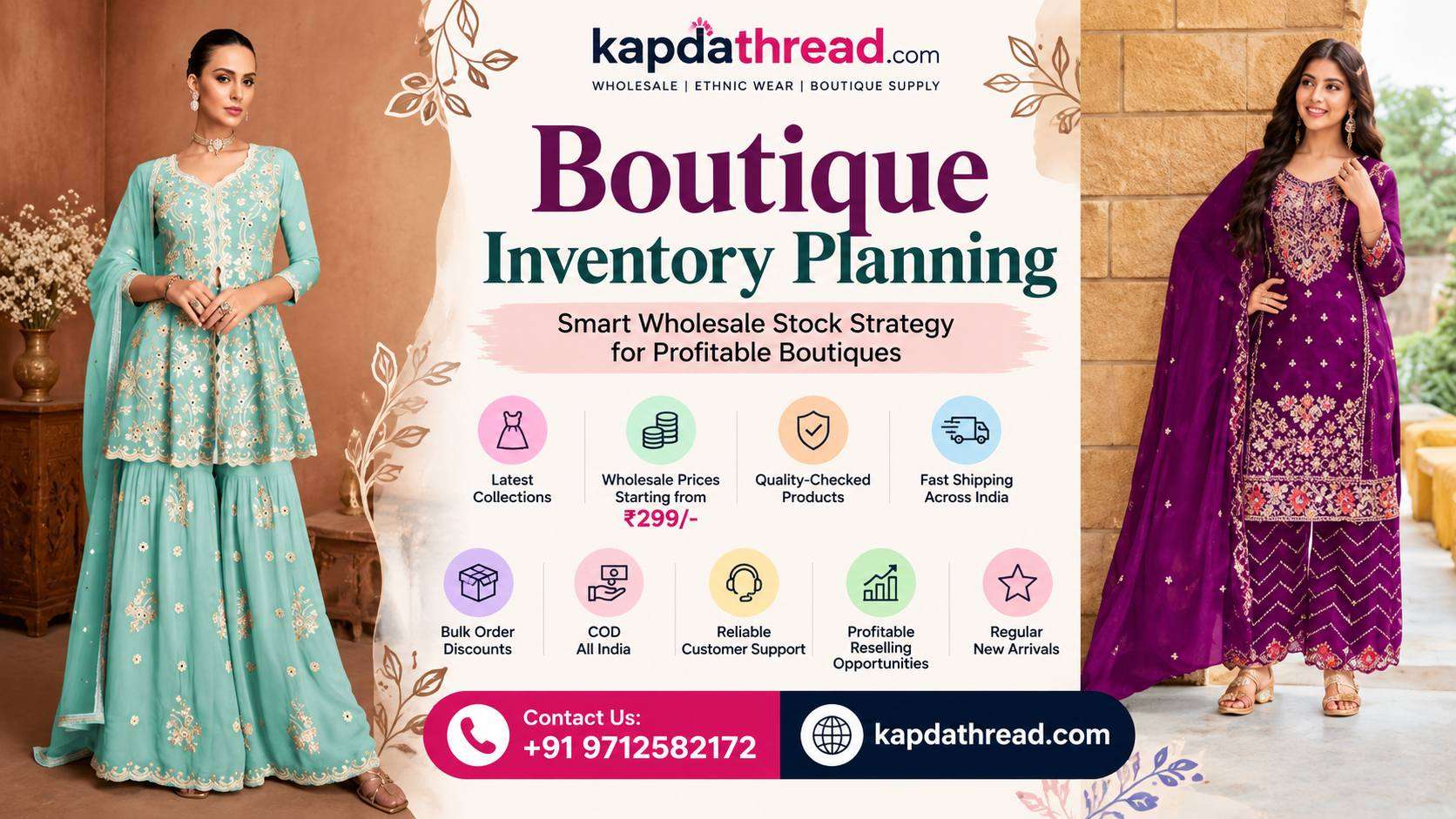
Boutique inventory planning
Boutique Inventory Planning: Smart Wholesale Stock Strategy for Profitable Boutiques in 2026
A profitable boutique is not built simply by keeping more garments on the shelves. It grows when the right designs, sizes, price points and quantities are available exactly when customers want to buy them. For boutique owners, resellers, showroom owners and home-based sellers, thoughtful stock selection can improve product rotation, protect working capital and create more opportunities for repeat sales.
Introduction
For fashion retailers, boutique inventory planning is directly connected with cash flow. Every kurti, suit set or dress material purchased for the store uses working capital until it is sold. This is why successful buyers generally focus on a combination of proven products and fresh designs instead of purchasing large quantities simply because a wholesale price appears attractive.
In 2026, customers are seeing new fashion through Instagram, WhatsApp, short videos and online marketplaces almost every day. A design that attracts attention today can generate enquiries quickly, while another style may move slowly even if its quality is excellent. Boutique buyers therefore need access to latest wholesale clothing collections that can be reordered according to actual customer response.
For buyers sourcing from the Surat textile market, areas around Ring Road and Sahara Darwaza offer access to a broad textile ecosystem covering ethnic wear, salwar suits, dress materials, kurtis and festive collections. Online wholesale sourcing makes it possible for retailers outside Surat to access similar categories without travelling for every purchase.
Kapdathread.com is designed for buyers searching for wholesale fashion products online, including boutique owners, resellers, shop owners and wholesale buyers who want to compare fresh collections before placing their orders.
Build Boutique Inventory Around Products That Customers Can Actually Buy
The first priority while buying boutique wholesale clothing should be sellability. A beautiful product is useful inventory only when it matches the customer's preferred style, budget, size and occasion.
A boutique targeting regular office and casual customers may require cotton kurtis, kurti-pant sets and comfortable salwar suits. A boutique with a strong wedding and festive customer base may need embroidered suits, Pakistani suits, designer ethnic sets and premium dress materials. Home-based sellers may prefer products that photograph well and can be marketed through WhatsApp or Instagram without maintaining a large physical display.
Start With Multiple Price Points
Keeping every product in one price bracket can limit conversions. Buyers often enter a boutique with different budgets, so inventory should include entry-level products, mid-range designs and selected premium pieces.
Wholesale sourcing can help retailers create this mix without pushing the retail price too high. Affordable everyday products can bring regular transactions, while premium embroidered and occasion-wear collections can increase average order value.
When sourcing online, compare the complete product rather than looking only at the lowest purchase price. Fabric, embroidery, stitching, finishing, dupatta quality, size availability and overall presentation influence how easily the garment can be sold.
Keep Depth in Winners and Variety in New Designs
Instead of buying deep quantities of every new style, retailers can begin with manageable quantities across multiple designs. Once customer demand becomes visible, stronger sellers can be reordered.
This approach creates a practical balance between wholesale boutique inventory and working capital. The store looks fresh, customers receive more choice and less money remains locked in untested designs.
Best Categories to Include in Boutique Stock
There is no single product combination suitable for every store. However, a balanced ethnic-wear boutique can build its purchasing around categories serving everyday, festive and occasion-based demand.
Salwar Kameez and Suit Sets
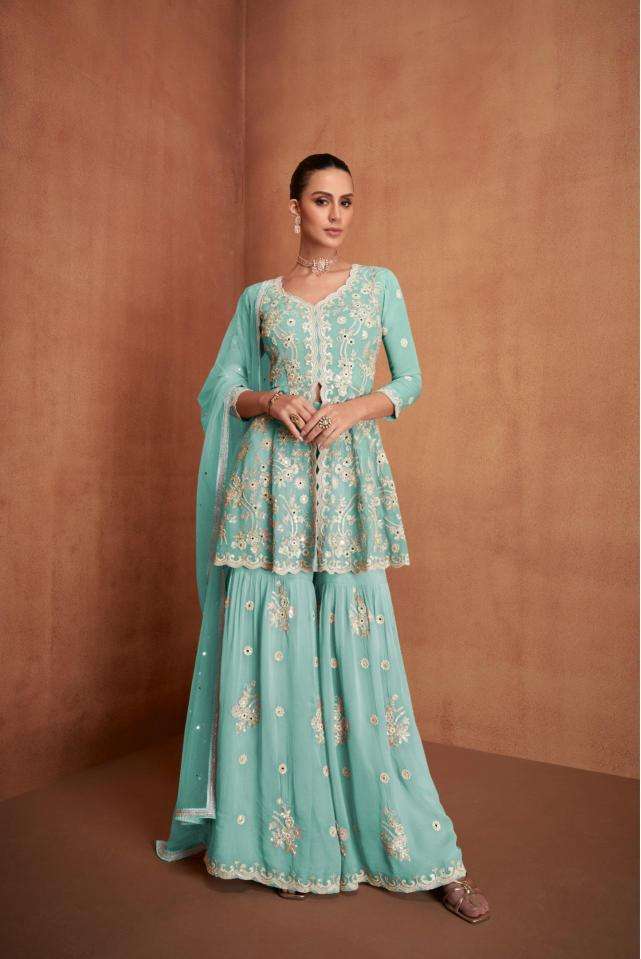
Wholesale salwar kameez remains a useful category because it can cover everyday wear, family functions, festive shopping and gifting. Cotton and lighter fabrics can serve routine demand, while embroidery, jacquard, organza, silk blends and decorative dupattas can address higher-value purchases.
Retailers can purchase colour and design combinations suited to their local customer base instead of stocking identical merchandise across every segment. For a showroom, broader variety may be important; a home-based reseller may achieve better stock rotation with smaller quantities and frequent new arrivals.
Pakistani Suits for Premium Boutique Buyers
Pakistani-inspired styling can add a distinctive premium section to a boutique. Straight silhouettes, detailed necklines, elegant embroidery, coordinated bottoms and statement dupattas create strong visual appeal for online and offline selling.
Buyers looking to buy Pakistani suits wholesale should check fabric specifications and design details carefully. The collection should include commercially wearable designs alongside elaborate pieces rather than relying entirely on heavy styles.
Dress Materials for Flexible Retail Selling
Wholesale dress materials give customers more freedom over stitching, fitting and styling. This makes them particularly useful for boutiques serving customers who prefer customized outfits.
Printed cotton, embroidered sets, festive dress materials, lawn fabrics and premium three-piece combinations can cover several customer profiles. For boutique owners working with local tailors, dress materials can also support a made-to-order business model.
Kurtis and Kurti Sets for Regular Rotation
Kurtis can provide repeat buying opportunities because customers may purchase them for office wear, casual use, college, travel and small functions. A mix of straight kurtis, printed designs, embroidered styles and coordinated kurti sets can create multiple retail price points.
For inventory planning, practical sizes and wearable colours should form the core stock, while trend-led colours and statement patterns can be introduced in smaller quantities.
How Much Inventory Should a Boutique Buy?
The correct quantity depends on store size, customer traffic, online sales, available capital and how quickly the supplier can replenish stock. A new boutique does not necessarily need hundreds of pieces to look well stocked. Carefully selected variety can often create a stronger presentation than large quantities of repetitive designs.
A practical boutique stock planning strategy can divide the buying budget between proven sellers, fresh products and seasonal merchandise. Established products provide stability, new designs keep the store interesting, and seasonal stock captures demand around festivals and wedding periods.
Retailers should also reserve part of their purchasing capacity for replenishment. Spending the entire budget on one buying day can make it difficult to purchase a fast-moving collection that appears a week later.
Buy Small, Measure Demand and Reorder
For newer collections, test buying can reduce inventory exposure. Observe which colours receive enquiries, which sizes sell first and which products customers save or share online. These signals can guide the next purchase.
Once a style starts moving consistently, a retailer can increase quantity while the collection is still available. This is especially useful for home-based sellers and resellers who want to grow without carrying unnecessarily heavy stock.
Plan Size Inventory Carefully
Size availability can directly affect sell-through. A popular design cannot generate its full potential if the required customer size is repeatedly unavailable.
Keep records of the sizes sold most frequently rather than assuming that every size should be purchased equally. As sales data accumulates, the retailer can build a more accurate size ratio for future bulk clothing orders.
Source Boutique Inventory from Surat for Better Product Variety
Surat has a large textile and apparel trading ecosystem, making it relevant for retailers looking for variety across ethnic-wear categories. Buyers searching the Surat textile market, Ring Road and Sahara Darwaza often look for wholesalers, suppliers and manufacturing-linked businesses capable of offering regularly updated collections.
For retailers outside Gujarat, digital sourcing can reduce the need to travel repeatedly. Product photos, catalogues and online ordering allow buyers to shortlist merchandise before investing.
Vastralife brings wholesale and export experience since 2017, with industry knowledge developed through working with different types of fashion buyers. That experience is useful when serving boutiques that need a balance of premium product quality, competitive wholesale buying and commercially relevant designs.
Through kapdathread.com, buyers can explore categories suited to boutiques, reselling businesses and retail stores while planning purchases according to their target market.
Plan Inventory According to Selling Season
A boutique purchasing calendar should not remain identical throughout the year. Wedding periods, festive seasons, summer, monsoon and winter can create different buying patterns. Preparing inventory before demand reaches its peak gives retailers time to photograph products, promote them and collect advance enquiries.
Festive and Wedding Inventory
Festive buyers generally respond well to embroidery, richer fabrics, attractive dupattas, coordinated sets and colours that photograph strongly. During wedding demand, boutiques can add selected premium salwar suits, party-wear sets and designer dress materials.
The objective is not to convert the entire store into heavy occasion wear. Maintaining affordable products alongside premium merchandise allows different customers to purchase within their preferred budget.
Everyday Stock Should Continue Throughout the Year
Seasonal products can produce strong short-term sales, but everyday merchandise keeps transactions moving between major occasions. Cotton suits, kurtis, comfortable sets and practical ethnic wear can provide this base.
For 2026 inventory, buyers can therefore maintain a core selection and rotate trend-focused merchandise around it. This reduces dependence on a single festival or fashion cycle.
Inventory Strategy for Different Types of Boutique Buyers
The purchasing model should match the way the business sells. A physical boutique, Instagram reseller and large showroom may source from the same supplier but require completely different quantities and product mixes.
Home-Based Sellers and Social Media Resellers
Home-based sellers usually benefit from lower inventory exposure and frequent collection updates. Products with strong photography, visible detailing and accessible price points are easier to promote through WhatsApp, Instagram and Facebook.
Rather than purchasing too many pieces of one design, these sellers can maintain greater visual variety and repeat the products that receive actual orders.
Boutique and Shop Owners
Physical boutiques need enough variety to create a complete shopping experience. The collection can include regular wear, festive styles and selected premium designs, with buying quantities based on historical store sales.
Retailers purchasing wholesale Pakistani suits online can use these products to build a distinctive premium section while keeping commercial everyday designs in surrounding price ranges.
Showroom Owners and Wholesale Buyers
Larger buyers generally require greater depth in successful designs, broader size availability and faster replenishment. Their purchasing decisions should consider not only individual product margin but also stock rotation across the entire showroom.
Buyers who require customizable merchandise can also explore dress materials wholesale collections for customers who prefer stitched-to-measure ethnic wear.
Control Inventory Through Price Segmentation
A strong boutique assortment should give customers a reason to buy at different budget levels. If every product sits in the same price range, a retailer can lose customers who want either a more affordable option or something more exclusive. Strategic boutique inventory planning therefore requires buyers to divide purchasing capital across multiple retail price brackets.
Entry-level products can support frequent transactions and attract first-time customers. Mid-range ethnic wear can become the core revenue category for many boutiques, while premium embroidered suits, designer sets and festive collections can generate higher-value bills. The exact mix should depend on the store's customer profile rather than a fixed industry formula.
When comparing wholesale products, calculate the potential selling margin after considering purchase price, transportation, packaging, payment charges and other applicable business costs. A low wholesale price does not automatically make an item more profitable if customers do not respond to its design.
Keep a Core Range and a Premium Range
A practical buying strategy is to maintain dependable products for routine sales and a smaller premium section for customers looking for something distinctive. This allows a boutique to serve several budgets without investing too heavily in expensive merchandise.
For example, regular kurtis and wearable salwar suits can support repeat purchases, while embroidered Pakistani suits, festive dress materials and designer ethnic sets can create premium upselling opportunities. This type of wholesale boutique stock mix can be adjusted every purchasing cycle according to sales.
Use Stock Rotation Instead of Simply Adding More Products
New inventory should not continuously enter the business without reviewing what is already on the shelves. Stock rotation helps boutiques identify products that need to be reordered, promoted, bundled or cleared.
Retailers can maintain a simple record containing product code, category, purchase date, wholesale cost, selling price, size, colour, quantity purchased and quantity sold. Even a basic spreadsheet can reveal which categories are producing revenue and which are tying up capital.
For every buying cycle, separate products into fast-moving, normal-moving and slow-moving stock. Increase purchases of proven categories, maintain controlled quantities of average sellers and avoid repeating weak products unless there is a clear reason to expect new demand.
Set a Reorder Point for Fast-Selling Designs
Waiting until a bestseller is completely sold out can result in missed orders. When stock reaches a predetermined minimum level, check whether the design remains available with the supplier and whether customer demand is continuing.
Fast-moving ethnic wear wholesale collections can sometimes change quickly. Reordering while the product is still commercially active can be more effective than attempting to source the identical design much later.
Clear Slow Stock Without Damaging the Boutique Image
Slow stock does not always need an aggressive discount. Retailers can first change its display position, create a coordinated styling look, promote it through reels, include it in WhatsApp customer updates or combine it with complementary products.
When clearance becomes necessary, structured offers can release capital for fresh purchases. The objective is to prevent ageing merchandise from occupying too much of the boutique's inventory budget.
Plan Inventory for International Reselling Markets
Retailers sourcing Indian ethnic wear for markets such as Nepal, Australia and Canada should consider local customer preferences, seasonal differences, delivery time and landed cost before finalizing quantities. Products that perform well in one market may require a different colour, fabric or price mix elsewhere.
For export-oriented buyers, purchasing decisions should also account for packaging, transport and the time required for stock to reach the destination. Maintaining an adequate replenishment window becomes particularly important when products are being sourced from India and sold overseas.
Buyers can use kapdathread.com to review wholesale fashion options from India and shortlist collections according to their own market. For international businesses, smaller test orders across several styles can help identify customer response before committing to deeper inventory.
Nepal Boutique Inventory
For Nepal, Indian ethnic wear can serve regular retail, festive and occasion-based demand. Boutique owners can build a mix of salwar suits, dress materials, kurtis and premium sets while planning purchases early enough to accommodate cross-border delivery.
Australia and Canada Resellers
Indian communities in Australia and Canada create opportunities for ethnic wear retailers, particularly around weddings, cultural celebrations and festive periods. Resellers can focus on visually distinctive merchandise while also keeping comfortable everyday ethnic products for repeat customers.
International wholesale buyers should calculate the complete landed price rather than evaluating merchandise solely on the Indian wholesale rate. Shipping and destination-related costs can affect the final margin.
How Manufacturing and Surat Sourcing Affect Boutique Buying
Surat's textile ecosystem connects fabric trading, processing, designing, manufacturing, wholesale distribution and nationwide supply. This depth gives boutique buyers access to changing collections across multiple ethnic-wear categories.
The commercial areas around Ring Road, Sahara Darwaza and the wider Surat textile market are familiar sourcing points for apparel traders. Online wholesale platforms extend this sourcing opportunity to retailers who cannot visit Surat every time they need new stock.
For boutiques, supplier consistency matters as much as product variety. Accurate product details, quality checks, responsive communication and reliable dispatch help buyers plan their inventory with greater confidence.
Vastralife's wholesale and export experience since 2017 supports an understanding of how boutique owners, resellers and wholesale buyers purchase merchandise. The focus is not merely on displaying a large catalogue, but on giving buyers access to commercially relevant products with premium product quality across multiple price levels.
Create a Monthly Boutique Purchasing Cycle
Instead of buying whenever stock looks low, create a purchasing calendar. A monthly or shorter review cycle can make boutique inventory management more disciplined and reduce emotional buying decisions.
Step 1: Review Actual Sales
Check which categories, designs, colours, sizes and price ranges generated the highest number of sales during the previous period. Use actual billing data whenever possible rather than relying only on memory.
Step 2: Identify Inventory Gaps
Look for situations where customers requested something you could not supply. Repeated enquiries for a particular size, product category or budget range may indicate a purchasing opportunity.
Step 3: Check New Wholesale Arrivals
Review fresh products from suppliers and compare them with the merchandise already in the store. Kapdathread.com can be used to explore new wholesale collections without waiting for the next physical market visit.
Step 4: Allocate the Buying Budget
Separate money for replenishing winners, introducing new designs and preparing for upcoming seasonal demand. Avoid spending the full purchasing budget on one category simply because it looks attractive in the catalogue.
Step 5: Place the Order and Prepare the Sales Content
Once products are selected, plan how they will be sold. Prepare product photography, reels, WhatsApp updates, customer broadcasts and store displays as soon as stock becomes available. Inventory produces revenue only when customers know it has arrived.
Transactional Keywords Boutique Buyers Commonly Search
Retailers ready to purchase often search with clear buying intent. Relevant phrases include buy boutique clothes wholesale, wholesale ethnic wear supplier, salwar suit wholesale price, buy kurtis in bulk, Pakistani suits wholesale supplier, dress material wholesale online, wholesale ladies suits, boutique clothing supplier India, Surat wholesale clothing supplier, ethnic wear bulk order, designer suits wholesale, women's clothing wholesale India, ready-made suits wholesale, wholesale kurti sets, reseller clothing supplier, boutique stock wholesale, online textile wholesaler, wholesale garments from Surat, Indian ethnic wear exporter and wholesale fashion supplier.
These transactional searches reflect what professional buyers actually need: available merchandise, workable quantities, competitive pricing and a supplier from whom they can place an order. For this reason, product pages should clearly communicate fabric, size, design, quantity requirements and relevant purchase information wherever available.
Internal Linking for Faster Product Discovery
Internal category navigation helps buyers move from general inventory research to actual product selection. A boutique buyer who begins with one category may discover that customers also need complementary products at another price level.
When planning stock, use category pages to compare different collections before finalizing the buying mix. The goal is to build an assortment where everyday merchandise, trend-led designs and occasion wear support each other instead of competing for the entire inventory budget.
For buyers ready to place wholesale orders, kapdathread.com provides access to changing fashion collections that can be reviewed according to product category and business requirement.
Customer FAQs
1. What is the best way to start boutique inventory with a limited budget?
Start with controlled quantities across several commercially relevant designs instead of buying deep quantities of a single untested style. Prioritize products matching your customer's usual sizes, price range and fashion preferences, then reorder proven sellers when possible.
2. Which products should a new ethnic-wear boutique purchase first?
A new boutique can consider a balanced selection of kurtis, kurti sets, salwar suits, dress materials and a smaller range of premium or festive merchandise. The final selection should depend on local customer demand rather than following the same stock formula for every market.
3. Can home-based resellers buy wholesale boutique stock?
Yes. Home-based sellers can build inventory around smaller quantities, regular new arrivals and products that can be marketed effectively through social media and WhatsApp. Check the current MOQ and product availability before ordering.
4. How often should boutique owners purchase new stock?
Purchase frequency should follow sales velocity and available working capital. Fast-moving businesses may introduce products frequently, while smaller boutiques can work with planned purchasing cycles. Reviewing sales before every new order helps avoid unnecessary overstocking.
5. How should I calculate the right retail price for wholesale clothing?
Start with the wholesale purchase cost and add relevant transportation, packaging, payment, operating and other applicable costs. Then set the selling price according to the required margin and what your target customer is willing to pay for that product.
6. Is Surat suitable for sourcing boutique clothing in 2026?
Surat remains an important textile and apparel sourcing centre with a broad ecosystem of traders, suppliers and manufacturing businesses. Retailers can source through physical markets as well as online wholesale channels depending on their requirements.
7. Should I buy large quantities to get a better wholesale price?
Not automatically. A lower unit cost is useful only when the merchandise sells. For an unfamiliar product, controlled buying can protect cash flow. Larger quantities make more sense when sales history supports the decision or confirmed customer orders already exist.
8. Can overseas boutiques source Indian ethnic wear online?
Yes. Buyers in markets such as Nepal, Australia and Canada can explore Indian wholesale collections online. Before ordering, international buyers should confirm current product availability, order quantity, shipping arrangements and applicable import-related costs for their destination.
Order Fresh Boutique Inventory for Your Business
Good inventory planning connects purchasing directly with selling. Whether you operate a boutique, showroom, home-based business, online store or reselling operation, the objective is to keep enough variety to attract customers without unnecessarily locking working capital into slow merchandise.
Explore Latest Collections and Trendy Ethnic Wear for your next buying cycle. Compare Wholesale Pricing, select products suitable for your customers and ask about current Bulk Order Deals. Buyers can also check applicable Fast Shipping options and COD Support for eligible orders.
Kapdathread.com offers wholesale fashion options for businesses looking for regular new arrivals and Quality Products Starting From ₹299, subject to current collection availability and product pricing.
Contact Number: +91 9712582172
Website: kapdathread.com
Plan your next purchase around real customer demand, keep fresh merchandise moving through the business and use every new order to build a more focused and profitable boutique inventory.