
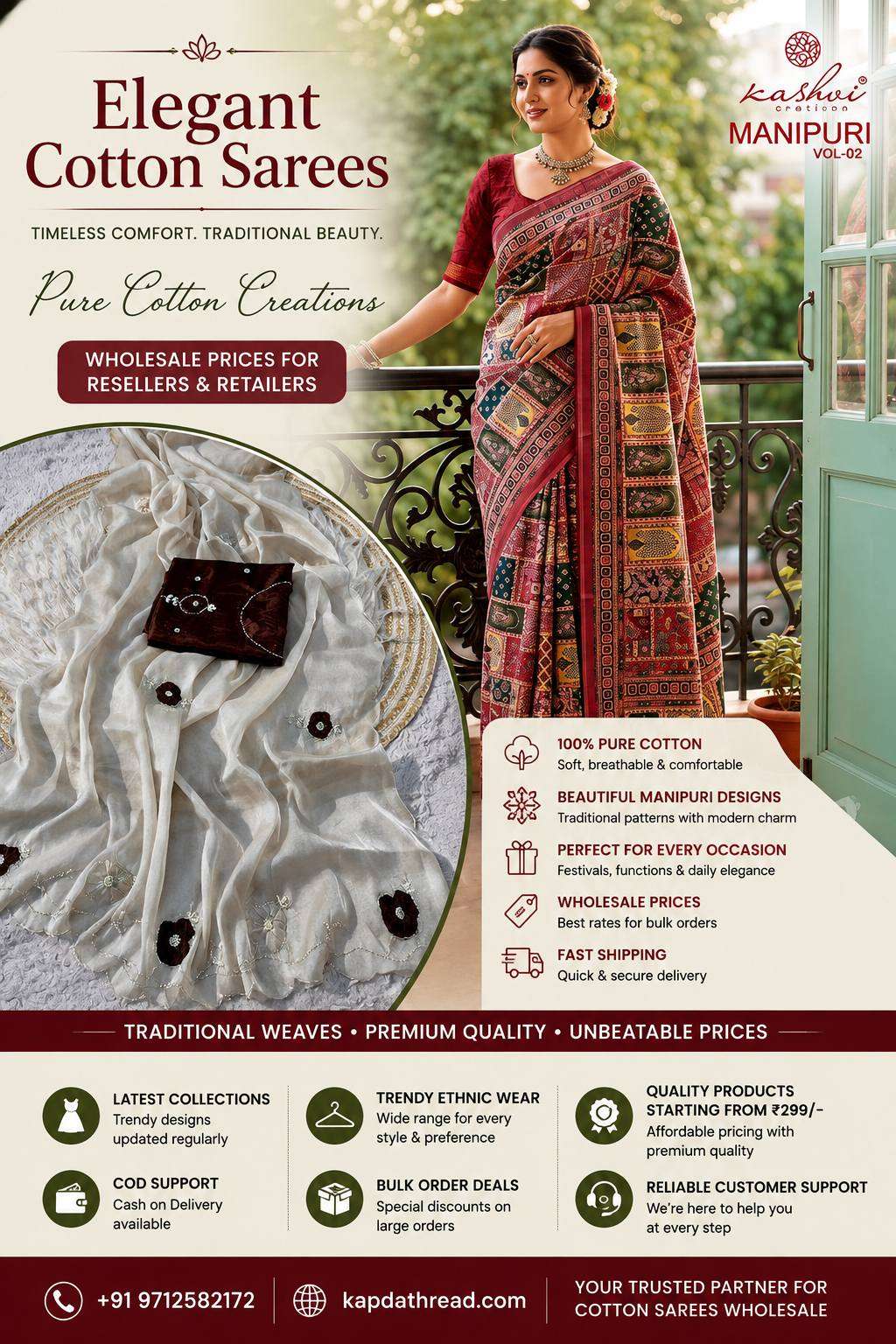
Cotton saree wholesale supplier
Cotton Saree Wholesale Supplier in India for Retailers and Resellers 2026
Cotton sarees continue to create dependable selling opportunities for clothing businesses that want wearable designs, repeat customer demand, and collections suitable for different regional markets. For retailers, the real advantage comes from selecting the right product mix, buying at a practical wholesale rate, and working with a sourcing platform that can support regular inventory requirements.
Introduction
Finding a reliable cotton saree wholesale supplier is an important purchasing decision for home-based sellers, shop owners, boutique owners, showroom owners, resellers, and wholesale buyers. The supplier you choose can directly influence your product variety, buying price, stock rotation, and ability to offer fresh saree collections to customers.
In 2026, saree buyers are not selecting products only for weddings or major festivals. Many customers purchase cotton sarees for office wear, family gatherings, religious occasions, daily styling, gifting, summer use, and elegant traditional dressing. This wider demand gives retailers an opportunity to maintain cotton saree stock across multiple price and design segments.
For wholesale buyers, however, purchasing random catalogues is not a sustainable stock strategy. A profitable cotton saree business requires access to cotton sarees wholesale, regular new designs, practical quantities, clear product details, and a retail price range that matches the target customer.
Surat remains a major textile sourcing destination in India. Buyers regularly connect the surat textile market, ring road, and sahara darwaza with saree wholesale, textile trading, fabric sourcing, and large manufacturing networks.
kapdathread.com helps clothing businesses explore wholesale saree collections for resale. Supported by Vastralife's wholesale and export experience since 2017 and textile industry expertise, the sourcing approach focuses on product variety, premium product quality, and the practical requirements of wholesale buyers.
Why Cotton Sarees Are a Strong Wholesale Category for Retailers
Cotton sarees can serve a broad customer market. Unlike highly occasion-specific products, many cotton styles can be sold during different months and for multiple wearing purposes.
A retailer buying from a cotton saree wholesale supplier can create separate collections for daily wear customers, office professionals, traditional saree buyers, boutique clients, and customers searching for lightweight ethnic wear.
Cotton Sarees Can Create Regular Customer Demand
Customers who enjoy wearing sarees regularly may purchase more than one design over time. This gives retailers an opportunity to build repeat sales by introducing fresh prints, colour combinations, borders, and regional-inspired collections.
A customer who purchases one comfortable saree and has a positive experience may return to explore another colour or design. For this reason, product quality and accurate product communication are important for repeat business.
Retailers should focus on building a collection that encourages customers to return rather than depending entirely on one-time festive sales.
Suitable for Multiple Retail Price Segments
Wholesale cotton sarees are available across different product specifications and pricing levels. This allows retailers to serve value-focused customers as well as buyers looking for more detailed and premium designs.
A home-based reseller may focus on affordable fast-moving products, while a boutique can select elegant sarees with distinctive prints, weaving effects, or refined borders.
The correct cotton saree wholesale price strategy depends on your landed cost and customer market. Retailers should never select inventory only because the buying rate appears low.
Useful for Online and Offline Saree Sellers
Cotton sarees can be promoted through physical stores, WhatsApp, Instagram, Facebook, websites, and reseller networks. Clear model images and product videos can help online customers understand the overall saree appearance.
Offline retailers can use fabric feel and physical presentation as part of the customer experience. Online sellers should compensate for the lack of physical touch by communicating product details accurately.
Both selling models can benefit from a regular wholesale cotton saree collection when stock is selected according to actual customer demand.
What Retailers Should Check Before Buying Cotton Sarees Wholesale
Wholesale buying should begin with product evaluation. A beautiful model image can attract attention, but retailers need enough product information to decide whether the saree fits their customer base.
Review the Stated Fabric Information
Cotton saree categories may include different fabric descriptions, blends, weaving styles, and product finishes. Retailers should review the stated catalogue details before confirming an order.
Do not assume that every product containing the word cotton has an identical feel, drape, or structure. Read the available product specifications and communicate the same information responsibly to your customers.
Accurate product details can help retailers build trust and reduce avoidable misunderstandings after delivery.
Check the Saree Design and Customer Use Case
Ask where your customers are likely to wear the saree. A subtle printed saree may appeal to office wear buyers, while a more decorative border can attract customers purchasing for family occasions.
Traditional motifs, floral prints, geometric patterns, elegant colour combinations, woven effects, and lightweight styles can serve different customer groups.
A smart cotton saree wholesale market buyer creates variety according to customer use rather than purchasing many nearly identical products.
Understand Blouse Piece Details Where Applicable
Blouse details can influence the final customer purchase decision. Retailers should check the available product information to understand whether a blouse piece is included and what details are stated for the catalogue.
Do not promise product components that have not been confirmed. Clear communication at the time of sale protects both the customer and the retailer.
Compare the Wholesale Rate With Retail Potential
The lowest wholesale rate does not automatically create the highest profit. Retailers should consider the expected selling price, product appeal, customer demand, and landed cost.
If a slightly higher-priced saree has stronger customer demand and better stock rotation, it may provide a healthier business opportunity than a cheaper product that remains unsold.
Wholesale purchasing should always connect product cost with realistic resale potential.
Choose Cotton Sarees According to Your Customer Segment
One of the biggest wholesale buying mistakes is purchasing according to the owner's personal taste. Retailers should use customer data, previous sales, and regular enquiries to decide which cotton sarees deserve inventory investment.
A well-planned cotton sarees wholesale order can contain multiple product segments without becoming a random collection.
Stock Planning for Home-Based Sellers
Home-based sellers often begin with a controlled budget. Instead of purchasing excessive quantities of one design type, they can select a practical mix of colours and styles according to applicable wholesale order conditions.
Use WhatsApp status, customer groups, and social media to test product response. Track confirmed orders rather than only reactions or enquiries.
When one type of cotton saree consistently sells, use the next buying cycle to source similar customer-friendly products.
Cotton Saree Buying for Shop Owners
Local shop owners should understand the regular buying habits of customers in their area. Some markets may have strong demand for daily wear sarees, while other locations may respond better to elegant cotton styles suitable for office or family use.
Maintain different retail price points. Customers should be able to explore products according to their budget without the store depending on one narrow range.
Shop owners should also review seasonal demand. Lightweight sarees may receive stronger interest during warmer months, while festive periods can create demand for richer colours and more detailed styling.
Wholesale Cotton Sarees for Boutique Owners
Boutiques often need products that feel selected rather than randomly stocked. A boutique owner can build a cotton saree range around a particular colour story, styling theme, or customer profile.
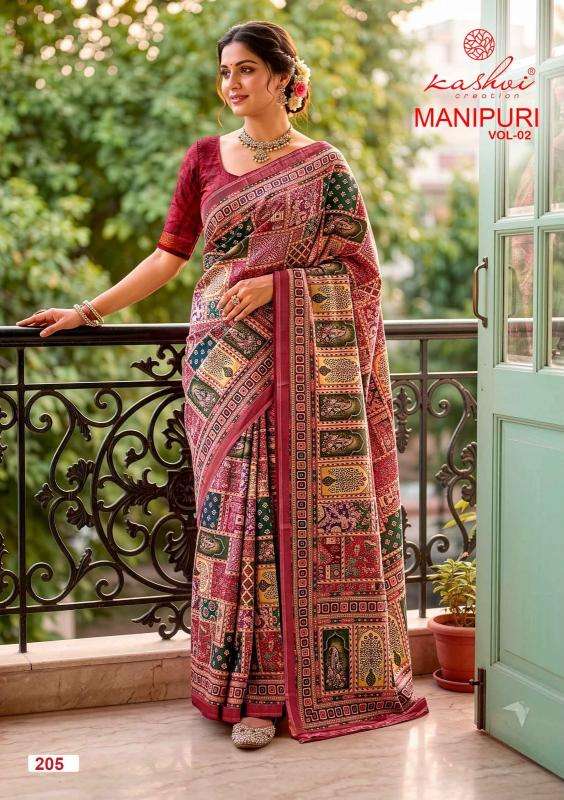
Product presentation is important. Show the pallu, border, print placement, and overall saree appearance clearly.
A boutique does not always need the largest quantity. It needs products that match its brand identity and can support a practical retail margin.
Inventory Strategy for Showroom Owners
Showroom owners can create separate cotton saree sections according to price, product style, or customer use. This can make product selection easier for both the sales team and the customer.
Track category-wise sales. If printed cotton sarees move faster than a particular premium segment, the next wholesale purchase should reflect actual stock movement.
Large inventory should be managed through data rather than repeated buying habits.
How to Build a Profitable Cotton Saree Wholesale Inventory
Profit begins before the saree reaches the customer. It starts with the wholesale buying decision. Retailers need the right product, right quantity, and a realistic resale strategy.
Divide Your Buying Budget Across Proven and New Collections
Use a larger portion of the wholesale budget for categories that already sell in your business. Keep a smaller amount available for testing new colours, prints, or saree styles.
This allows retailers to explore trends without placing the complete working capital into untested inventory.
When a new product receives confirmed customer orders, the retailer can consider increasing similar stock where availability permits.
Maintain Colour Variety Without Overbuying
Colour can strongly influence saree purchasing. Pastel shades, bright festive colours, earthy tones, classic reds, blues, greens, and elegant neutral combinations may attract different customers.
However, variety does not mean buying every available shade in excessive quantities. Review the colour preferences of your actual customers.
Use sales data to identify which colour families generate regular orders.
Keep Working Capital for Regular New Arrivals
Wholesale buyers should avoid spending the complete budget on one order. The textile market changes quickly, and fresh collections can arrive regularly.
Keeping part of the buying budget available gives retailers the flexibility to purchase a fast-moving new collection.
Buyers sourcing through kapdathread.com can review available saree categories and plan purchases according to current collection availability.
Calculate Landed Cost Before Fixing the Retail Price
Start with the wholesale product rate and add applicable inward shipping or transportation expenses. If multiple products arrive in one shipment, calculate an approximate shipping cost per piece.
Retailers should then consider relevant direct business expenses before deciding the final retail price.
A practical margin strategy protects the business from unplanned discounting and helps retailers understand the real profitability of each stock category.
Buy Cotton Sarees from Surat for Retail and Reselling
Surat's textile ecosystem gives wholesale buyers access to a wide variety of clothing categories and supplier networks. The surat textile market is widely connected with saree trading, textile sourcing, and large-scale distribution.
Areas around ring road and sahara darwaza are familiar to many textile buyers exploring Surat's wholesale market network. However, every retailer cannot travel to Surat regularly to review new collections.
Online wholesale sourcing can help buyers explore products remotely and communicate their requirements before placing an order.
Why Online Wholesale Sourcing Helps Resellers
Home-based sellers and retailers outside Surat can review product images and available catalogue details without making repeated market visits.
This can save travel time and allow buyers to focus more on customer communication and sales.
For retailers looking to source directly from the textile ecosystem, working with an experienced online wholesale platform can simplify product discovery.
Use Current Product Details Before Confirming Orders
Wholesale stock availability can change. Retailers should confirm the applicable product and order details before making a final purchasing decision.
Do not build customer promises around old catalogue availability without checking current stock conditions.
Fast communication and accurate order planning can improve the overall wholesale buying process.
Source According to Your Retail Business Model
A reseller, boutique, and large showroom may purchase from the same textile market but need completely different inventory.
The right cotton saree wholesale supplier relationship should support your business requirements rather than encouraging unnecessary stock buying.
Retailers can explore available collections on kapdathread.com and shortlist products according to customer demand, budget, and resale opportunity.
Prepare Cotton Saree Stock for India and Export Markets
Cotton sarees are not limited to domestic retail. Indian ethnic wear sellers serving customers outside India can also build cotton saree collections according to destination demand.
For this blog, three relevant target markets are USA, Nepal, and Malaysia. Each market can have different customer preferences, freight costs, and local retail price expectations.
Cotton Saree Wholesale Buying for USA Resellers
Resellers serving Indian communities in the USA should calculate the complete landed cost before placing a wholesale order. International freight can influence the final cost per saree.
Select products according to your local customer profile. Some customers may search for comfortable traditional sarees for community events, while others may prefer elegant cotton styles for regular ethnic wear.
Plan the export buying cycle early when products are required for specific cultural events.
Wholesale Saree Supply for Nepal Buyers
Nepal-based clothing businesses can select sarees according to their local customer demand and selling price segment. Retailers should review colours, designs, and previous sales before purchasing deeper quantities.
Transportation cost should be included in the landed cost calculation. This helps the reseller decide a realistic final selling price.
Clear product selection and early stock planning can support faster inventory rotation.
Cotton Saree Sourcing for Malaysia Retailers
Retailers serving Indian ethnic wear customers in Malaysia should study local demand before confirming large wholesale quantities.
A selected mix of traditional, printed, and elegant cotton sarees can provide customer choice. However, the exact product combination should be based on real enquiries and previous sales.
Vastralife's wholesale and export experience since 2017 supports the industry understanding behind sourcing requirements for domestic and international clothing buyers.
Plan Cotton Saree Stock According to Seasonal Customer Demand
A successful saree inventory should change according to customer demand rather than remaining identical throughout the year. Cotton sarees may have broad selling potential, but colour preferences, prints, and customer buying reasons can shift during different selling periods.
Retailers working with a cotton saree wholesale supplier should review stock movement regularly and use actual sales data before placing the next order.
Build Lightweight Saree Stock for Warmer Selling Periods
Customers looking for comfortable ethnic wear may show interest in lightweight saree collections during warmer months. Retailers can present suitable cotton styles for office wear, daily use, family visits, and traditional occasions according to the stated product specifications.
Instead of promoting every saree with the same message, explain the customer use case naturally. A practical product recommendation can make the buying decision easier.
Home-based sellers can also create separate WhatsApp updates for lightweight sarees and show different colour options to previous customers.
Add Rich Colours Before Festive Selling Periods
Festive customer preferences may create demand for brighter colours, attractive borders, traditional motifs, and visually stronger saree designs. Retailers can add selected festive cotton sarees without changing the complete store inventory.
Review previous Diwali, Navratri, and family-function sales before confirming deeper stock. If your customers regularly buy red, green, maroon, royal blue, or other rich colours during festive periods, use that sales history during wholesale purchasing.
Retailers should still maintain variety because every customer does not want the same festive colour.
Use Wedding and Gifting Demand to Create Separate Collections
Cotton sarees can also be selected for gifting according to the buyer's budget and product requirement. Retailers serving family shoppers can maintain multiple price segments for individual and quantity-based purchases.
When customers ask for several sarees, understand the budget per piece before showing products. This helps the sales team recommend a more relevant collection.
Wholesale buyers should purchase gifting stock only when their customer market supports the category. Quantity should always connect with realistic sales potential.
How Resellers Can Sell Wholesale Cotton Sarees Faster
Buying attractive sarees is only one part of the retail process. Products need consistent visibility, accurate information, and timely customer communication to generate orders.
Retailers sourcing cotton sarees wholesale can use simple digital selling methods to reach existing and new customers.
Show the Complete Saree in Product Content
Customers may want to understand the overall design before purchasing. Use available model images and product videos to show the saree appearance clearly.
Where product content is available, highlight the pallu, border, print, and colour. Avoid excessive image editing that changes the actual product appearance.
Clear visual presentation can help online resellers communicate more confidently.
Use WhatsApp Status for Regular Saree Updates
WhatsApp status can help home-based sellers and shop owners display regular new arrivals without repeatedly messaging every customer.
Post selected sarees throughout the day or week rather than uploading a very large number of designs at once. Give each product enough visibility.
Include simple buying details and ask interested customers to contact you for current availability. Stock conditions can change, so availability should be confirmed before making a final customer commitment.
Create Customer Lists According to Saree Preferences
Not every saree customer has the same buying preference. Some customers may regularly purchase printed sarees, while others prefer traditional styles or elegant office wear.
Retailers can maintain simple customer preference records. When a relevant new collection arrives, show it to the most suitable customers first.
This targeted selling process can generate better conversations than sending every catalogue to every buyer.
Use Repeat Customer Demand to Plan Reorders
When customers repeatedly ask for a particular saree style, colour family, or price segment, record that information. These requests can guide the next wholesale order.
A retailer should not depend entirely on personal judgement when repeat sales data is already available.
Confirmed orders and repeat customer requests are valuable signals for inventory planning.
Calculate Cotton Saree Retail Margin Before Offering Discounts
Wholesale buying should create room for sustainable retail profit. Retailers need to understand the complete product cost before deciding regular prices, promotional offers, or customer discounts.
Start With the Complete Landed Cost
Calculate the wholesale buying rate and add relevant inward transportation expenses. If one shipment contains multiple products, divide the applicable freight cost to estimate an approximate cost per item.
Add other direct product-related expenses according to your business model. This gives the retailer a more realistic understanding of inventory investment.
For international buyers, export freight can have a significant effect on the landed cost and should be calculated before setting the final selling price.
Set the Selling Price According to Your Customer Market
A saree can have different retail pricing in different markets. Store rent, delivery expenses, customer expectations, and local competition may influence the selling strategy.
Do not copy another retailer's price without understanding their buying cost and business structure.
Calculate the margin your business requires and compare it with a realistic customer selling value.
Use Calculated Offers Instead of Random Discounts
Customers may ask for a lower price, especially when buying multiple products. Retailers should know the minimum practical selling value before negotiating.
Bulk retail orders may justify a different pricing approach when the total margin remains healthy. However, every discount should be based on calculation.
A strong cotton saree wholesale price strategy protects both stock rotation and business profitability.
Internal Linking Section for Wholesale Saree Buyers
Retailers building a broader saree inventory can explore a saree manufacturer in Surat category to review connected sourcing opportunities for their resale business.
Clothing sellers serving customers across multiple ethnic wear categories may also explore wholesale Pakistani suits online when actual customer demand supports adding another product segment.
Internal product discovery should always support a genuine buying requirement. Retailers do not need to purchase every available category simply because it is visible online.
Review current customer enquiries, existing inventory, and working capital before expanding into a new clothing segment. A focused product mix can be more profitable than an oversized collection of unrelated products.
Avoid Common Cotton Saree Wholesale Buying Mistakes
Wholesale buying mistakes can block working capital and reduce stock rotation. Retailers should remain disciplined even when a new catalogue appears attractive.
Do Not Buy Only Because the Wholesale Price Is Low
A low buying rate is useful only when customers want the product. Before confirming quantity, ask whether the saree fits your existing customer base.
Compare the design, expected retail value, and selling potential. A slightly higher buying rate may be more practical when the product has stronger demand.
Do Not Purchase Too Many Similar Designs
Several catalogues may contain similar floral prints, colour combinations, or traditional patterns. Purchasing too many similar sarees can make the collection feel repetitive.
Review existing stock before confirming the next wholesale order. Use the buying budget to fill genuine product gaps.
Customer choice should come from meaningful variety rather than only a large number of product codes.
Do Not Ignore Slow-Moving Stock
Review inventory regularly. If a saree remains unsold, check whether the product has received enough customer visibility.
Create a fresh video, show the product to a more relevant customer group, or review the retail price. Where necessary, introduce a calculated promotional offer.
Do not wait for months before identifying weak stock performance.
Do Not Promise Availability Without Confirmation
Wholesale product availability can change. Online resellers should confirm current stock before making a final promise to the customer.
Fast-selling collections may not remain available indefinitely. Timely order confirmation can improve the purchasing process.
Clear communication helps build a more professional resale business.
Why Choose kapdathread.com for Cotton Saree Wholesale Sourcing
Wholesale buyers need access to current collections, practical product information, and a sourcing process that understands retail and reselling requirements. kapdathread.com helps buyers explore available saree collections for different customer segments.
The platform is supported by Vastralife's wholesale and export experience since 2017 and textile industry expertise developed through years of working with clothing categories and wholesale buyers.
Wholesale and Export Experience Since 2017
A home-based reseller and a large showroom do not have identical buying requirements. Similarly, an India-based retailer and an export buyer may calculate stock investment differently.
Industry experience helps in understanding these different sourcing situations. Vastralife's wholesale and export experience since 2017 supports the business approach behind serving domestic and international clothing buyers.
Wholesale buyers can review available saree collections through kapdathread.com and connect for applicable product and order details.
Premium Product Quality Focus
Retailers build their reputation through the products they sell. Customer expectations should match the quality and product details communicated during the order.
The sourcing approach focuses on premium product quality and clear product selection for wholesale buyers.
Retailers should always review the stated product details and select collections according to their own customer expectations.
Regular New Collections for Resellers and Retailers
Repeat customers may want to see new designs regularly. Maintaining fresh product options can give resellers more reasons to reconnect with previous buyers.
kapdathread.com allows clothing sellers to explore available wholesale collections and shortlist products according to current business demand.
Regular new arrivals can support content creation, customer communication, and planned stock rotation.
Customer FAQs
1. Where can I buy cotton sarees wholesale for resale?
Retailers and resellers can explore available wholesale saree collections through kapdathread.com and connect for current product availability and applicable wholesale order details.
2. How do I choose a cotton saree wholesale supplier?
Review product variety, stated product details, wholesale pricing, communication, and suitability for your customer market. Select a supplier or sourcing platform that supports your actual resale requirements.
3. Can home-based sellers buy wholesale cotton sarees?
Yes. Home-based sellers can purchase according to applicable minimum order and product conditions. Controlled inventory buying can help reduce unnecessary stock investment.
4. What cotton sarees sell well for retailers?
The answer depends on the customer market. Printed sarees, lightweight styles, office wear collections, traditional designs, and selected festive cotton sarees can serve different customer segments.
5. Can I order cotton sarees wholesale online from Surat?
Yes. Online wholesale sourcing allows buyers outside Surat to review available products remotely. Retailers should confirm current stock and applicable order terms before finalising a purchase.
6. Does kapdathread.com supply wholesale sarees for export buyers?
Wholesale and export requirements can be discussed according to the destination, product selection, order conditions, and shipping possibilities. International buyers should calculate freight and landed cost before purchasing.
7. How should I price wholesale cotton sarees for retail profit?
Calculate the product buying rate, inward transportation, and relevant direct expenses. Use the complete landed cost to decide a realistic retail selling price and required margin.
8. How can I reduce unsold cotton saree stock?
Buy according to customer demand, control quantities, maintain product variety, promote stock regularly, and use confirmed sales data when planning the next wholesale purchase.
Buy Cotton Sarees Wholesale for Your Retail and Reselling Business
A profitable saree business needs more than a large product catalogue. Retailers need the right designs, practical wholesale quantities, realistic margin calculations, and collections selected according to actual customer demand.
Whether you are a home-based seller, shop owner, boutique owner, showroom owner, reseller, or wholesale buyer, kapdathread.com can help you explore available wholesale clothing collections for your business.
Discover Latest Collections, competitive Wholesale Pricing, and Trendy Ethnic Wear for different retail markets. Buyers can explore options with Fast Shipping, COD Support, and attractive Bulk Order Deals according to applicable wholesale order conditions.
Selected collections include Quality Products Starting From ₹299, giving clothing sellers opportunities to source products across different customer price segments.
With Vastralife's wholesale and export experience since 2017, textile industry expertise, and a focus on premium product quality, the sourcing approach is designed for growing clothing businesses seeking regular inventory opportunities.
Contact Us: +91 9712582172
Website: kapdathread.com
Explore available collections, calculate your retail margin, select stock according to genuine customer demand, and build a stronger cotton saree resale business in 2026 with disciplined wholesale buying.