
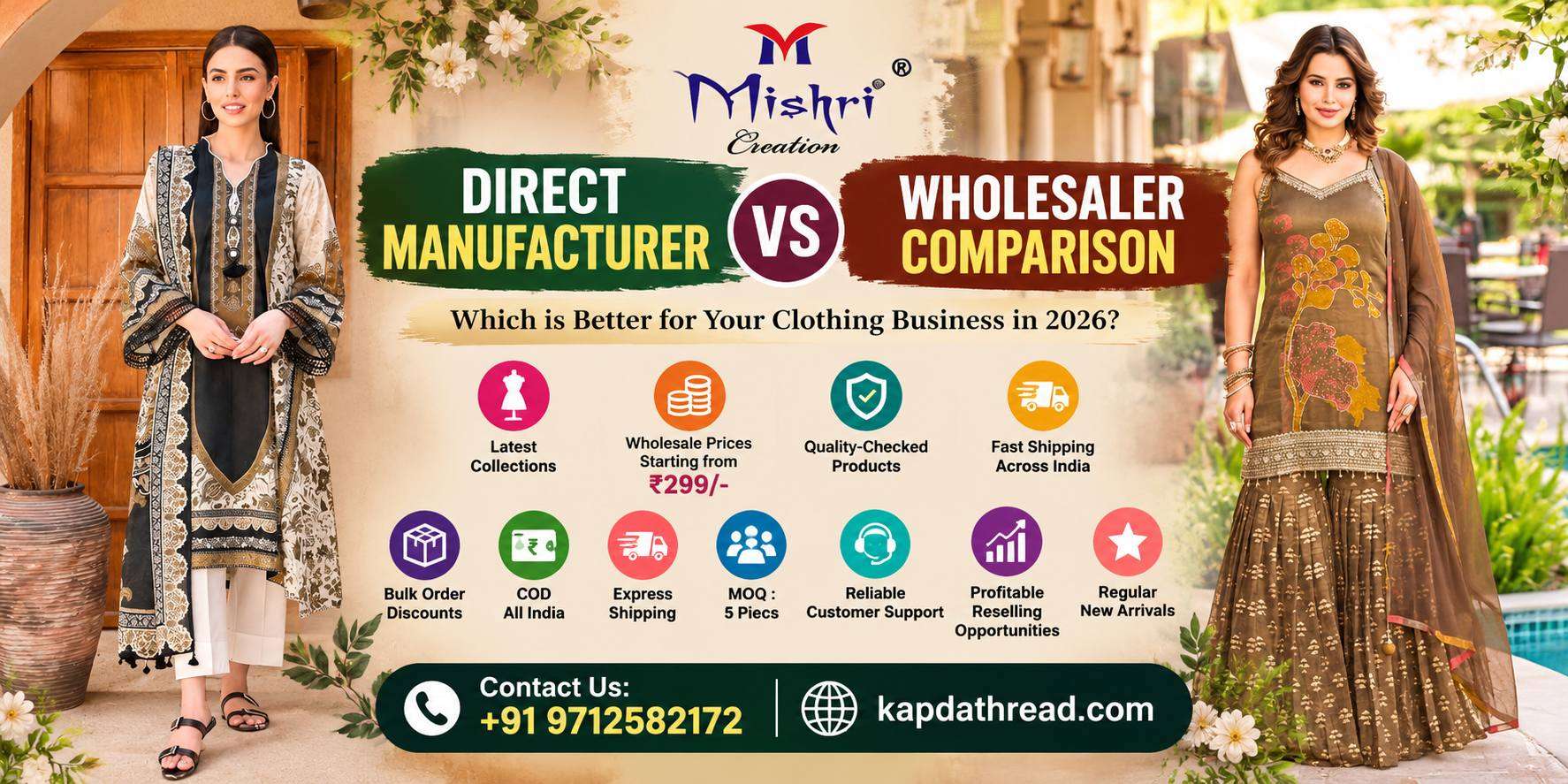
direct manufacturer vs wholesaler comparison
Direct Manufacturer vs Wholesaler Comparison: Best Wholesale Clothing Supplier for Bulk Buyers in 2026
Choosing the right clothing supplier can make a major difference to your purchasing cost, available designs, stock rotation and resale profit. Whether you run a boutique, operate a clothing showroom, sell through WhatsApp or manage a growing online fashion business, deciding between a direct manufacturer and a wholesale supplier is an important buying decision. Both sourcing options offer advantages, but the better choice depends on your order quantity, preferred collections, delivery requirements and available investment.
Introduction
For clothing retailers and resellers planning their next bulk purchase, the direct manufacturer vs wholesaler comparison becomes particularly important when evaluating wholesale prices, product variety, minimum order quantities and repeat-order convenience.
In 2026, clothing businesses need suppliers who can provide attractive ethnic wear collections without forcing buyers to invest heavily in slow-moving stock. Customers regularly look for fresh salwar kameez designs, Pakistani suits, dress materials, kurtis and coordinated ethnic outfits. Retailers therefore need sourcing partners capable of supplying fashionable merchandise at competitive buying prices.
Surat remains an important destination for buyers searching for wholesale clothing suppliers in India. Its established textile trading network connects manufacturers, fabric processors, garment suppliers and wholesale distributors with buyers across domestic and international markets.
Buyers exploring the surat textile market, particularly the Ring Road and Sahara Darwaza textile trading areas, can compare multiple product categories, catalogue options and supplier arrangements before committing to larger orders.
Through kapdathread.com, boutique owners, showroom operators, home-based sellers and wholesale buyers can explore clothing collections and evaluate sourcing options without depending entirely on physical market visits.
Direct Manufacturer vs Wholesaler: Which Supplier Should You Choose?
The best supplier depends on what your business needs to purchase. A direct manufacturer may be suitable when you want large quantities of one design, customised production or repeated manufacturing specifications. A wholesaler may be more practical when you want several brands, different designs, smaller buying quantities and ready-stock availability.
For example, a showroom purchasing hundreds of pieces in one pattern may benefit from negotiating a factory production rate. However, a boutique purchasing several styles of Pakistani suits, printed dress materials and festive salwar sets may find a multi-brand wholesale supplier more convenient.
Before placing a bulk clothing order, compare the final landed cost rather than considering the quoted garment price alone. Transportation, packaging, quality inspection, minimum order quantities and unsold inventory all influence actual profitability.
Buying Directly from a Clothing Manufacturer
A direct manufacturer produces garments or coordinates production through its own manufacturing operations. Buyers may purchase finished garments, request customised specifications or arrange repeat production for selected styles.
Direct factory sourcing can be suitable for established businesses seeking consistent designs, controlled production requirements and larger purchase volumes.
When contacting a clothing manufacturer in Surat, ask whether the quoted price includes stitching, embroidery, fabric processing, packaging, labelling and applicable taxes. These details help buyers compare factory quotations accurately.
Some manufacturers specialise in particular products, such as cotton dress materials, embroidered suits, ready-made kurtis or designer salwar kameez. This specialisation may support consistent production quality, but it can limit the variety available from a single source.
Purchasing from a Wholesale Clothing Supplier
A wholesale supplier purchases or sources garments from manufacturing units and established brands before supplying retailers, boutiques, online sellers and distributors.
The major attraction is convenience. Instead of contacting multiple factories separately, buyers can compare several collections through one purchasing channel.
A wholesale clothing supplier in Surat may offer cotton suits, Pakistani-style dress materials, embroidered salwar kameez, festive outfits and everyday ethnic wear under one sourcing arrangement.
This makes wholesale buying especially useful for resellers who need new arrivals frequently but cannot commit to large quantities of every design.
For buyers seeking wholesale dress materials online, comparing ready-stock catalogues can also reduce the time spent travelling between different manufacturers and textile markets.
Compare Wholesale Prices Before Placing Bulk Orders
Price is often the first consideration when purchasing garments for resale. However, the lowest quoted rate does not automatically create the highest profit.
A manufacturer may offer a lower per-piece price for a large production quantity, while a wholesaler may offer a slightly higher unit rate with greater design flexibility and a smaller minimum purchase.
Suppose a manufacturer quotes ₹450 per piece for a minimum order of 200 pieces. The merchandise investment would be ₹90,000 before additional charges. A wholesaler quoting ₹490 per piece for 30 pieces would require ₹14,700 for that particular purchase. These are illustrative figures, not current supplier quotations.
The manufacturer offers a lower unit cost in this example, but the wholesaler requires substantially less starting capital. For a new reseller, preserving cash for marketing, customer acquisition and fresh stock can sometimes be more valuable than obtaining the lowest unit price.
Factory Price vs Wholesale Price
When comparing manufacturer price vs wholesale price, request the complete order quotation. Confirm whether the rate changes according to quantity, colour assortment, fabric quality or design complexity.
For instance, a plain printed cotton suit may have a different manufacturing cost from an embroidered Pakistani suit featuring decorative neck work, detailed borders and a matching dupatta.
Similarly, a premium festive outfit may require additional finishing and quality checks. Comparing these products solely by their listed prices can create unrealistic expectations.
Buyers should evaluate fabric quality, colour consistency, garment finishing, catalogue accuracy and delivery reliability alongside price.
Minimum Order Quantity and Working Capital
Minimum order quantity, commonly called MOQ, determines how many pieces a buyer must purchase before an order can be accepted.
Manufacturing orders often depend on production batch sizes. Smaller production runs may cost more because cutting, printing, stitching and finishing expenses must be distributed across fewer pieces.
Wholesale suppliers may offer more flexible purchase quantities for selected ready-stock collections. This can help home-based resellers test customer demand before purchasing additional stock.
For buyers looking for low MOQ wholesale clothing, the right strategy is to confirm the MOQ for each catalogue rather than assuming that every design has identical purchasing conditions.
Before ordering, ask whether the MOQ applies to one design, a complete catalogue, mixed colours or an assortment of different products.
Best Wholesale Clothing Collections for Resellers and Boutique Owners
For retailers comparing direct manufacturing with wholesale sourcing, the next step is choosing products that match their customers' purchasing preferences.
Successful stock selection requires a balance of everyday essentials, attractive mid-range designs and premium occasion wear. Buying only expensive festive outfits can restrict regular sales, while stocking only basic products may reduce the average order value.
A balanced wholesale assortment gives customers multiple price options and creates more opportunities for repeat purchases.
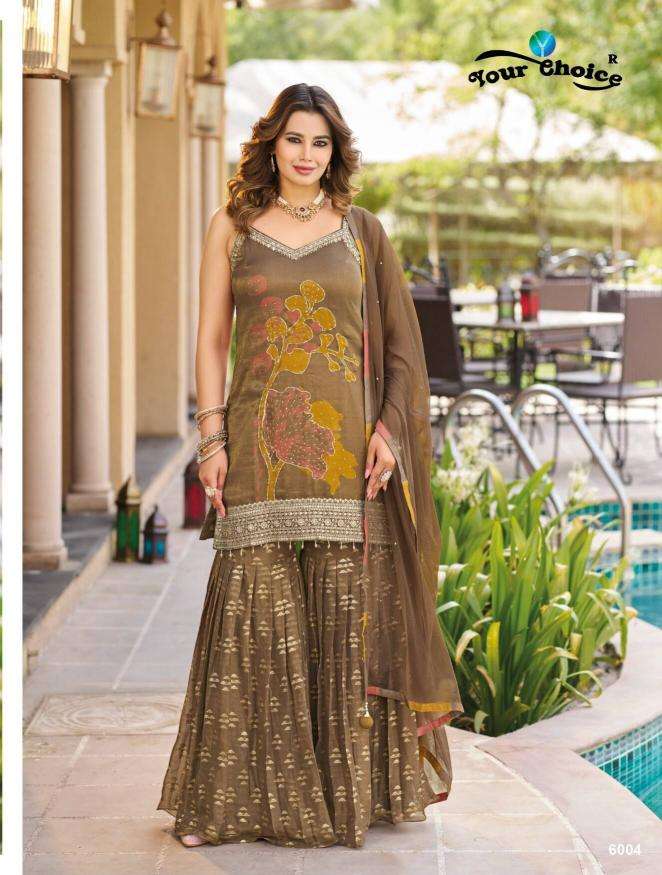
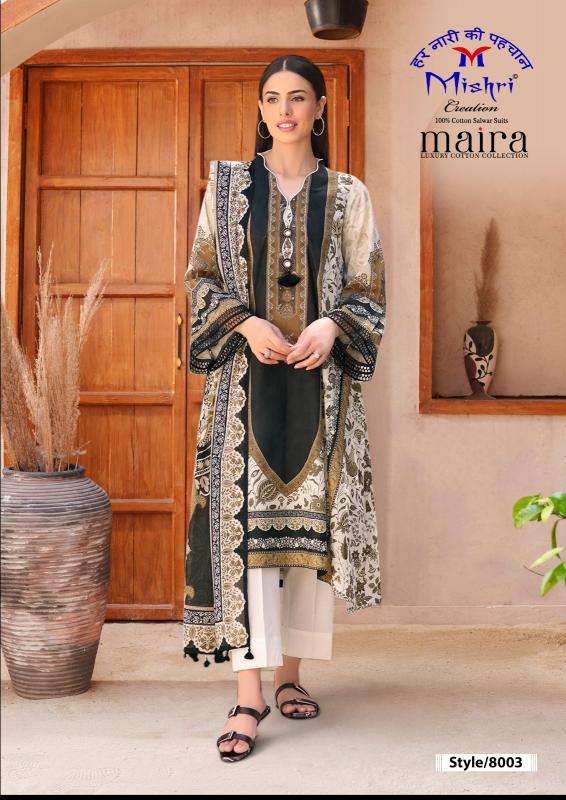
Pakistani Suits Wholesale Collection
Pakistani suits wholesale collections are worth evaluating for boutiques and online sellers specialising in elegant ethnic fashion.
These collections commonly feature straight-cut silhouettes, decorative necklines, printed dupattas, embroidered borders and coordinated bottom fabrics. Depending on the catalogue, designs may include cotton, synthetic blends, lawn-inspired fabrics or festive materials.
Buyers planning to purchase Pakistani-style salwar kameez should compare fabric descriptions, measurements, embroidery details and available colour combinations.
For retailers selling through Instagram, Facebook and WhatsApp, clear product photographs and accurate fabric information can help customers make confident purchasing decisions.
Dress Materials Wholesale for Everyday Retail Sales
Unstitched dress materials allow customers to customise garments according to their preferred fitting and stitching style.
This makes dress materials wholesale a useful sourcing category for retailers serving customers with different body measurements and style preferences.
Printed cotton dress materials, embroidered three-piece sets, office-wear fabrics and occasion-ready collections can serve different customer budgets.
When purchasing dress materials in bulk, confirm the fabric length, top material, bottom material, dupatta specifications and whether the set is completely unstitched or partially stitched.
Retailers should also inspect catalogue images carefully and request actual product details whenever a fabric description is unclear.
Ready-Made Salwar Kameez and Kurti Sets
Ready-made ethnic wear is suitable for buyers who prefer garments that can be sold without additional tailoring.
Popular categories to compare include straight kurti sets, kurti-pant combinations, printed salwar suits, embroidered three-piece outfits and coordinated everyday wear.
For ready-made garments, size availability becomes an important purchasing factor. Retailers should confirm chest measurements, garment length, sleeve length, bottom fitting and available plus-size options.
When selecting salwar kameez wholesale suppliers, buyers should also consider how quickly popular sizes can be replenished after initial sales.
Wholesale Supplier Selection for Different Business Sizes
Not every clothing business should follow the same purchasing model. A new home-based seller has different financial requirements from an established showroom purchasing stock for several branches.
Understanding these differences helps buyers choose between factory-direct sourcing and wholesale distribution without unnecessarily increasing their inventory risk.
Home-Based Resellers and WhatsApp Sellers
Home-based sellers generally benefit from accessible wholesale pricing, smaller purchase quantities and frequent catalogue updates.
Instead of investing heavily in one design, they can test customer interest through selected collections and reorder styles that generate genuine sales.
When placing a wholesale clothing order online, resellers should request product photographs, fabric specifications, purchase conditions and estimated dispatch details.
A supplier offering regular new arrivals can help sellers maintain active product catalogues without depending on a single seasonal collection.
Boutique Owners and Fashion Retailers
Boutique owners often need a combination of distinctive designs, premium finishing and manageable purchasing quantities.
A direct manufacturer may be appropriate when the boutique wants exclusive designs or private-label production. However, a multi-brand wholesaler can be more convenient when the business needs several fashion categories under one purchasing arrangement.
For boutiques planning seasonal promotions, purchasing a carefully selected mix of embroidered suits, printed dress materials and festive outfits can create a more flexible product range.
Buyers can review available collections through kapdathread.com and shortlist designs based on their customer preferences, budget and expected resale price.
Showroom Owners and High-Volume Wholesale Buyers
Established showroom owners may require consistent stock replenishment, larger quantities and reliable product availability.
These buyers should compare direct manufacturing quotations with wholesale catalogue rates for each product category.
For standardised products sold in large volumes, factory-direct production may be economical. For changing fashion collections, ready-stock wholesale sourcing may help maintain greater variety.
Many established retailers benefit from using both purchasing methods instead of relying entirely on one supplier type.
A practical purchasing arrangement is to source repeat-selling basics through suitable manufacturing partners while purchasing new fashion designs through reliable wholesale channels.
How to Choose a Reliable Clothing Supplier in Surat
Finding the right supplier is not simply about locating the lowest price. For boutique owners, resellers and wholesale buyers, supplier reliability directly affects product quality, customer satisfaction and repeat business. Whether you purchase from a direct manufacturer or a wholesale distributor, the most important consideration is whether the supplier can consistently meet your business requirements.
Buyers searching for wholesale clothing suppliers in Surat should compare product availability, catalogue variety, minimum order quantities, payment conditions and dispatch commitments before placing their orders.
The surat textile market has developed a strong reputation for textile trading, garment manufacturing and wholesale distribution. Commercial areas around Ring Road and Sahara Darwaza provide access to textile traders, manufacturers and suppliers dealing in numerous ethnic wear categories.
However, visiting a large textile market does not automatically guarantee the best purchasing deal. Buyers should verify the supplier's business details, product specifications and order conditions before making payments.
Check Product Quality Before Confirming Bulk Orders
Premium product quality is essential when purchasing garments for resale. Customers expect the delivered product to match the catalogue images, fabric description and advertised design.
Before confirming a bulk clothing order, evaluate the following factors:
- Fabric composition, thickness and overall finishing.
- Embroidery quality, stitching consistency and decorative details.
- Colour accuracy and available design variations.
- Garment measurements and size availability.
- Dupatta, bottom fabric and other included components.
- Packaging standards and dispatch arrangements.
- Product availability and replacement conditions for verified defects.
These checks are particularly important when purchasing premium Pakistani suits, designer salwar kameez and embroidered dress materials.
When comparing a manufacturer with a wholesaler, ask both suppliers how quality inspections are conducted. A lower purchase price may not be beneficial if the products require additional corrections or create avoidable customer complaints.
Compare Ready Stock and Manufacturing Lead Times
Delivery speed can influence how quickly retailers convert enquiries into sales. A wholesale supplier offering ready-stock collections may dispatch confirmed orders sooner than a manufacturer producing garments against a new production requirement.
Manufacturing lead times depend on fabric availability, order quantity, stitching schedules, printing requirements and finishing processes. Ready-stock dispatch times depend on payment confirmation, stock availability and shipping arrangements.
Retailers planning festive promotions should confirm the expected delivery date before advertising products to customers.
For buyers searching for ready stock wholesale clothing, requesting current availability is more useful than relying only on an older catalogue.
Through kapdathread.com, buyers can explore available product categories and enquire about collection-specific purchasing conditions before proceeding with their orders.
Direct Manufacturer vs Wholesaler Comparison for Bulk Purchasing in 2026
When purchasing clothing in bulk, buyers should evaluate the complete sourcing arrangement rather than concentrating exclusively on the advertised wholesale rate.
The following comparison helps retailers understand which purchasing model may be more suitable for their business.
| Buying Factor | Direct Manufacturer | Wholesale Supplier |
|---|---|---|
| Purchase Price | Potentially lower for larger production quantities | Competitive rates depending on brand and order quantity |
| Minimum Order Quantity | Often determined by production batch requirements | May offer smaller quantities for selected catalogues |
| Product Variety | Usually concentrated on specific manufacturing categories | Can provide collections from multiple manufacturers and brands |
| Ready Stock | Depends on existing factory inventory | Often available for selected wholesale collections |
| Custom Manufacturing | May be available for qualifying orders | Usually depends on manufacturing partners |
| New Design Selection | Depends on production and development schedules | Can include regularly updated multi-brand catalogues |
| Best Suited For | Large buyers requiring consistent or customised production | Boutiques, resellers, retailers and mixed-category buyers |
| Inventory Flexibility | Can require larger commitments for individual designs | May allow smaller purchases across multiple collections |
This direct manufacturer vs wholesaler comparison shows why the best buying option depends on order volume, product category and available working capital.
For example, a retailer purchasing a large quantity of one cotton kurti design may benefit from direct production. A boutique requiring several embroidered suits, Pakistani dress materials and festive outfits may prefer a wholesale supplier offering multiple catalogues.
The right approach is to calculate the total purchasing investment, expected resale margin and estimated inventory turnover before selecting a supplier.
Internal Linking: Explore Related Wholesale Clothing Collections
Buyers interested in premium ethnic fashion can explore wholesale Pakistani suits online to compare fashionable designs, embroidered outfits and coordinated collections suitable for boutique and showroom sales.
Retailers searching for unstitched suits, printed fabrics and everyday ethnic wear can also browse dress materials wholesale collections to identify suitable options for their customer base.
Comparing these product categories helps retailers decide whether to concentrate on one clothing segment or maintain a broader assortment of wholesale ethnic wear.
For businesses purchasing from Surat, checking several product categories through one sourcing platform can make catalogue selection and order planning more convenient.
How to Calculate Profit Margins on Wholesale Clothing Orders
Profit calculation is an essential step before placing a wholesale order. Buyers should consider the complete landed cost, including the purchase price, transportation, packaging and other applicable expenses.
For example, suppose a reseller purchases a salwar suit at a wholesale price of ₹500. Additional transportation and packaging expenses amount to ₹30 per piece, bringing the total landed cost to ₹530.
If the reseller sells the product for ₹799, the gross profit before marketing, platform charges, returns and other business expenses would be ₹269.
The calculation would be:
Selling Price – Total Landed Cost = Gross Profit
₹799 – ₹530 = ₹269
This represents an illustrative gross margin of approximately 33.7% of the selling price. Actual results will vary according to purchasing costs, customer demand and operating expenses.
Why the Lowest Wholesale Price Is Not Always the Best Deal
Imagine purchasing 100 pieces of a design that costs ₹400 per piece but sells slowly. Although the purchase rate appears attractive, the retailer may need several months to recover the investment.
Now consider purchasing 30 pieces of a different design at ₹450 per piece that matches current customer preferences. If those pieces sell quickly, the retailer can reinvest the money in fresh collections.
This is why wholesale clothing for resellers should be selected according to expected demand, resale potential and stock rotation rather than unit price alone.
For home-based sellers, maintaining manageable stock levels can also reduce the financial pressure associated with unsold inventory.
How to Negotiate Better Wholesale Pricing
Buyers placing repeat orders can discuss quantity-based pricing, available catalogue combinations and bulk purchase conditions with their suppliers.
When requesting wholesale clothing prices in Surat, share your expected purchase quantity, preferred product category and delivery location.
For larger purchases, request a written quotation that clearly identifies the product, quantity, applicable taxes, transportation charges and payment conditions.
Professional communication helps both manufacturers and wholesalers understand the buyer's requirements and offer suitable purchasing options.
Wholesale Clothing Export Opportunities for International Buyers
Indian ethnic wear also serves customers outside India. Retailers purchasing for international markets often require fashionable collections, reliable product descriptions and appropriate export documentation.
For buyers operating in Malaysia, Nepal and Australia, sourcing from Indian wholesale clothing suppliers can provide access to Pakistani-style suits, dress materials, embroidered salwar kameez and festive ethnic outfits.
However, export purchasing involves additional considerations, including customs regulations, international freight, applicable duties and destination-specific import requirements.
Wholesale Clothing Export to Malaysia
Buyers in Malaysia may consider Indian ethnic wear collections for boutiques serving customers interested in traditional and contemporary South Asian fashion.
Popular sourcing categories to evaluate include embroidered salwar suits, cotton dress materials, modest ethnic outfits and occasion-wear collections.
Before placing an international bulk order, Malaysian buyers should confirm shipping methods, import documentation and the total landed cost in their destination market.
Wholesale Ethnic Wear for Nepal Retailers
Nepal offers opportunities for retailers dealing in Indian ethnic wear, particularly festive suits, kurti sets and dress materials.
Wholesale buyers should compare purchasing prices, transportation arrangements, customs duties and local selling prices before confirming their stock requirements.
Retailers planning seasonal collections should also allow sufficient time for cross-border transportation and customs clearance.
Indian Clothing Wholesale for Australia
Retailers serving South Asian communities in Australia may source Indian ethnic clothing for festive occasions, family celebrations and everyday traditional wear.
For international purchasing, product measurements, fabric composition, packaging quality and accurate catalogue descriptions are particularly important.
Export buyers should also confirm the supplier's ability to provide the necessary commercial invoices and other shipping documentation.
Why Experience Matters When Choosing a Wholesale Supplier
Supplier experience can help buyers navigate the complexities of textile sourcing, product selection and bulk purchasing.
Vastralife has been involved in wholesale and export activities since 2017, developing industry experience across women's ethnic wear, clothing sourcing and wholesale distribution.
This background reflects the importance of understanding product quality, manufacturing practices, catalogue selection and the purchasing requirements of retailers operating at different business levels.
Experienced sourcing businesses understand that a home-based reseller purchasing a small collection has different needs from a showroom owner purchasing large quantities.
They also recognise the importance of providing clear product information, communicating stock availability and maintaining professional order processes.
Buyers exploring premium quality wholesale clothing should always evaluate the actual products and purchasing conditions rather than relying entirely on a supplier's years of experience.
For boutique owners and wholesale buyers, the ideal sourcing partner combines industry knowledge with transparent pricing, practical order quantities and dependable customer communication.
How to Place a Wholesale Clothing Order Online
Purchasing wholesale garments online becomes easier when buyers follow a structured ordering process.
Step 1: Select Your Preferred Clothing Category
Begin by identifying the products you want to sell. Popular categories include Pakistani suits, cotton dress materials, embroidered salwar kameez, ready-made kurti sets and festive ethnic wear.
Choose products according to your customers' budget, preferred styles and purchasing habits.
Step 2: Shortlist Suitable Wholesale Catalogues
Compare available designs, fabric specifications, product images and price ranges.
For businesses seeking wholesale salwar kameez online, check whether the selected catalogue includes unstitched materials, semi-stitched outfits or ready-made garments.
Step 3: Confirm MOQ and Stock Availability
Before confirming your purchase, enquire about the minimum order quantity, available colours, product sizes and current stock position.
Do not assume that every collection has the same MOQ or that older catalogue designs remain available.
Step 4: Request the Final Order Amount
Ask for a complete quotation including the product price, applicable taxes and shipping expenses.
For international purchases, confirm whether export documentation, freight charges and destination customs expenses are included or charged separately.
Step 5: Confirm Payment and Dispatch Conditions
Review the supplier's payment terms, order confirmation process and estimated dispatch schedule.
If COD support is available for eligible domestic orders, confirm the advance payment requirement and other conditions before placing the order.
Step 6: Track Sales and Plan Repeat Purchases
After receiving your collection, monitor which designs generate enquiries and actual sales.
Use this information to plan repeat purchases and reduce unnecessary investment in slow-moving products.
Retailers who maintain accurate sales records can make more informed decisions when purchasing their next wholesale collection.
Customer FAQs About Direct Manufacturers and Wholesalers
1. Is buying directly from a manufacturer cheaper than buying from a wholesaler?
Direct manufacturing can offer a lower per-piece price for larger production quantities. However, wholesalers may provide better purchasing flexibility for smaller orders and mixed collections. Buyers should compare total landed costs and minimum order requirements before deciding.
2. Which is better for a new clothing reseller: manufacturer or wholesaler?
A wholesaler may be more convenient for new resellers because selected ready-stock collections can offer smaller purchasing quantities and access to multiple designs. Direct manufacturing may become attractive when the business develops predictable demand for larger quantities.
3. Where can I buy wholesale Pakistani suits in Surat?
Buyers can explore Surat-based wholesale clothing platforms, established textile suppliers and garment trading businesses. Online sourcing through kapdathread.com provides another way to review available clothing collections and enquire about purchasing requirements.
4. What is the minimum order quantity for wholesale clothing?
MOQ varies according to the supplier, brand, catalogue and product category. Some wholesale collections allow relatively small purchases, while manufacturing orders may require larger quantities. Always confirm the exact MOQ before making payment.
5. Can I purchase wholesale clothing for my home-based business?
Yes. Home-based sellers can purchase wholesale clothing for resale through WhatsApp, Instagram, Facebook and other channels. Choosing suitable quantities and maintaining accurate product descriptions can help manage inventory and customer expectations.
6. Do wholesale clothing suppliers offer COD support?
Some suppliers provide conditional COD services for eligible domestic orders. Availability may depend on the delivery location, order value and advance payment requirements. Confirm the applicable policy directly with the supplier before placing an order.
7. Can international buyers order wholesale ethnic wear from India?
Yes. International buyers can source Indian ethnic clothing through suppliers offering export services. Buyers should confirm shipping availability, freight costs, documentation requirements and destination customs charges before ordering.
8. Which wholesale clothing products are suitable for boutique owners?
Boutique owners can evaluate embroidered Pakistani suits, printed dress materials, designer salwar kameez, cotton ethnic wear and festive collections. The most suitable products depend on local customer preferences, price positioning and expected demand.
9. How can I find competitive wholesale clothing prices in 2026?
Compare current supplier catalogues, confirm fabric specifications, request complete quotations and calculate total landed costs. Purchasing larger quantities may improve unit pricing, but inventory risk should also be considered.
10. Can I purchase different clothing designs from one wholesale supplier?
Many multi-brand wholesalers offer several product categories, allowing buyers to explore different designs through one sourcing channel. However, mixed-catalogue purchasing rules and minimum order quantities depend on the individual supplier.
Start Your Wholesale Clothing Business with KapdaThread
Whether you are launching a new clothing business, expanding your boutique or purchasing stock for an established showroom, choosing the right wholesale supplier is an important step toward sustainable business growth.
At KapdaThread, buyers can explore fashionable ethnic wear collections and enquire about wholesale purchasing options suitable for their business requirements.
What You Get with KapdaThread
- Latest Collections: Explore regularly updated clothing designs and fashionable ethnic wear catalogues.
- Wholesale Pricing: Compare competitively priced clothing collections for retail and resale businesses.
- Trendy Ethnic Wear: Discover Pakistani suits, salwar kameez, dress materials and other fashionable collections.
- Fast Shipping: Enquire about available dispatch and delivery arrangements across India.
- COD Support: Conditional COD options for eligible domestic orders, subject to advance payment and order confirmation.
- Bulk Order Deals: Ask about quantity-based purchasing rates for selected wholesale collections.
- Quality Products Starting From ₹299: Explore eligible collections in the starting price range, subject to current stock and catalogue availability.
- Reliable Customer Support: Get assistance with product selection, order requirements and purchasing enquiries.
- Regular New Arrivals: Discover fresh designs to keep your retail collection updated.
- Reselling Opportunities: Source clothing collections suitable for boutiques, shops, showrooms and home-based businesses.
For buyers comparing manufacturers and wholesalers, the best decision is the one that supports your purchasing budget, customer demand and long-term business goals.
Ready to explore your next wholesale clothing collection? Browse the latest ethnic wear designs, shortlist suitable catalogues and contact our team for product availability and wholesale purchasing details.
Website: kapdathread.com
Wholesale Enquiries: +91 9712582172
Explore Latest Collections | Request Wholesale Pricing | Enquire About Bulk Order Deals
Choose fashionable products, purchase according to your business requirements and build a clothing collection your customers will want to explore again.