

Saree Business Profit Margin Explained
Saree Business Profit Margin Explained: Wholesale Pricing & Reselling Guide 2026
Starting or expanding a saree business can become commercially attractive when buying cost, selling price, inventory movement and operating expenses are managed together. For home-based sellers, boutique owners, shop owners, resellers and wholesale buyers, the real opportunity is not simply finding the cheapest saree. It is sourcing the right collection at a workable cost and selling it at a price customers are comfortable paying.
Introduction
The Indian saree market offers business opportunities across everyday wear, festive collections, wedding sarees, designer styles and premium occasion wear. However, two retailers selling similar-looking sarees can achieve very different results because their sourcing cost, customer segment, stock turnover and selling strategy may be completely different.
Understanding the saree business profit margin therefore begins with the complete cost of getting a product ready for sale. Wholesale purchase price is important, but transportation, packaging, payment charges, advertising, returns, staff expenses and unsold inventory can also affect the money that ultimately remains with the business.
For sellers purchasing through Surat or online wholesale channels such as kapdathread.com, the objective should be to source commercially suitable products rather than buying stock only because it is available at a low price. A ₹500 saree that sells quickly can sometimes be a better business purchase than a ₹400 saree that remains on the shelf for months.
How Saree Business Profit Margin Actually Works
The simplest calculation starts with the difference between your effective cost and your selling price. Suppose a saree costs ₹600 at wholesale. After adding ₹25 for transportation allocation, ₹15 for packaging and ₹10 for other order-related costs, the effective product cost becomes ₹650. If the saree sells for ₹950, the gross rupee difference is ₹300 before considering broader business expenses.
It is important not to confuse markup with margin. If a product costs ₹650 and is sold for ₹950, the markup is calculated against the cost, while gross margin is calculated against the selling price. These percentages are different even though the rupee difference remains ₹300.
Simple Markup Calculation
Using the example above, the markup is:
(₹950 - ₹650) ÷ ₹650 × 100 = approximately 46.15%
This tells the retailer how much has been added over the effective cost.
Gross Margin Calculation
Using the same example, gross margin is:
(₹950 - ₹650) ÷ ₹950 × 100 = approximately 31.58%
This distinction becomes important when a retailer compares different saree categories, calculates discounts or decides how much room is available for promotional offers.
What Is a Good Saree Business Profit Margin?
There is no single fixed percentage that applies to every saree business. The commercially workable margin depends on the saree category, customer type, sourcing quantity, competition, sales channel and operating expenses. A wholesaler moving large quantities may work with a smaller percentage per piece, while a boutique offering styling, premium presentation and personalised service may require a larger rupee margin per product.
Instead of asking only, "How much percentage can I earn?", sellers should calculate the net earning per saree after realistic expenses. A business making ₹250 on a product that sells repeatedly may generate better cash flow than one targeting ₹800 on a premium saree that sells very slowly.
Daily-Wear Sarees
Daily-wear categories can be attractive for businesses that depend on volume and repeat purchasing. Cotton sarees, printed sarees, lightweight synthetic sarees and practical office-wear styles can offer regular sales when the price matches the target customer's budget.
Because customers can easily compare products in this segment, retailers need competitive wholesale saree prices. Efficient sourcing and fast stock rotation become especially important.
Festive and Designer Sarees
Festive sarees allow retailers to sell design, colour, fabric, work and presentation together rather than competing entirely on price. Attractive catalogues, distinctive borders, embroidery, prints and contemporary colour combinations can create stronger perceived value.
The purchase decision should still remain commercial. Buying an expensive catalogue does not guarantee a better saree business profit margin. The collection must match what the retailer's customers are actually willing to buy.
Wedding and Premium Sarees
Premium sarees can generate a higher rupee contribution per sale, but they also lock more capital into each piece. Showroom owners and boutique businesses should balance premium stock with faster-moving products instead of putting too much working capital into one price segment.
For 2026, retailers can benefit from maintaining a planned product ladder: entry-level products that attract enquiries, mid-range products that drive regular sales and selected premium collections that increase order value.
Wholesale Buying Price Is Only the Starting Point
A common mistake in the saree business is calculating profit using only supplier price. If a saree is purchased for ₹700 and sold for ₹1,000, it may appear that the business has earned ₹300. In practice, the actual earning can be lower after every associated cost is included.
The effective cost may include transportation, courier charges, packing material, payment gateway fees, marketplace commission, advertising cost, catalogue photography, sales commission and a reasonable allowance for damaged or slow-moving products.
Shop and showroom businesses may also need to allocate rent, electricity, staff salaries and other fixed costs. Home-based sellers may have lower overheads, but they can still incur digital advertising and delivery expenses.
Calculate Landed Cost Before Setting Retail Price
Consider another example. A retailer buys 20 sarees at ₹550 each, making the merchandise value ₹11,000. If freight and related expenses total ₹1,000, the average landed cost becomes ₹600 per saree before any additional selling expenses.
If the retailer calculates the selling price from ₹550 instead of ₹600, every product is being priced using an incomplete cost figure. Across hundreds of transactions, this difference can materially affect overall business profitability.
Why Surat Is Important for Wholesale Saree Sourcing
Surat has a large textile ecosystem connecting fabric sourcing, processing, printing, embroidery, designing, manufacturing, wholesale distribution and trading. This gives retailers access to numerous saree categories and price segments through one major sourcing centre.
Buyers visiting the surat textile market commonly explore textile trading areas around Ring Road and Sahara Darwaza. For retailers outside Surat, digital sourcing can reduce the need to travel for every catalogue or new arrival.
Platforms such as kapdathread.com can help buyers discover wholesale fashion collections remotely. For a reseller, this can make it easier to compare styles and select stock according to customer demand instead of depending exclusively on local availability.
Buy for Your Customer, Not for Yourself
A saree may look excellent to the business owner but still be wrong for the actual customer base. Before placing a wholesale order, consider which price range sells fastest, what fabrics customers request, which colours receive repeat enquiries and whether customers primarily buy daily, festive or wedding products.
A boutique targeting premium wedding customers needs a different assortment from a home-based seller whose customers mainly purchase affordable festive sarees. The right wholesale strategy begins with the buyer's own sales data.
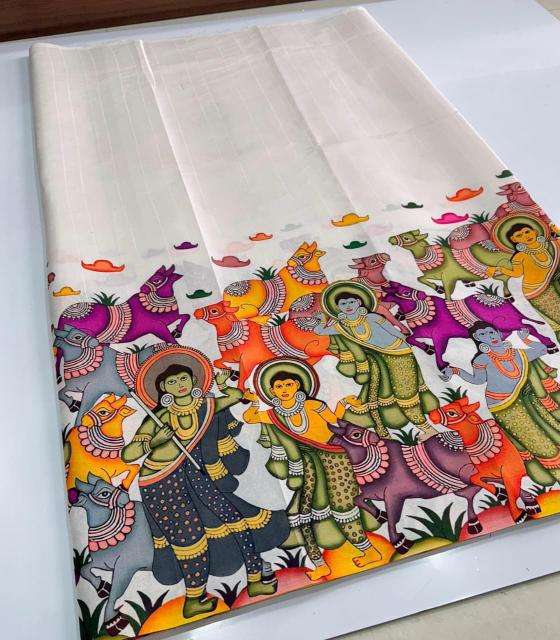
How Product Selection Changes Your Saree Business Earnings
Product selection has a direct connection with profitability because margin on paper has little value if inventory does not sell. Successful retailers usually need a combination of attractive purchasing cost and strong stock turnover.
Keep Fast-Moving Price Points
Every business develops certain price points at which customers make decisions more easily. A seller may discover that ₹799, ₹999, ₹1,299 or ₹1,499 performs particularly well for its audience. Another showroom may perform better in a completely different range.
Once these patterns become visible, wholesale buying can be planned backward from the desired selling price. If customers consistently purchase around ₹999, the retailer can determine the maximum landed cost that still leaves enough room for expenses and profit.
Use New Arrivals to Generate Repeat Enquiries
Regular new arrivals give customers a reason to revisit a WhatsApp catalogue, website, Instagram profile or physical shop. They can also help retailers avoid depending too heavily on one design.
For transactional buyers, fresh inventory matters because fashion demand changes. A design that performs strongly today may eventually slow down. Purchasing smaller test quantities followed by replenishment of successful products can help protect working capital where supplier availability permits.
Mix Affordable and Premium Sarees
A balanced range allows sellers to serve more than one customer budget. Affordable collections can generate traffic and volume, while better-value premium products can increase the rupee contribution per order.
This is particularly useful for boutique owners and showroom operators who receive customers with different budgets. Instead of losing a customer because every product is too expensive or too basic, the seller can provide several suitable options.
How Bulk Buying Can Affect Wholesale Price
Bulk purchasing can improve sourcing economics when better commercial terms are available, but quantity alone should never determine an order. Buying 100 pieces at an attractive rate is not profitable if only 30 pieces sell and the remaining inventory stays blocked.
Before placing a bulk saree order, calculate expected sell-through, average selling period and available working capital. Ask whether the lower per-piece price genuinely compensates for the additional inventory risk.
Wholesale buyers should also compare complete commercial terms, including minimum order quantity, catalogue assortment, size or colour availability where applicable, dispatch timeline and transportation charges. The lowest quoted price is not automatically the lowest effective cost.
How Home-Based Saree Sellers Can Protect Their Margin
Home-based sellers can operate with comparatively lean infrastructure, but price competition can be intense because customers often compare products across WhatsApp, Instagram and online marketplaces. The answer is not always to become the cheapest seller.
A home-based business can create value through carefully selected products, quick communication, genuine product details, reliable dispatch, attractive presentation and regular new arrivals. These factors can support customer confidence and repeat purchasing.
Avoid Unnecessary Discounting
Suppose the landed cost of a saree is ₹650 and the normal selling price is ₹999. Offering ₹100 off may seem small, but that discount comes directly from the available gross rupee contribution unless another cost changes.
Before launching any offer, calculate the revised margin. Discounting should ideally have a commercial purpose, such as increasing order quantity, clearing ageing stock or acquiring customers who have reasonable repeat-purchase potential.
Increase Average Order Value
Sellers can improve order economics when one customer purchases multiple products in the same transaction. Shipping and marketing costs may then be distributed across more pieces.
Bundle offers, multiple-piece purchasing benefits and complementary ethnic wear categories can be used carefully without reducing every item's price unnecessarily.
Profit Planning for Boutique and Showroom Owners
Boutiques and showrooms typically carry costs that online-only sellers may not have. Rent, interiors, staff, displays, electricity and local promotion all need to be supported by product contribution.
For this reason, a physical retailer should not copy an online reseller's selling price without comparing cost structures. Two businesses can purchase the same saree at the same wholesale rate and still require different selling prices to remain commercially sustainable.
Track Profit by Category
Instead of looking only at total monthly sales, divide performance into categories such as cotton sarees, silk sarees, printed sarees, festive sarees, designer sarees and wedding collections. Track purchase value, sales value, remaining stock and average selling period.
This can reveal which categories generate turnover and which categories consume working capital without sufficient sales. Future purchasing decisions can then be based on actual business performance.
Stock Turnover Matters Alongside Margin
Imagine Product A produces ₹250 gross contribution and sells four times during a certain period, while Product B produces ₹500 but sells only once during the same period. Product B has the larger contribution per sale, but Product A may generate more gross contribution from the capital deployed, depending on the costs and replenishment cycle.
This is why saree business profit margin should be evaluated together with inventory turnover rather than in isolation.
Saree Wholesale Opportunities for India and Export Buyers
Indian sarees have potential beyond domestic retail. Wholesale and export businesses can serve ethnic fashion customers internationally, but destination-specific buying requires additional planning for freight, delivery time and customer preferences.
For this guide, three relevant markets are India, USA and Nepal. Indian retailers can source according to local regional demand, while sellers serving the USA may plan around South Asian weddings, festivals and community events. Nepal wholesale buyers may also select sarees according to festive and occasion-driven demand in their own customer base.
International sellers should calculate landed destination cost before deciding the final selling price. Freight, customs or import-related charges where applicable, local delivery and currency conversion can change the actual cost substantially compared with the original Surat wholesale price.
Vastralife brings wholesale and export experience since 2017, along with industry exposure to women's ethnic wear sourcing and premium product quality. This experience can be relevant for retailers looking to build a commercially practical assortment rather than purchasing products without considering their target market.
How to Set a Selling Price Without Damaging Your Margin
A practical pricing method begins with landed product cost and then considers selling expenses, desired contribution and the price customers are willing to accept. Sellers should avoid using a fixed multiplier blindly across every saree category.
For example, a low-cost fast-moving saree and a high-value premium saree may require different pricing strategies. Competitive intensity, stock availability, customer expectations and selling channel can all influence the final price.
For each product, calculate purchase cost, inbound freight, packing, payment costs, marketing allocation and other directly attributable selling expenses. Then decide the selling price and calculate the expected rupee contribution and percentage margin before launching the product.
Use a Minimum Acceptable Selling Price
Retailers can establish an internal minimum selling price for every product. This makes it easier for staff or resellers to know how much discount can be offered without unintentionally reducing the order below an acceptable contribution level.
The minimum price can also help during festive promotions, customer negotiations and bulk-order enquiries because the business knows its commercial limit before discussing discounts.
Review Prices When Costs Change
Freight, fabric, processing, manufacturing and other expenses can change over time. A selling price that worked for an earlier purchase batch may not provide the same result for a new batch.
Retailers should therefore review their calculations periodically rather than assuming that one pricing structure will remain suitable throughout 2026.
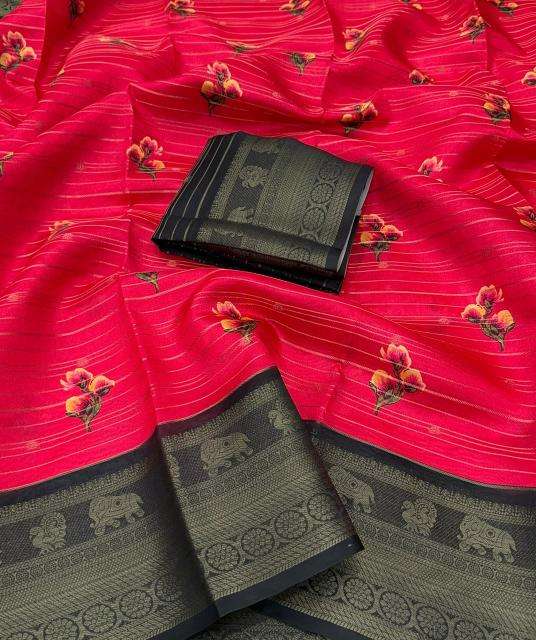
Choosing the Right Wholesale Supplier for Better Profitability
The supplier you choose affects far more than the initial purchase price. Product quality, catalogue accuracy, stock availability, dispatch reliability and collection variety can all influence how smoothly a saree business operates. A slightly better sourcing experience can save considerable time and reduce avoidable business costs.
When comparing saree wholesale suppliers, buyers should examine the complete commercial proposition. Look at the actual fabric and finishing, wholesale price, minimum order requirement, catalogue variety, dispatch process and availability of new collections. For repeat buyers, consistency is often more valuable than finding the lowest rate for one transaction.
Businesses sourcing from Surat can explore saree manufacturers in Surat to identify collections suitable for their customer segment. Retailers expanding into other ethnic categories can also explore wholesale Pakistani suits online as a complementary category without depending entirely on saree sales.
Internal Linking Section: Build a Wider Ethnic Wear Product Mix
A strong retail business does not necessarily need hundreds of unrelated categories. Instead, sellers can build around products purchased by a similar customer. A saree buyer may also be interested in dress materials, kurti sets, salwar suits, festive ethnic wear and occasion-based collections.
This strategy can be particularly useful for home-based sellers and boutique owners. Once customer acquisition costs have been incurred, offering additional relevant products can create more opportunities for repeat orders. It also gives sellers more content to share through WhatsApp, Instagram, websites and physical catalogues.
kapdathread.com can be used by wholesale buyers to discover fashion products across different price segments. Rather than buying every available design, sellers can shortlist products according to customer demand, available capital and expected selling price.
How to Increase Saree Business Profit Without Simply Increasing Price
Increasing retail price is only one way to improve profitability. In many cases, better purchasing, lower operating costs and faster inventory movement can have an equally important effect on the business.
Negotiate Through Quantity Where It Makes Commercial Sense
If a particular catalogue consistently sells well, a larger repeat order may create an opportunity for better sourcing economics. However, the additional quantity should be supported by actual demand rather than purchased only to receive a lower per-piece price.
For example, saving ₹30 per saree on 100 pieces creates a ₹3,000 purchasing advantage. But if a significant part of that stock remains unsold for months, the apparent saving may be outweighed by blocked capital and eventual discounting.
Reduce Dead Stock
Dead stock can quietly reduce the effective profitability of a saree business. If ten products sell profitably but two products eventually need to be cleared below the intended price, the overall performance of the entire purchase batch changes.
Review ageing inventory regularly. Products that have received little customer interest can be repositioned through catalogue combinations, targeted offers or clearance campaigns instead of being allowed to remain indefinitely.
Improve Repeat Customer Business
A returning customer can be commercially valuable because the business may not need to spend the same amount on advertising for every subsequent purchase. Good product quality, accurate communication and dependable service can therefore contribute indirectly to profitability.
Retailers should maintain customer records, understand preferred categories and communicate new arrivals without overwhelming buyers with irrelevant products.
How Resellers Can Calculate Profit Before Accepting an Order
Resellers often work differently from traditional retailers because some sell products before physically holding inventory. This can reduce inventory investment, but it does not eliminate the need for careful cost calculations.
Suppose the supplier price is ₹700, shipping allocation is ₹60, payment or transaction costs are ₹15 and promotional cost attributable to the sale is ₹25. The effective cost becomes ₹800. If the reseller sells at ₹1,099, the gross difference before other business expenses is ₹299.
If the customer receives a ₹100 discount, the difference falls to ₹199. If the reseller had calculated profit only as ₹1,099 minus ₹700, the original expectation would have been significantly overstated.
This is why transactional sellers should calculate every order from landed cost to final selling price, particularly when using paid advertising or offering delivery benefits.
Working Capital: The Hidden Factor in Saree Business Growth
A profitable business can still face cash-flow pressure when too much money is locked in inventory. Working capital management therefore deserves as much attention as the percentage margin on individual products.
Consider a seller with ₹2 lakh available for inventory. Investing the entire amount in premium products may provide attractive potential margins, but the business could struggle to purchase fresh stock until those products sell. A balanced buying plan can keep funds available for fast-moving new arrivals.
Divide Purchasing Capital by Category
A retailer can allocate inventory capital among proven fast-moving products, new collection testing, seasonal stock and selected premium pieces. The exact allocation should be based on the business's own sales history rather than a universal percentage.
When a new product performs well, the seller can increase the next purchase. When it performs poorly, the initial exposure remains limited.
Reinvest From Products That Actually Sell
Revenue should not automatically be treated as profit. Part of every sale represents the cost of the inventory that has been sold and may need to be reinvested to maintain stock.
Separating purchase capital, operating expenses and actual earnings can give small retailers a clearer understanding of business performance.
Seasonal Buying Strategy for Saree Sellers
Saree demand can change around weddings, festivals and regional celebrations. Wholesale buyers should therefore plan purchases early enough for stock to arrive before customer demand peaks.
Festive buying can include silk-look sarees, traditional prints, embroidered designs, party wear and premium collections, while regular months may require a stronger mix of practical and affordable products.
Seasonal purchasing should also account for delivery time. A collection arriving after the primary selling period can quickly become slow-moving stock, even when the design itself is attractive.
Do Not Overbuy a Temporary Trend
Fashion trends can generate strong short-term demand, but not every trend remains commercially relevant for an entire season. Test quantities allow retailers to observe actual customer response before committing significant capital.
This is particularly important for online sellers who can see rapid changes in demand through social media. A viral design may generate enquiries quickly, but buyers should distinguish genuine paid orders from likes, views and casual enquiries.
Saree Business Opportunities for Different Types of Buyers
Home-Based Sellers
Home-based sellers can start with a focused selection and gradually expand according to customer response. Lower fixed expenses can make this model attractive, especially when the seller uses WhatsApp, social media and repeat customer networks effectively.
Boutique Owners
Boutiques can differentiate themselves through selection, styling and customer experience. Rather than competing only on price, they can curate distinctive sarees and complementary ethnic wear for a specific audience.
Shop Owners
Traditional shop owners benefit from understanding local buying patterns. Maintaining the right price points and frequently refreshing displays can support regular footfall and repeat business.
Showroom Owners
Showrooms usually need a wider assortment and more inventory depth. Their purchasing decisions should account for floor space, staff costs, seasonal demand and the amount of capital invested in stock.
Resellers
Resellers can concentrate on catalogue marketing and customer acquisition while keeping inventory commitments controlled. Reliable sourcing and accurate stock updates are especially important for this model.
Wholesale Buyers
Wholesale buyers generally operate on larger volumes and may work with lower per-piece margins than boutiques. For them, purchasing efficiency, logistics, stock turnover and repeat retailer relationships become central to profitability.
Common Mistakes That Reduce Saree Business Profit Margin
One of the biggest mistakes is treating the difference between purchase price and selling price as final profit. Another is buying excessive inventory because a supplier offers a better bulk rate.
Businesses should also avoid setting prices without accounting for freight and marketing, copying competitors without understanding their cost structure, giving discounts without calculating the revised margin, and holding slow-moving products for too long.
Another common issue is mixing personal withdrawals with business cash. A seller may see money entering the account and assume the business is generating strong profits, while part of that money actually needs to fund replacement inventory and operating expenses.
Simple Saree Profit Calculation Example for 2026
Consider a retailer purchasing 50 sarees at an average wholesale price of ₹600 each. The merchandise investment is ₹30,000. Suppose total inward freight and packing expenses add ₹2,500, making the initial landed inventory cost ₹32,500 or ₹650 per saree.
If the average selling price is ₹999, the difference before additional selling and overhead expenses is ₹349 per saree. If all 50 pieces sell at that average price, total sales would be ₹49,950 and the difference against the ₹32,500 landed inventory cost would be ₹17,450.
That ₹17,450 should not automatically be described as net profit. Advertising, payment charges, staff expenses, rent, returns, customer shipping support, taxes where applicable and other business costs may still need to be deducted.
This example demonstrates why a professional saree business profit margin calculation needs more than purchase and selling prices.
How to Scale a Saree Business More Safely
Growth becomes more sustainable when purchasing expands after proven demand. Instead of doubling inventory across every category, retailers can increase quantities of the products that consistently sell while testing new collections in controlled amounts.
Track monthly sales, gross contribution, inventory value, ageing stock, repeat customers and advertising expenses. These figures provide a more useful foundation for expansion than sales turnover alone.
A business generating ₹10 lakh in sales is not automatically stronger than a business generating ₹7 lakh. The actual comparison depends on product cost, operating expenses, stock investment, outstanding payments and net earnings.
Build Supplier Relationships
Long-term sourcing relationships can help retailers understand upcoming collections, availability and buying patterns. Reliable communication also becomes valuable when the business starts purchasing larger quantities.
With wholesale and export experience since 2017, Vastralife has developed industry expertise around women's ethnic wear, wholesale sourcing and premium product quality. For retailers, the broader lesson is to work with suppliers who understand wholesale requirements and can support repeat business rather than focusing only on a one-time transaction.
Use Data Before Expanding
Before increasing an order, check which colours, designs, fabrics and price points sold previously. A retailer should know which 20% of products are generating a meaningful share of customer demand.
That information can guide the next wholesale purchase and reduce guesswork. It can also help determine which products deserve paid advertising and which should simply remain part of the general catalogue.
Customer FAQs
1. How much profit can I make in a saree business?
There is no guaranteed profit percentage. Earnings depend on wholesale purchase cost, landed cost, selling price, stock turnover, discounts, marketing, freight and operating expenses. Calculate each product's actual cost before deciding your selling price.
2. Is the saree business profitable for home-based sellers?
It can be commercially viable when sourcing, pricing and customer acquisition are managed carefully. Home-based sellers may have lower fixed overheads than physical stores, but shipping, advertising and payment costs still need to be included in calculations.
3. Where can I buy sarees at wholesale prices?
Surat is one of India's major textile sourcing centres, with extensive wholesale activity around the surat textile market, Ring Road and Sahara Darwaza. Online sourcing through kapdathread.com can also help buyers explore collections without depending solely on physical market visits.
4. Should I buy sarees in bulk to increase profit?
Bulk buying can improve purchasing economics when better rates are available, but only when there is enough demand to sell the inventory. A lower unit price does not help if excess stock remains unsold or eventually needs heavy discounting.
5. Which sarees are suitable for reselling?
The right products depend on your customer base. Printed sarees, daily-wear sarees, festive sarees, traditional designs, designer collections and wedding sarees can all work for different audiences. Start with the price points and categories your customers already request.
6. How should I calculate my saree selling price?
Begin with wholesale purchase cost and add freight, packaging, payment charges and relevant selling costs. Then determine the required contribution and compare the resulting price with customer demand and market positioning.
7. Can I export sarees purchased from India?
Wholesale buyers can source sarees for international markets, subject to the applicable export, import, customs and tax requirements. Before quoting overseas customers, calculate freight and destination-related costs so the final landed economics are clear.
8. How can I reduce unsold saree inventory?
Start with controlled quantities, monitor customer enquiries and paid orders, reorder proven products, review ageing stock frequently and avoid committing too much capital to temporary trends.
Start Sourcing Your Next Wholesale Collection
If you are planning to start, restock or expand your saree and ethnic wear business, focus on products that combine customer demand, workable buying cost and realistic resale potential. kapdathread.com helps home-based sellers, shop owners, boutique owners, showroom owners, resellers and wholesale buyers discover products for different business requirements.
Explore Latest Collections, Wholesale Pricing, Trendy Ethnic Wear, Fast Shipping, COD Support, Bulk Order Deals and Quality Products Starting From ₹299.
Contact Number: +91 9712582172
Website: kapdathread.com
Whether you are testing your first collection or purchasing for an established retail operation, calculate the complete cost before every buying decision. Better sourcing, controlled inventory, disciplined pricing and faster stock rotation can help turn a simple buying-and-selling activity into a more structured saree business.