
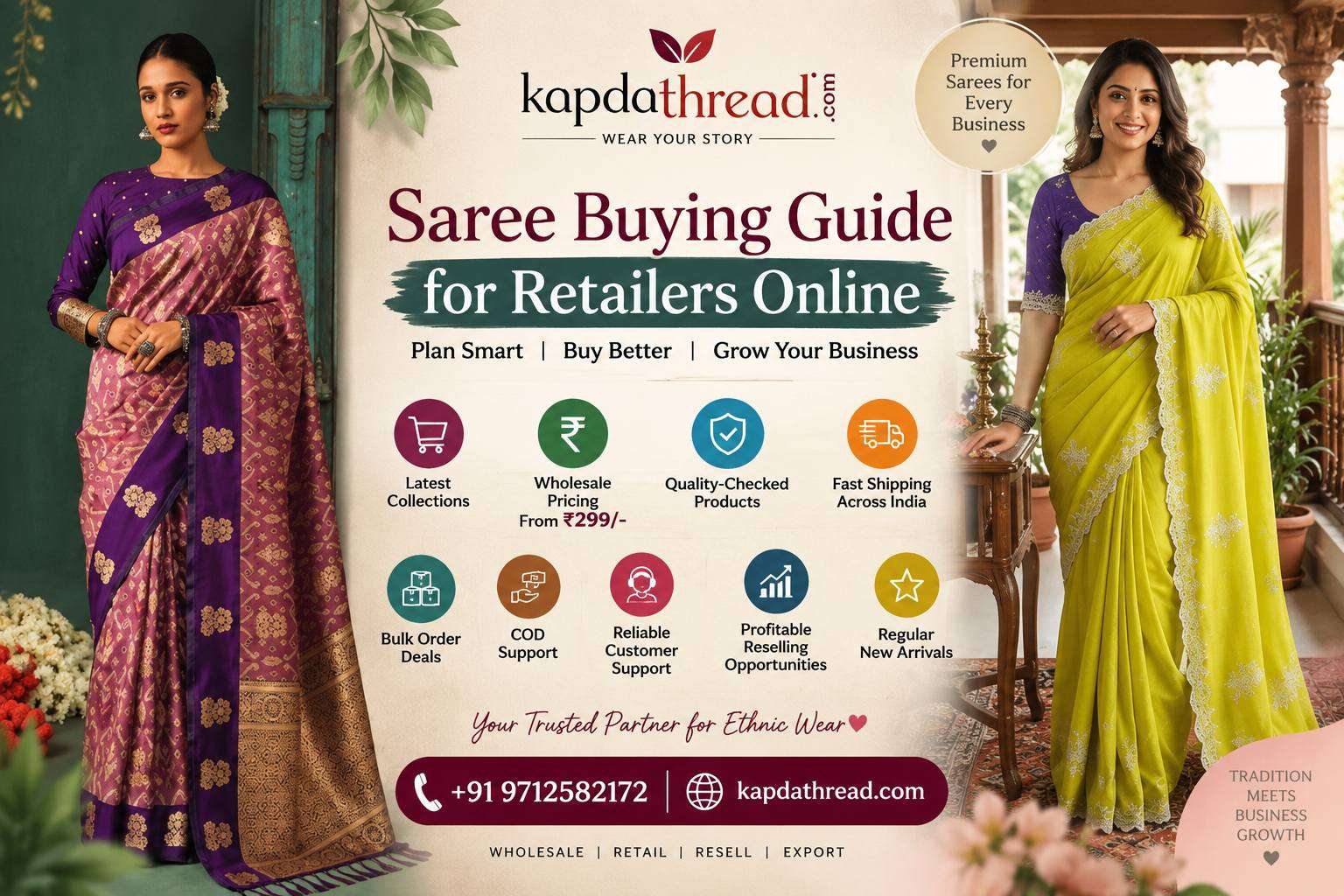
Saree buying guide for retailers online
Saree Buying Guide for Retailers Online 2026 | Wholesale Sarees from Surat
Buying sarees online for resale becomes much easier when you know exactly what to verify before placing an order. Retailers need collections that match their customers, offer workable margins and arrive with the fabric, colour and quality expected from the catalogue. Whether you run a boutique, showroom, retail shop, home-based business or online reselling operation, a disciplined buying process can help you choose commercially useful stock instead of purchasing simply because a catalogue looks attractive.
Introduction
Retail saree buying has changed considerably as suppliers, manufacturers and wholesalers have moved more of their catalogues online. In 2026, a retailer no longer needs to travel for every purchase. New saree collections can be shortlisted through websites, digital catalogues, WhatsApp and product videos before an order is confirmed.
However, convenience should not replace proper buying checks. A retailer ordering wholesale sarees online needs to evaluate the actual product, supplier, wholesale price, catalogue quantity, MOQ, stock availability, shipping conditions and expected retail margin. These factors determine whether an attractive design becomes profitable inventory or slow-moving stock.
This Saree buying guide for retailers online is designed for buyers with purchase intent: home-based sellers searching for new stock, shop owners planning their next order, boutiques sourcing premium designs, showroom owners requiring variety, resellers looking for profitable products and wholesale buyers purchasing larger quantities.
Retail buyers can use kapdathread.com to explore saree collections connected with Surat's textile sourcing ecosystem and shortlist products according to their business requirements. Before confirming any purchase, current price, MOQ, availability and dispatch terms should always be checked for the selected catalogue.
Buy Wholesale Sarees Online According to Your Customer Base
The first buying decision should not be “Which saree looks best?” It should be “Which saree is most likely to sell to my customers?” A catalogue that performs strongly for one retailer may move slowly for another because customer budgets, occasions, regional preferences and store positioning differ.
Buy Daily Wear Sarees for Regular Retail Demand
Retailers serving regular-use customers can purchase lightweight, manageable sarees in commercially accessible price ranges. Printed sarees, synthetic blends and other easy-to-maintain products may provide repeat-selling opportunities depending on the local market.
Before ordering a daily-wear catalogue, calculate the final purchase cost against the realistic retail selling price in your area. A design is commercially useful only when customers are willing to purchase it at a price that leaves enough margin for your business.
Buy Festive Sarees for Higher-Value Orders
For festive periods, buyers can shortlist richer colours, decorative borders, woven details and more elaborate designs. Festive inventory should normally be purchased early enough to allow time for delivery, merchandising, photography and customer promotion before the strongest shopping period begins.
If you operate online, select festive sarees that can be presented clearly through catalogue images and videos. Customers buying higher-value products generally expect better product information before placing an order.
Buy Premium Sarees for Boutiques and Showrooms
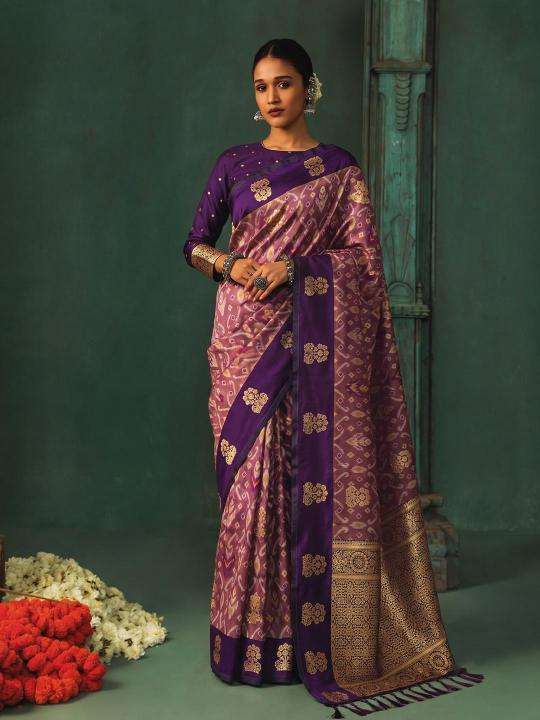
Boutique and showroom owners can purchase more distinctive sarees where fabric, finishing and design justify a higher retail position. The goal is not simply to buy an expensive product but to select inventory that looks and feels appropriate for the expected selling price.
Premium wholesale buying should therefore include closer checks of fabric, border, pallu, blouse piece, finishing and catalogue presentation before the order is finalised.
Compare Wholesale Saree Price Before Placing an Order
Price comparison is essential, but comparing only the lowest number can lead to poor buying decisions. Two visually similar sarees can differ in fabric, weave, finishing, blouse piece, border quality, production process and packaging.
When checking wholesale saree price, compare like-for-like products wherever possible. Ask what exactly is included at the quoted rate and whether the rate applies to a complete catalogue, selected designs or a particular minimum quantity.
Calculate Your Landed Purchase Cost
Your real buying cost can include more than the supplier's quoted product rate. Freight, packing, applicable taxes and other order-related expenses can influence the final landed price.
For example, if a retailer buys a saree at an attractive wholesale rate but pays substantial logistics charges on a small order, the effective cost per piece increases. Calculating the landed cost before confirming the purchase gives you a more realistic base for setting your retail price.
Set a Target Retail Margin Before Buying
Do not wait until the stock arrives to decide how much you need to sell it for. Estimate the intended retail selling price before placing the wholesale order. Compare that figure with your complete landed cost and determine whether the remaining margin is suitable for your business model.
Home-based sellers may have different operating expenses from physical stores, while showrooms may need to account for rent, staff, marketing and display costs. Your buying strategy should reflect your actual business expenses rather than copying another seller's markup.
Check MOQ Before You Buy Sarees in Bulk
Minimum order quantity can have a direct impact on inventory risk. Some collections may be sold catalogue-wise, while other wholesale arrangements may have different minimum purchasing requirements.
Retailers searching for bulk sarees online should confirm whether the MOQ refers to pieces, designs, complete sets, catalogue quantities or total order value. Never assume that a rate displayed for one product automatically applies to any quantity you want to purchase.
MOQ Strategy for New Retailers
If your business is new, buying a huge quantity of an untested style can lock working capital into stock that takes months to sell. Where supplier conditions permit, begin with a commercially manageable selection and identify what your customers actually purchase.
Once you have sales data, you can increase quantities for fabrics, colours and price ranges that consistently perform well.
MOQ Strategy for Established Showrooms
Established retailers with previous sales records can buy more strategically. If a particular category repeatedly performs well, deeper purchasing may improve stock availability during peak periods and potentially provide access to better bulk order opportunities.
Even experienced buyers should avoid confusing historical success with guaranteed future demand. Review current customer behaviour before every major seasonal purchase.
Verify Fabric and Product Details Before Online Payment
A catalogue photograph can help you shortlist a saree, but it cannot fully communicate fabric weight, texture, drape or finishing. This is why product specifications matter when purchasing online.
Before payment, confirm the stated fabric, approximate saree length where provided, blouse-piece inclusion, design details and other important specifications. If a fabric description is unclear, ask before ordering rather than assuming from the photograph.
Check Whether a Blouse Piece Is Included
Retail customers frequently ask whether the saree includes a blouse piece. Wholesale buyers should know the answer before listing or advertising the product.
If a blouse piece is included, confirm whether it is attached or separate and whether its colour or design coordinates with the saree. Accurate information makes your own retail communication easier.
Check Colour and Catalogue Presentation
Digital images can appear slightly different across screens and lighting conditions. Retailers should consider this when selling products from catalogues and avoid promising an exact screen shade where natural variation may exist.
If you are making a larger purchase, request available product information or videos when appropriate. The purpose is to understand what you are buying before committing significant inventory capital.

Buy Sarees from Surat for Wider Wholesale Choice
Retailers searching for saree wholesale in Surat can access a large textile ecosystem covering fabric processing, printing, weaving, manufacturing, wholesale trading and distribution. This concentration gives buyers opportunities to compare numerous styles and price segments.
The surat textile market includes major commercial activity around Ring Road, while Sahara Darwaza and nearby textile-market areas are also familiar sourcing zones for buyers. For retailers purchasing remotely, online sourcing can reduce the need to physically visit Surat for every catalogue selection.
Shortlist Surat Saree Suppliers by Product Fit
A supplier should not be selected only because they are located in Surat. Check whether their products fit your actual retail segment. A store focused on affordable everyday sarees requires a different buying mix from a premium boutique.
Before confirming a supplier, evaluate current collections, price level, MOQ, product communication and dispatch terms. For repeat orders, consistency becomes particularly important because your own customers begin expecting a certain standard from your store.
Buy from a Supplier with Multiple Collection Options
A retailer often needs more than one type of saree. Access to printed, festive, traditional, contemporary and premium ranges can make future sourcing easier because you can build an assortment around different customer requirements.
Through kapdathread.com, wholesale buyers can review products and shortlist collections for their retail or reselling business. Confirm live stock before making payment because fast-moving catalogue availability can change.
Choose Sarees by Retail Selling Segment
A disciplined buyer divides inventory by customer intent instead of purchasing randomly. This makes it easier to allocate capital and maintain useful variety across the store.
Buy Affordable Sarees for Volume Sales
Affordable products can be useful for stores whose customers shop frequently and are highly price-conscious. When buying this segment, pay close attention to the relationship between wholesale cost and acceptable quality.
Extremely low pricing has little commercial value if the product does not meet customer expectations. Your objective should be a price-quality combination that can support both conversion and repeat purchases.
Buy Mid-Range Sarees for Core Inventory
For many retailers, mid-range products can become an important part of the assortment because customers may be willing to pay more for improved design and presentation without moving into premium pricing.
Look for catalogues where the fabric, colour combinations and overall appearance justify the intended retail price. A strong mid-range collection can serve regular shoppers as well as customers buying for smaller functions or gifting.
Buy Premium Sarees for Higher Ticket Sales
Premium sarees require more selective buying. Evaluate whether the product offers visible or tangible value that customers can recognise. Better fabric, distinctive design, weaving, embellishment or superior finishing can support a higher selling price when accurately represented.
Boutique and showroom buyers should avoid overstocking premium inventory simply because margins appear attractive on paper. Higher ticket products may need a different stock-turn strategy from regular-volume sarees.
Plan Saree Purchases Around the 2026 Selling Calendar
Timing can directly influence the profitability of wholesale saree buying. Stock purchased too late for a festival or wedding period may still be attractive, but its immediate selling opportunity can be weaker.
Retailers should work backward from the date when customers are likely to begin shopping. Allow time for supplier confirmation, payment, dispatch, delivery, product photography, catalogue creation and customer promotion.
Place Festival Orders Before Peak Customer Demand
Festival-related stock should ideally be available before customers enter their strongest buying phase. This gives your business enough time to show products repeatedly through the store, WhatsApp, social media and direct customer follow-up.
Bulk buyers should also consider that popular designs can become unavailable as demand increases. Earlier selection can provide a wider choice, although every purchase should still be based on expected demand rather than fear of missing out.
Keep Regular Saree Stock Between Seasonal Peaks
Do not make the complete business dependent on festivals. Daily wear, gifting, family occasions and regular retail purchases can continue between major seasonal peaks. Maintaining an appropriate regular-selling range can support more consistent cash flow.
Buy Sarees Online for Reselling and Home-Based Businesses
Home-based sellers and digital resellers need products that can be sold effectively without a large physical showroom. Clear catalogue photographs, understandable product specifications and commercially practical price points are therefore especially important.
When selecting sarees for reselling, calculate your expected customer price before placing the order. Include product cost and shipping, then determine whether enough margin remains after any advertising, payment or delivery expenses relevant to your business.
Choose Catalogue-Friendly Sarees
Customers buying through WhatsApp or social media initially judge the product visually. Select designs that are represented clearly and have enough product information for you to answer common customer questions confidently.
Attractive images may generate enquiries, but accurate descriptions help convert those enquiries into more informed purchases.
Restock According to Orders, Not Social Media Likes
A product receiving many views or likes is not necessarily your best-selling product. Track enquiries, confirmed orders, repeat demand and actual margin. Use those figures to determine which collections deserve restocking.
This simple discipline can help home-based sellers protect working capital and gradually develop a product mix suited to their own customers.
Wholesale Saree Export Buying for International Retailers
Indian sarees also have retail demand in international markets. For this buying guide, Nepal, Australia and Canada are three relevant markets where retailers serving Indian and South Asian fashion customers may source products from India.
International wholesale buyers need to calculate the complete landed cost rather than comparing only the Surat product rate. Export orders can involve packing, freight, applicable customs or import requirements and local destination delivery.
Order International Stock with Enough Lead Time
If sarees are being purchased for a festival, wedding season or planned promotion, international buyers should order early enough for shipping and local distribution. A profitable product arriving after the main selling period can lose much of its commercial advantage.
Vastralife brings wholesale and export experience since 2017, with industry expertise across women's ethnic wear sourcing. For wholesale businesses, premium product quality, clear commercial communication and appropriate collection selection are important foundations for long-term repeat buying.
Match Export Stock to Your Local Customers
Do not assume that a saree selling strongly in India will automatically perform identically in another country. Retail price expectations, climate, occasion frequency and local customer preferences can differ.
International retailers should purchase according to their own historical sales and customer enquiries, then increase quantities in categories that demonstrate genuine local demand.
Verify the Wholesale Supplier Before You Place a Large Saree Order
Once you have shortlisted designs and calculated your expected margin, the next step is supplier verification. Online wholesale buying becomes safer and more efficient when commercial terms are clear before payment. Retailers should confirm who they are purchasing from, what products are included, how much stock is available and how the order will be dispatched.
For a larger wholesale saree order, keep the catalogue name, design numbers, quantities, agreed price and dispatch details documented. Clear order records are especially valuable for showroom owners and wholesale buyers purchasing multiple catalogues at the same time.
Confirm Current Stock Before Making Payment
Textile inventory can move quickly. A catalogue that was available when you first viewed it may have limited stock by the time you are ready to purchase. Ask for current availability before completing payment, particularly when ordering fast-moving or seasonal collections.
Do not build a major customer promotion around stock that has not yet been confirmed. Retailers accepting advance customer orders should be especially careful about availability.
Confirm the Exact Catalogue and Quantity
If you are purchasing a full catalogue, confirm how many designs or pieces are included. If selection is available, verify which designs have been confirmed for your order.
This is important when comparing wholesale sarees online because one supplier's quoted rate may apply to a complete catalogue while another may have different terms for selected pieces.
Understand Dispatch and Delivery Terms
Ask how the parcel will be dispatched, the expected processing period and which transport or courier arrangement applies to your destination. Retailers should plan stock launches around realistic dispatch and delivery expectations rather than assuming immediate arrival.
For seasonal orders, even a good wholesale deal can become less useful if the inventory reaches your store after the strongest customer demand has passed.
Compare Saree Manufacturers and Wholesalers Correctly
Retail buyers often search for both manufacturers and wholesalers, but the two business models are not always identical. A manufacturer may specialise in producing particular product categories, while a wholesaler can offer collections sourced across different manufacturers and brands.
Neither model should be selected purely by label. Your buying decision should depend on product suitability, quality, price, MOQ, collection variety, stock availability and supply consistency.
When Direct Manufacturing Can Help
For larger-volume buyers, direct manufacturing relationships can be useful when substantial quantities of a specific product are required. Buyers should still clarify production quantity, design conditions, delivery schedule and commercial terms before committing to a large order.
Manufacturing becomes particularly relevant when a wholesaler, distributor or chain of stores needs repeated supply rather than a small catalogue purchase.
When a Multi-Brand Wholesaler Can Help
Retailers that require frequent variety may benefit from a wholesale source offering products from multiple collections. This can make it easier to purchase daily wear, festive, traditional and premium sarees without relying entirely on one manufacturing line.
For many small and medium retailers, access to variety can be commercially important because customers expect new designs regularly.
Internal Linking for Wholesale Saree and Ethnic Wear Buyers
Retailers looking to source directly from Surat can explore a saree manufacturer in Surat category to compare relevant collections and identify products suited to their retail price segment and customer demand.
Businesses expanding beyond sarees can also explore kurtis manufacturers in Surat when building a broader women's ethnic wear assortment for their shop, boutique, showroom or reselling business.
Using related categories strategically can improve inventory planning. Instead of putting the entire buying budget into one product type, retailers can allocate stock according to proven customer demand while maintaining a clear core category.
Buy Sarees Online with a Quality-First Checklist
A competitive wholesale price matters, but repeat retail business depends heavily on customer satisfaction. Before buying in quantity, consider whether the product quality is appropriate for the price at which you plan to sell it.
Check Fabric and Finish
Confirm the fabric description and examine available close-up photographs or videos. Look at the border, pallu, blouse section and overall finishing where these details are visible and relevant.
For premium products, the customer is likely to expect more than an attractive print. The fabric and finishing should support the retail positioning you plan to use.
Check Product Description Accuracy
Do not advertise a product using a fabric, weave or manufacturing method that has not been confirmed. Accurate descriptions protect your business and help customers make informed decisions.
This becomes even more important for online resellers because their customers may make a purchase entirely from the information provided digitally.
Check Packing for Bulk Orders
Wholesale buyers ordering larger quantities should understand how products will be packed for transport. Appropriate packing can help protect stock during handling and shipping.
International export buyers should also clarify packing requirements appropriate to the selected shipping method and destination.
Build a Profitable Saree Inventory Instead of Simply Buying More Stock
Successful retail buying is not measured by how many sarees you purchase. It is measured by how efficiently those products convert into profitable sales. Working capital tied up in unsold inventory cannot be used for faster-moving collections.
A practical Saree buying guide for retailers online therefore needs to include stock planning as well as product selection. Retailers should know which products are selling, how quickly they move and which categories generate repeat orders.
Divide Your Buying Budget by Product Segment
Instead of spending the complete purchasing budget on one catalogue style, divide it according to your customer demand. You might allocate different amounts to regular wear, festive products, premium sarees and experimental new trends.
The percentages should come from your own business data. A boutique serving occasion-wear customers should not copy the inventory structure of a high-volume budget retailer.
Maintain Fast-Moving Core Stock
New designs attract attention, but retailers also need products that sell consistently. Identify the fabrics, price ranges and styling categories that repeatedly generate orders and ensure that a reasonable portion of your buying budget remains focused on those proven segments.
Trend-led products can then be introduced as controlled additions rather than replacing the entire core inventory.
Clear Slow Stock Before It Blocks New Buying
If a design has remained unsold for too long, consider appropriate retail promotions, customer bundles or other commercially sensible methods to improve stock movement. Continuously adding new inventory without addressing older stock can create unnecessary pressure on cash flow.
Wholesale buying should therefore be connected directly to stock turnover rather than treated as a separate activity.
Online Saree Buying Strategy for Boutique Owners
Boutiques usually benefit from selection rather than excessive quantity. Customers often visit a boutique expecting products that feel more curated than a general wholesale catalogue.
Buy Fewer but More Distinctive Designs
A boutique can select sarees with distinctive colour combinations, attractive borders, premium fabrics or design details that support its positioning. Buying fewer carefully selected products can sometimes create a stronger presentation than stocking many nearly identical designs.
When possible, match new purchases with the colour and style preferences already demonstrated by your customers.
Calculate Premium Retail Positioning Before Ordering
A higher wholesale cost does not automatically create a premium product. Before buying, consider whether customers can recognise enough additional value to support your planned retail price.
Fabric, workmanship, finishing, design and presentation should work together. If those characteristics do not justify the selling price, a high theoretical margin may be difficult to realise.
Online Saree Buying Strategy for Showroom Owners
Showrooms usually need greater assortment depth because they serve more customers and multiple buying budgets. This makes systematic purchasing especially important.
Create Clear Price Bands
Organise buying into practical retail price bands. This helps purchasing teams see whether the showroom is overstocked in one segment and underrepresented in another.
It also makes customer selling easier because staff can quickly show suitable products according to budget.
Use Sales Data for Reordering
Showroom owners should monitor sales by product type, price range and season. Reorder decisions can then be based on actual performance rather than only the attractiveness of new catalogue photographs.
If one particular saree segment repeatedly sells faster than others, it may deserve a larger share of the next wholesale purchase.
Online Saree Buying Strategy for Resellers
Resellers often operate with limited inventory or sell through catalogues, making product information and supplier communication especially important.
Calculate Your Selling Price Before Posting
Do not publish a catalogue first and calculate your margin after receiving an order. Determine product cost, shipping and your required margin before advertising the final customer price.
This reduces the risk of receiving an enquiry only to discover that the order is not commercially worthwhile.
Post Collections That You Can Actually Supply
Availability can change quickly in wholesale textiles. If a catalogue is selling well, check stock before taking confirmed customer orders whenever practical.
Repeatedly advertising unavailable designs can weaken customer confidence and create unnecessary order-management problems.
How Retailers Can Buy from Surat Without Visiting Every Time
A physical visit to the surat textile market can be useful for understanding products and supplier relationships, but established retailers do not necessarily need to travel for every repeat purchase. Digital catalogues and online communication can support remote ordering once the buying process is clear.
Buyers familiar with textile trading around Ring Road and Sahara Darwaza can combine offline market knowledge with online sourcing. This hybrid approach allows retailers to maintain access to Surat collections while reducing unnecessary travel for routine orders.
Shortlist Online, Confirm, Then Purchase
A practical process is to shortlist designs online, compare the commercial details, confirm live stock and then finalise the order. This prevents unnecessary time being spent discussing products that do not fit your budget or customer segment.
kapdathread.com can support this product-discovery process by helping wholesale buyers explore relevant collections before making their purchase decision.
Customer FAQs
1. Where can retailers buy wholesale sarees online?
Retailers can explore wholesale saree collections through kapdathread.com and shortlist products according to fabric, design, price and customer segment. Before placing an order, confirm current stock, MOQ, wholesale rate and dispatch terms for the selected catalogue.
2. What should I check before buying sarees online in bulk?
Confirm fabric, catalogue quantity, blouse-piece details, wholesale price, MOQ, stock availability, shipping charges, payment terms and dispatch conditions. For larger orders, keep the agreed product and quantity details documented.
3. What is the minimum order for wholesale sarees?
MOQ can vary according to the product, catalogue and supplier terms. Some collections may require catalogue-wise purchasing while others can have different quantity conditions. Confirm the applicable MOQ before payment.
4. How do I calculate profit when buying wholesale sarees?
Calculate the complete landed cost per saree, including the product price and applicable order expenses. Compare this with the realistic retail selling price and account for your own business costs before deciding whether the expected margin is suitable.
5. Can home-based sellers buy sarees online for reselling?
Yes. Home-based sellers can source sarees for resale subject to the applicable purchasing conditions. A controlled initial assortment can help identify which designs and price points generate actual orders before investing in larger stock.
6. Can boutique owners source premium sarees from Surat online?
Yes. Boutique owners can shortlist premium and distinctive saree collections remotely. Fabric, finishing, design, price, stock and MOQ should be verified before placing a bulk order.
7. Can wholesale sarees be exported outside India?
Wholesale export can be arranged depending on destination, order details, logistics and applicable requirements. International buyers should calculate freight and other destination costs when determining the final landed price.
8. Is it better to buy from a manufacturer or wholesaler?
The better sourcing route depends on your requirement. Larger repeat quantities of a particular product may make a manufacturing source useful, while retailers seeking frequent variety may prefer access to multiple wholesale collections. Compare product quality, price, MOQ and supply capability before deciding.
9. How can retailers reduce the risk of slow-moving saree stock?
Use previous sales data, buy according to customer demand, test new styles in controlled quantities where possible and track actual orders rather than social-media engagement alone. Avoid placing too much working capital into an untested trend.
10. Which sarees should a new retailer buy first?
A new retailer should prioritise products that fit the expected customer budget and local demand. Maintaining a manageable mix of regular-selling products and selected new designs can be safer than beginning with a very large speculative inventory.
Order Latest Wholesale Saree Collections for Your Retail Business
A strong Saree buying guide for retailers online ultimately comes down to disciplined purchasing: select products for your actual customers, compare complete costs, verify quality and specifications, confirm stock and MOQ, and calculate your expected margin before placing the order.
Whether you are a home-based seller, shop owner, boutique owner, showroom owner, reseller or wholesale buyer, kapdathread.com can help you explore Latest Collections, Wholesale Pricing and Trendy Ethnic Wear for your business.
Enquire about Fast Shipping, available COD Support, Bulk Order Deals and Quality Products Starting From ₹299. With Vastralife's wholesale and export experience since 2017, industry expertise and focus on premium product quality, buyers can source collections according to their retail requirements.
Wholesale & Bulk Order Enquiries
Contact: +91 9712582172
Website: kapdathread.com
Shortlist your next saree collection, confirm the current wholesale price and stock, calculate your retail margin and place your order according to the demand of your customers.