
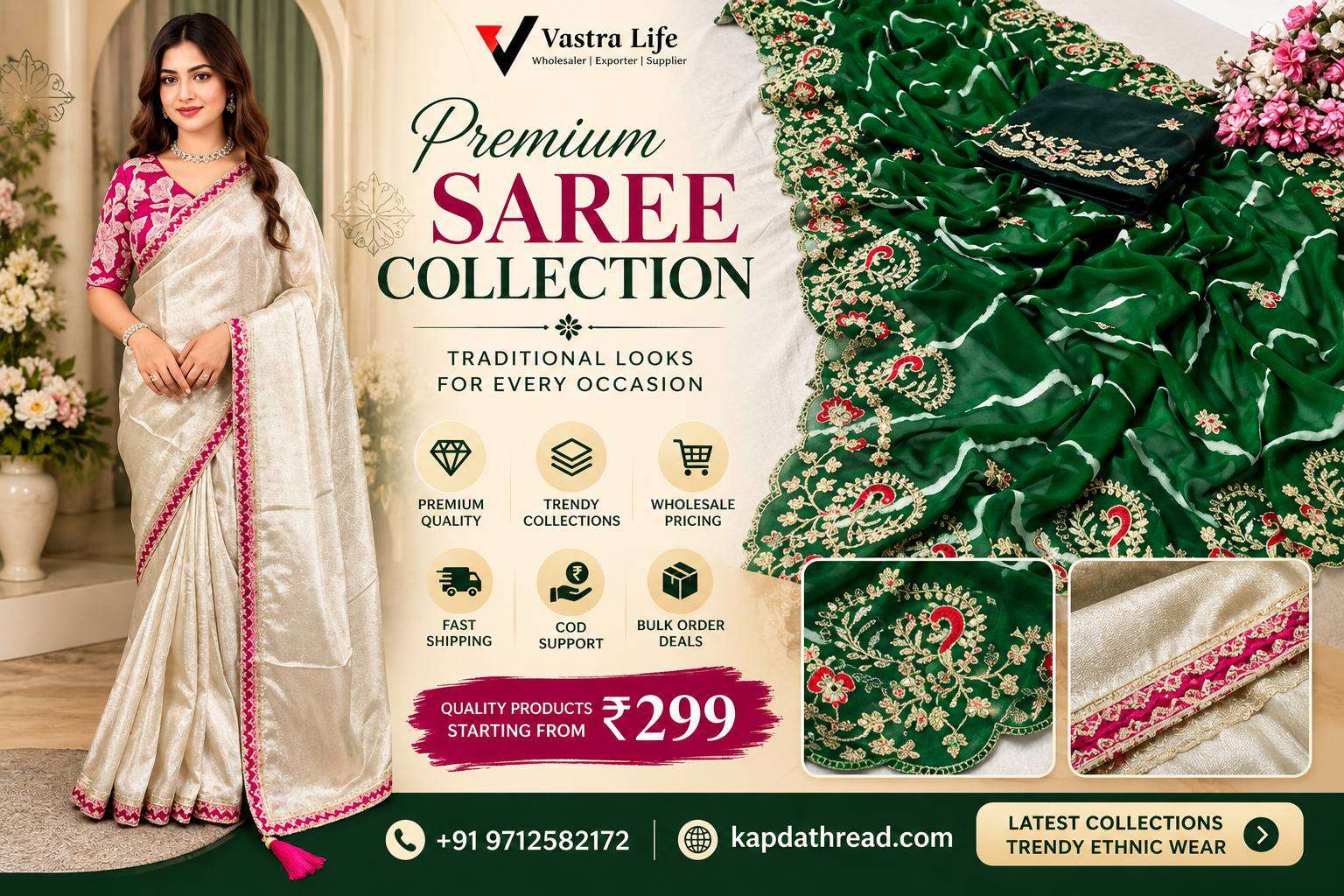
top selling saree categories in india
Top Selling Saree Categories in India 2026: Wholesale Buying Guide for Resellers
India's saree market continues to create strong buying opportunities for retailers, boutiques, online resellers and wholesale businesses. The biggest advantage for a buyer is the sheer variety available across everyday wear, festive collections, wedding styles and trend-driven designs. For businesses sourcing in 2026, selecting categories with proven customer appeal can help maintain faster inventory movement while giving buyers enough variety to serve different budgets, regions and occasions.
Introduction
Sarees remain one of the most versatile categories in the Indian ethnic wear business. A single retail shop may serve customers looking for affordable daily wear, festive sarees, wedding styles, traditional prints and premium designer collections. Online sellers have expanded this opportunity further by selling through Instagram, WhatsApp, websites and marketplaces.
For Shop Owners, Boutique Owners, Showroom Owners and Resellers, understanding the top selling saree categories in India is therefore directly connected with purchasing decisions. The objective is not simply to stock more sarees. The right strategy is to create a collection where different categories serve different customer requirements and price points.
Surat plays an important role in this sourcing network. The surat textile market, Ring Road, Sahara Darwaza and surrounding textile areas connect buyers with a large ecosystem of saree trading, processing, distribution and manufacturing. Buyers who cannot visit Surat regularly can also explore wholesale sourcing opportunities through kapdathread.com.
For 2026, retailers should think of saree inventory as a balanced portfolio. Affordable sarees can bring frequent purchases, fashionable products can generate social-media attention, and premium collections can help increase order value. This approach is especially useful for businesses that want to serve both local customers and online buyers.
Why Top-Selling Saree Categories Matter for Wholesale Buyers
Wholesale purchasing involves capital, and every product that remains unsold for too long affects cash flow. Buying categories with established customer demand can help businesses create a healthier stock rotation compared with purchasing entirely on personal taste.
This does not mean every seller should stock exactly the same products. Demand differs by city, customer age, season, occasion and retail price. A saree that performs strongly for a wedding-focused boutique may not be the right choice for a home-based seller targeting affordable daily wear.
Wholesale Buyers should therefore combine broader market demand with their own sales data. If printed sarees consistently sell well among existing customers, that category can receive a larger share of the next purchase. If premium designer products generate fewer orders but significantly higher order values, maintaining a smaller curated selection may make more sense.
Better Inventory Planning
Knowing the major best selling sarees in India helps retailers divide purchasing budgets logically. Instead of investing most of the available capital in one fashion trend, buyers can spread stock across everyday, festive, traditional and premium segments.
This becomes particularly important during seasonal buying. Festivals and weddings can temporarily shift demand toward richer designs, while regular months may support more practical and affordable collections.
More Price Points for Customers
A varied saree inventory allows sellers to create entry, mid-range and premium price levels. Customers who enter through an affordable offer can later purchase more expensive festive or occasion wear if they develop trust in the seller.
Retailers should calculate their complete buying cost before setting a selling price. Product cost, transportation, packaging, marketing and applicable payment or delivery expenses should be considered when determining the final margin.
1. Printed Sarees for High-Volume Retail Selling
Printed sarees are an important category for sellers who want attractive designs at accessible price points. Their visual variety makes them suitable for retail stores as well as Instagram and WhatsApp selling.
Buyers searching for printed sarees wholesale can select from floral patterns, traditional motifs, geometric designs, abstract prints and regionally inspired styles. The broad range makes printed sarees suitable for building multiple collections without relying on a single visual theme.
Why Printed Sarees Work for Resellers
For Home-Based Sellers and Resellers, printed sarees can be comparatively easy to display online. A clear photograph or video can immediately communicate the main design, colour and overall appearance.
Retail buyers should check print clarity, fabric feel, colour combinations, border finishing and overall presentation before purchasing. A low wholesale price can be attractive, but repeat business depends on whether customers feel satisfied after receiving the product.
Build a Mixed Printed Saree Range
Rather than buying only one type of print, sellers can combine subtle everyday patterns with brighter festive or statement designs. This gives customers more reasons to browse the complete collection.
Printed products can also be used as regular new-arrival content. When a fresh catalogue arrives, sellers can create short videos, carousel posts and WhatsApp updates to generate immediate enquiries.
2. Bandhani Sarees for Traditional and Festive Demand
Bandhani-inspired styles hold strong cultural and visual appeal, particularly for customers looking for traditional Indian fashion. Their distinctive dotted patterns and rich colour combinations make them recognizable both in physical stores and online catalogues.
Bandhani sarees wholesale can be relevant for retailers serving festive customers, traditional-fashion buyers and shoppers preparing for family occasions. Reds, maroons, greens, yellows and other vibrant combinations can create a strong festive presentation.
Bandhani for Boutique and Festival Collections
Boutique Owners can position Bandhani designs as part of curated traditional collections rather than mixing every product into one general saree section. This makes merchandising clearer and can help customers shop according to an occasion or style preference.
Online sellers can use detailed videos to show the saree body, border and pallu. Close-up presentation is especially useful when the design contains multiple motifs or decorative details.
3. Leheriya Sarees for Colourful Seasonal Collections
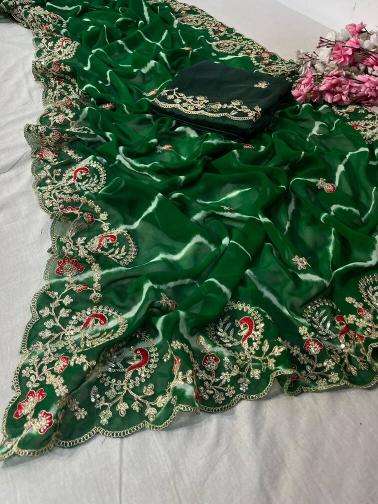
Leheriya styles bring movement and colour to a saree collection through their characteristic wave-like patterns. These designs can work particularly well in visually driven selling environments where colour combinations influence the customer's first impression.
Retailers sourcing Leheriya sarees wholesale can consider them for festive campaigns, traditional collections and seasonal promotions. The category can complement Bandhani and other Indian print-inspired products without looking identical.
For Instagram sellers, colourful Leheriya designs can be presented through movement-based Reels where the drape is opened naturally. This allows customers to see more of the pattern than they would from a single folded-product image.
4. Designer Sarees for Boutique and Premium Customers
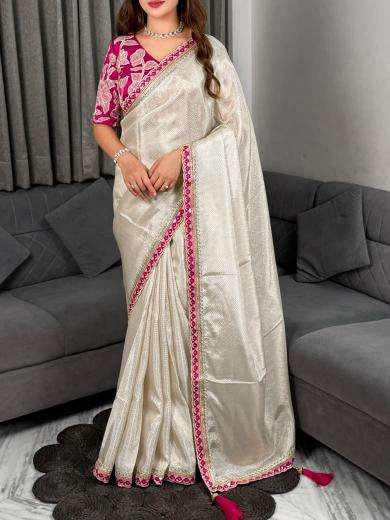
Designer sarees can help retailers move beyond purely price-driven selling. Customers purchasing for celebrations, parties, weddings and special occasions may focus more heavily on appearance and detailing than customers shopping for regular daily wear.
When buying designer sarees wholesale, retailers should evaluate whether the product justifies its intended retail price. Fabric, border work, embroidery, embellishments, blouse design and overall finishing can influence customer perception.
Premium Products Need Better Presentation
A premium saree should not be marketed with unclear photographs or incomplete descriptions. Boutique Owners should provide detailed views and explain the important features naturally.
This is particularly important online because customers cannot physically examine the saree before ordering. Clear presentation can help reduce uncertainty and attract more serious enquiries.
Do Not Build the Entire Inventory Around Premium Products
Unless the business specifically targets luxury customers, premium stock should normally be balanced with more accessible products. This gives sellers opportunities to serve customers with different budgets while keeping the overall inventory diversified.
5. Affordable Sarees for Fast-Moving Wholesale Business
Affordable sarees remain highly relevant for sellers targeting price-conscious customers, regular-wear buyers and volume-based retail. The key is to distinguish affordability from poor quality. Customers still expect a product that offers reasonable fabric, finishing and appearance for the amount they pay.
For Wholesale Buyers, cheap sarees wholesale can be useful for promotional collections, entry-price ranges and high-volume customer segments. Sellers should calculate the margin carefully rather than competing entirely through discounts.
A lower purchase price can provide more flexibility for offers, but the product still needs to meet the expectations created by the seller's photos and description. Maintaining that balance can support repeat purchases.
6. Wedding Sarees for Higher-Value Customer Orders
Wedding shopping creates opportunities across multiple price levels. Not every customer is purchasing the main bridal saree; families may also buy sarees for relatives, pre-wedding functions, gifting and other ceremonies.
This makes wedding sarees wholesale a broad category rather than a single product type. Retailers can create separate selections for premium wedding wear, family functions, gifting and more accessible occasion sarees.
Buy Wedding Stock Before Demand Peaks
Showroom Owners and Boutique Owners should prepare before the strongest local wedding-shopping period. Purchasing after customer demand has already peaked reduces the available selling window and can leave seasonal inventory unsold.
Retailers can coordinate purchasing with their regional wedding calendar and previous sales history. Proven colours and price bands can receive deeper stock, while experimental designs can be purchased more selectively.
7. Festive Sarees for Seasonal Sales Campaigns
Festive sarees give retailers an opportunity to create time-specific collections around major buying periods. Instead of promoting the entire inventory equally, sellers can highlight products that match the mood and expected dressing style of the season.
Festive sarees wholesale can include colourful traditional prints, rich borders, designer styles and occasion-focused products. The exact mix should depend on the seller's customers and region.
For online businesses, festive stock can generate weeks of content. Sellers can introduce the collection, feature individual designs, show packing videos and create limited-stock updates as the festival approaches.
8. Daily Wear Sarees for Regular Repeat Demand
Occasion wear attracts attention, but everyday products can provide continuity between major festival and wedding periods. Customers looking for regular-use sarees generally value comfort, manageable maintenance, practical fabrics and sensible pricing.
Retailers purchasing daily wear sarees wholesale should select designs according to their local customer profile. Some audiences may prefer subtle patterns and lighter colours, while others respond better to brighter prints.
Home-Based Sellers can also use daily-wear products to build repeat relationships. A customer satisfied with an affordable regular-use saree may return for additional colours or designs.
9. Party Wear Sarees for Social Media and Boutique Selling
Party wear collections are especially suitable for visual marketing because customers often shop for distinctive looks rather than basic utility. Shimmer, attractive borders, contemporary prints and fashionable drapes can perform well when presented through short videos.
Party wear sarees wholesale can help Instagram sellers and boutiques serve customers shopping for receptions, celebrations, family functions and evening events.
The category should be refreshed regularly because fashion preferences can change faster than in traditional everyday segments. Buyers can monitor which designs receive actual enquiries before committing to larger quantities.
How Surat Supports Saree Wholesale and Manufacturing
Surat's textile infrastructure gives buyers access to a large network involved in fabric, processing, trading, wholesale distribution and saree manufacturing. This is one reason buyers from different parts of India continue to connect their sourcing requirements with Surat.
The commercial ecosystem around ring road, sahara darwaza and the wider surat textile market serves different types of buyers, from smaller retailers to larger wholesalers and businesses handling export requirements.
Kapdathread.com gives buyers another route for exploring textile sourcing opportunities without depending exclusively on physical market visits. This can be particularly useful for businesses located outside Gujarat that require regular access to new collections.
Top Selling Saree Categories in India for Different Business Models
The top selling saree categories in India should be interpreted according to the type of business purchasing them. A successful category for a large showroom may not generate the same results for a newly launched Instagram store.
For Home-Based Sellers
Home-Based Sellers can focus on manageable collections containing printed, affordable, daily-wear and selected festive sarees. The objective is to learn customer preferences without locking too much capital into slow-moving inventory.
For Boutique Owners
Boutique Owners can create more curated assortments using designer, Bandhani, Leheriya, wedding and premium festive products. Presentation and product differentiation become particularly important in this segment.
For Shop and Showroom Owners
Shop Owners and Showroom Owners usually benefit from a wider mix. Daily wear can support regular footfall, while wedding and festive collections provide opportunities for higher-value transactions during seasonal periods.
For Wholesale Buyers and Resellers
Wholesale Buyers should study repeat demand, stock turnover and regional preferences before increasing quantities. Resellers should similarly track which products generate confirmed orders rather than relying only on social-media views.
Vastralife Wholesale and Export Experience Since 2017
Working with an experienced wholesale network becomes more important as order volume grows. Vastralife brings wholesale and export experience since 2017, supported by industry expertise in women's fashion sourcing and business-to-business requirements.
The focus on premium product quality, current collections and practical wholesale supply can support Home-Based Sellers, retailers, boutiques, resellers and larger buyers seeking products for different customer segments.
For businesses evaluating the top selling saree categories in India, experience also matters when selecting products for different price levels and markets. A collection should not simply look attractive at the time of purchase; it should fit the actual needs of the seller's customers.
The same sourcing ecosystem can also support export buyers serving international markets such as Nepal, Singapore and the USA. International buyers should account for destination demand, shipment planning and landed costs when selecting wholesale inventory.
In the next part, we will continue with category-wise purchasing strategy, 2026 inventory planning, international wholesale opportunities, exactly two relevant internal keyword links, customer FAQs and a complete kapdathread.com wholesale buying CTA.
How to Build the Right Saree Inventory Mix in 2026
Knowing popular categories is useful, but profitability depends on how those categories are combined. Retailers should avoid putting their entire purchasing budget into one trend, fabric or price segment. A balanced assortment gives customers more choices and reduces dependence on a single type of demand.
For 2026, sellers can divide purchases among regular-selling sarees, seasonal collections and selected trend-driven products. Printed and daily-wear sarees can support routine sales, while Bandhani, Leheriya, festive, wedding and designer collections can strengthen occasion-based business.
The exact allocation should be based on actual sales. A retailer whose customers regularly purchase traditional sarees may allocate more stock to Bandhani and Leheriya designs, while an Instagram reseller serving younger customers may concentrate more heavily on fashionable printed and party-wear products.
Keep Fast-Moving Products Available
When a particular category consistently generates confirmed orders, buyers should consider maintaining a regular flow of similar products. The exact design may change, but the successful fabric, price range or styling can guide future purchases.
For example, if affordable printed sarees repeatedly sell within a particular price band, the next order can include new designs within that proven segment. This is more practical than starting every purchasing cycle from zero.
Keep a Smaller Budget for New Trends
New styles can create strong demand, particularly through Instagram and other social platforms, but trends can also change quickly. Buyers can test newer products in controlled quantities before committing a large portion of their inventory budget.
This gives Resellers and Boutique Owners an opportunity to participate in current trends while protecting cash flow if a particular design does not perform as expected.
Buying Sarees According to Customer Price Range
A strong saree business usually serves more than one customer budget. Even within the same category, customers may search for affordable, mid-range and premium options. Wholesale purchasing should therefore consider the intended final selling price before the order is confirmed.
Entry-level collections can attract price-conscious shoppers and help generate volume. Mid-range products can provide a balance of design and value, while premium sarees can serve weddings, celebrations and boutique customers looking for more distinctive products.
Affordable Price Segment
Affordable collections can include printed sarees, daily-wear designs and selected fashionable products. These are useful for Home-Based Sellers and Resellers who want products that can appeal to a broader audience.
Buyers should still evaluate quality carefully. A low wholesale price is useful only when the product provides enough value for the final customer.
Mid-Range Saree Segment
Mid-range collections can include richer prints, attractive borders, festive designs, Bandhani-inspired products, Leheriya styles and selected designer sarees. This segment can be particularly useful for Shop Owners because it provides options for both regular and occasion-based customers.
Premium Saree Segment
Premium collections are generally purchased more selectively. Customers in this segment may expect better fabric, distinctive styling, richer detailing and an overall presentation suitable for important occasions.
Boutiques and Showroom Owners can use premium products to differentiate their collection instead of competing entirely on price.
Wholesale Saree Buying Strategy for Festival and Wedding Seasons
Seasonal buying should begin before the customer starts actively shopping. If a retailer receives festive inventory too close to the occasion, there may not be enough time to promote and sell it effectively.
Buyers can work backwards from major festivals, regional celebrations and local wedding periods. This allows enough time for product selection, ordering, transportation, photography, social-media promotion and customer selling.
Plan Festive Collections as a Campaign
Instead of treating festive stock as normal inventory, sellers can build a complete campaign around it. Start with a collection announcement, then showcase individual products, colour options, price ranges and styling ideas over several days or weeks.
Bandhani, Leheriya, printed, designer and traditional sarees can be combined according to the festival and the preferences of the seller's customer base.
Wedding Collections Need Wider Price Choices
Wedding customers do not all purchase at the same budget. A showroom can serve customers buying premium occasion sarees as well as family members looking for multiple products at more accessible rates.
This makes a multi-level price strategy especially useful during wedding seasons. It can also increase the possibility of multiple-piece purchases from one family.
Wholesale Saree Opportunities for Online Resellers
Online reselling has changed the way sarees reach customers. A seller no longer needs to depend exclusively on local footfall. Instagram, WhatsApp and other digital channels allow a collection sourced through Surat to be presented to customers in different cities and regions.
For digital sellers, the top selling saree categories in India can become separate content themes. Printed sarees can be promoted as affordable new arrivals, Bandhani and Leheriya as traditional collections, and designer products as premium occasion wear.
Use Product Videos to Improve Buying Confidence
Sarees are visual products, but customers also want to understand the drape, border, pallu and overall design. Short videos can communicate these details more effectively than a single catalogue photograph.
Online sellers should keep product descriptions clear and avoid making claims that cannot be verified. Accurate product representation can help build long-term customer trust.
Turn Every New Catalogue Into Multiple Selling Opportunities
A new wholesale catalogue can provide content for Reels, Stories, WhatsApp updates and individual product posts. Sellers can highlight different colours and designs over several days instead of publishing everything at once.
This approach allows the same inventory to remain visible without making the page feel repetitive.
Internal Linking Section for Saree and Ethnic Wear Buyers
Business buyers who want to explore Surat sourcing in greater depth can review options connected with a saree manufacturer in Surat while planning retail, boutique or bulk purchasing requirements. This can help buyers connect saree sourcing with Surat's wider textile and manufacturing ecosystem.
Retailers expanding beyond sarees can also consider wholesale Pakistani suits online when building a broader women's ethnic wear assortment for existing customers. Adding complementary categories gradually can help sellers increase product variety without losing focus on proven saree demand.
Kapdathread.com can support this research by helping wholesale buyers explore product opportunities connected with Surat and women's fashion sourcing.
Saree Wholesale Opportunities for Export Buyers
Indian sarees also create opportunities for international boutiques, ethnic-fashion retailers and Resellers. Buyers serving markets such as Nepal, Singapore and the USA can select products according to their own customer profile instead of assuming that one collection will work equally well in every destination.
Traditional sarees may perform well around cultural celebrations and festivals, while fashionable printed and designer styles can appeal to customers seeking contemporary Indian ethnic wear.
Calculate the Landed Price Before Export Ordering
International Wholesale Buyers should consider product cost together with freight, shipment size, destination requirements and other applicable expenses. The wholesale buying price alone does not represent the final landed cost.
Calculating these expenses before confirming the order makes it easier to establish a sustainable selling price in the destination market.
Plan Export Stock Earlier
International shipments require additional planning. Buyers preparing for major Indian festivals, wedding periods or community events should allow enough time for sourcing, dispatch, transportation and local selling.
This is especially important for seasonal products. Even an excellent festive collection becomes difficult to sell at full potential if it reaches the destination after the main shopping period.
How to Select a Saree Wholesale Supplier in Surat
Surat provides extensive sourcing options, but Wholesale Buyers should still evaluate suppliers carefully. A dependable business relationship requires more than a large catalogue.
Buyers should consider product quality, collection freshness, wholesale terms, stock availability, communication and dispatch support. For repeat purchasing, consistency can be more valuable than changing suppliers simply to save a small amount on one order.
Check Product Quality Against Your Customer Segment
Quality expectations vary according to the intended retail price. An affordable daily-wear product and a premium wedding saree cannot be evaluated using exactly the same criteria.
The product should deliver appropriate value for the segment in which it will be sold. This protects the retailer's reputation and can improve repeat business.
Choose Suppliers With Regular Collections
Shop Owners and online sellers need fresh stock throughout the year. Working with a wholesale source that introduces new collections regularly can make purchasing easier and provide more material for customer promotions.
This is particularly useful for social-media sellers because new products create a natural reason to communicate with followers and existing customers.
Why Surat Remains Important for Saree Wholesale Buying
The scale of textile activity around Surat gives buyers access to multiple product categories, price ranges and supply channels. The surat textile market ecosystem around Ring Road and Sahara Darwaza connects textile trading with processing, distribution and manufacturing.
For buyers outside Gujarat, online sourcing can reduce the need to visit the physical market for every purchasing cycle. Kapdathread.com provides a digital route for businesses researching wholesale textile products and sourcing opportunities.
Retailers can use online purchasing alongside their own market knowledge, customer data and seasonal planning to create a more efficient stock strategy.
Vastralife Experience for Wholesale and Export Buyers
Vastralife brings wholesale and export experience since 2017, with industry expertise developed around women's fashion and business-to-business supply requirements. This experience is relevant for buyers who need regular products rather than making only a one-time purchase.
For Resellers, Shop Owners, Boutique Owners, Showroom Owners and Wholesale Buyers, dependable sourcing includes collection variety, practical pricing and premium product quality. These factors become increasingly important as sales volumes and repeat customer expectations grow.
Whether the buyer operates in India or handles international orders, selecting products according to actual market demand can create a stronger foundation for sustainable wholesale purchasing.
Customer FAQs
1. What are the top selling saree categories in India for 2026?
Popular wholesale categories include printed sarees, Bandhani sarees, Leheriya sarees, designer sarees, daily-wear sarees, festive sarees, wedding sarees and party-wear collections. The best category for an individual business depends on its customer profile, location, price range and season.
2. Where can retailers buy sarees wholesale from Surat?
Retailers can source through suppliers connected with Surat's textile ecosystem, including businesses operating around Ring Road, Sahara Darwaza and other textile-market areas. Buyers can also explore wholesale opportunities through kapdathread.com without depending entirely on physical market visits.
3. Which saree category is suitable for a new reseller?
New Resellers can consider starting with a manageable combination of printed, daily-wear, affordable and selected festive designs. Actual customer orders should then guide future purchasing rather than investing heavily in too many categories immediately.
4. Are Bandhani and Leheriya sarees suitable for online selling?
Yes. Their distinctive patterns and colours can make them visually attractive for Instagram, WhatsApp and online catalogues. Clear images and product videos can help customers understand the design before ordering.
5. Can wholesale sarees from Surat be purchased for export?
Export buyers can source sarees for international resale subject to the supplier's terms and applicable shipping and destination requirements. Buyers should calculate landed costs and plan seasonal stock well before the intended selling period.
6. How should a boutique select wholesale sarees?
Boutique Owners should select products according to their established customer profile. A curated mix of designer, traditional, festive and wedding sarees may be appropriate for occasion-focused boutiques, while other stores may require a larger affordable segment.
7. How much stock should a new saree seller purchase?
There is no single quantity suitable for every business. Available capital, customer demand, supplier requirements and expected inventory turnover should guide the order size. New sellers can test categories in controlled quantities before increasing purchases in proven styles.
8. Is wholesale price the most important factor when choosing sarees?
Price is important, but it should be considered alongside fabric, finishing, design, supplier reliability and customer expectations. A product that provides stronger overall value may generate better repeat business than the cheapest available option.
9. Which sarees are suitable for festive and wedding sales?
Bandhani, Leheriya, designer, traditional, party-wear and richer printed sarees can all be considered depending on the occasion and target customer. Sellers should prepare seasonal inventory before peak shopping begins.
10. Can Home-Based Sellers buy wholesale sarees?
Yes. Home-Based Sellers can build a saree reselling business through social media and direct customer networks. Starting with a focused assortment and increasing purchasing according to confirmed sales can help control inventory risk.
Shop Top-Selling Saree Collections for Your Business
Choosing the right top selling saree categories in India can help retailers build a collection that serves everyday customers, festive shoppers, wedding buyers and online audiences without depending on a single product segment.
Explore Latest Collections and Wholesale Pricing for your retail, boutique, showroom or reselling business. Build your inventory with Trendy Ethnic Wear and purchasing options designed for business buyers.
Buyers can explore Fast Shipping, COD Support where applicable and attractive Bulk Order Deals according to current ordering terms and availability.
Discover Quality Products Starting From ₹299 and select collections according to your customers, selling season and target price range.
Contact Number: +91 9712582172
Website: kapdathread.com
From affordable everyday designs to festive, Bandhani, Leheriya, wedding and designer collections, a strong saree business begins with disciplined purchasing. Use customer demand to decide what to reorder, introduce new trends carefully and maintain enough variety to keep buyers interested throughout 2026.