
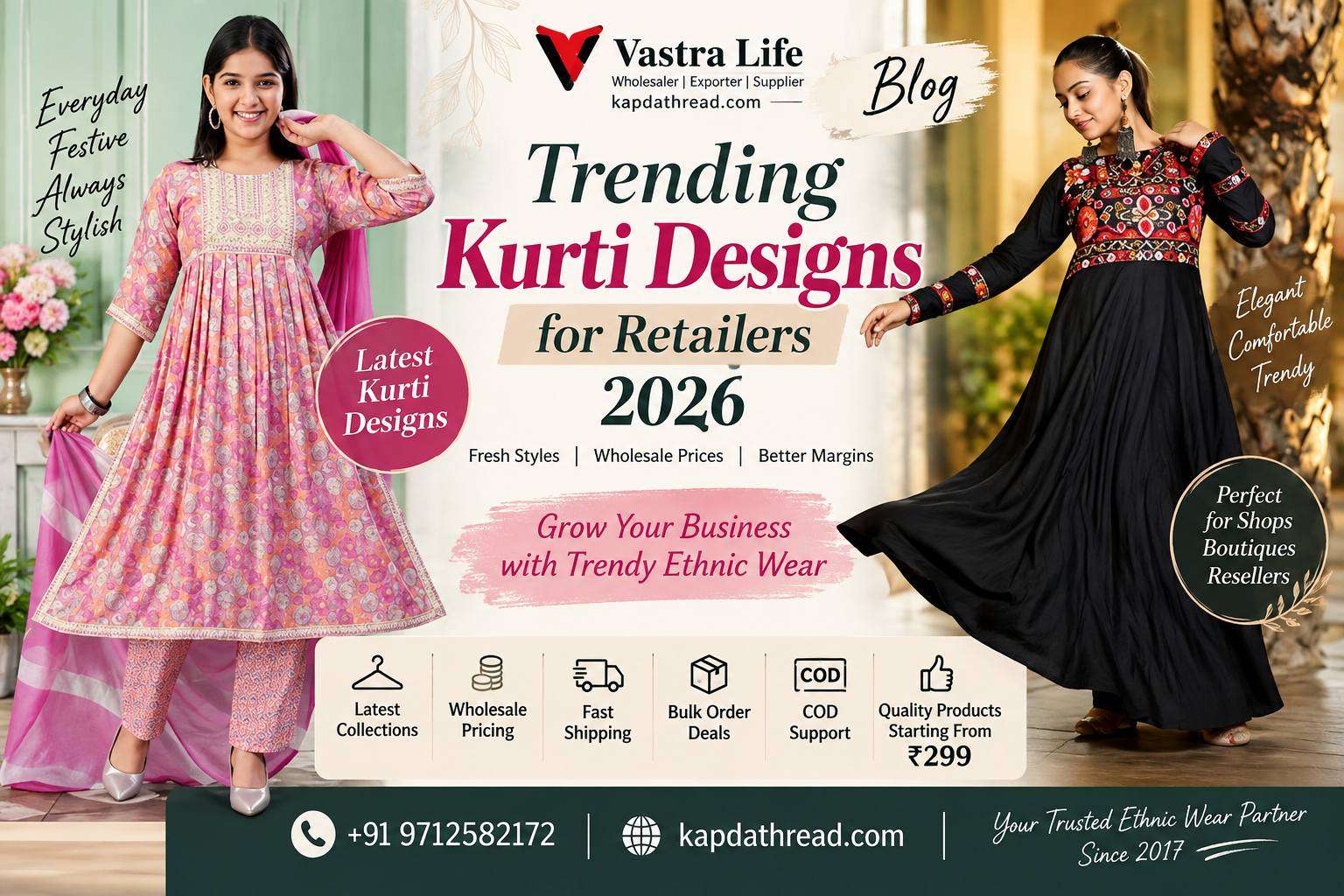
Trending kurti designs for retailers
Trending Kurti Designs for Retailers 2026 – Wholesale Styles, Prices & Surat Suppliers
Retail fashion moves quickly, and kurti buyers need collections that look fresh on the rack, match current customer demand and still leave enough margin for profitable resale. For shop owners, boutique owners, showroom buyers, home-based sellers and resellers, selecting the right designs is therefore much more than choosing attractive pieces. Fabric, fitting, size range, colour combination, wholesale price, repeat availability and the reliability of the supplier all influence how successfully a collection performs. With Surat continuing to be an important sourcing destination for Indian ethnic wear, buyers can explore a wide variety of everyday, festive and premium kurtis suitable for different customer segments.
Introduction
The demand for trending kurti designs for retailers continues to create opportunities for fashion businesses in 2026. Kurtis remain versatile because retailers can sell them across different age groups, occasions and price segments. A customer may want a comfortable rayon kurti for regular wear, while another may look for an embroidered designer style for festivals, office functions or family occasions. This broad demand gives retailers the flexibility to build collections according to their local market.
At the same time, buying decisions are becoming more trend-sensitive. Customers regularly discover new silhouettes, prints, colour combinations and styling ideas through social media and online fashion platforms. A retailer who keeps refreshing stock can therefore create stronger customer interest than a seller depending only on traditional designs for an entire season.
Buyers sourcing through kapdathread.com can explore wholesale-oriented collections connected with the Surat textile ecosystem. Vastralife brings wholesale and export experience since 2017, along with practical industry expertise developed by working with retailers, resellers and wholesale buyers. The focus remains on offering commercially useful collections with premium product quality and options suitable for both domestic and international requirements.
Which Kurti Designs Are Retailers Buying in 2026?
The most useful wholesale collection is rarely built around only one fashion trend. Successful retailers normally combine proven daily-wear designs with selected fashion-forward pieces. This creates a balance between regular turnover and newness. In 2026, buyers looking for latest kurti designs wholesale can focus on silhouettes that customers already understand while introducing updated fabrics, necklines, sleeves, prints and coordinated styling.
A-Line Kurtis for Broad Retail Demand
A-line kurtis continue to offer strong retail versatility because their silhouette can work across casual, office and semi-festive segments. Depending on the fabric and detailing, the same basic cut can be positioned at different retail price points. Printed cotton and rayon versions can work for regular customers, while embroidery, foil print, zari accents or richer fabrics can create a more premium presentation.
For shop owners who want dependable inventory, A-line designs are useful because they can be mixed with leggings, pants, palazzos and selected denim styles. Retailers should compare fabric quality, stitching, colour fastness, size availability and wholesale price instead of purchasing only on the basis of catalogue photography.
Straight-Cut Kurtis for Everyday and Office Customers
Straight-cut styles remain commercially practical for retailers serving working women and customers who prefer clean silhouettes. They are easy to display, easy to explain to buyers and can be offered in printed, embroidered and solid variants. For a retailer building a balanced kurti wholesale collection, straight kurtis can provide an important everyday segment alongside more fashionable designs.
Buyers can consider subtle floral prints, geometric patterns, traditional motifs, textured fabrics and minimal embroidery. Neutral shades can be combined with brighter seasonal colours so that the display appeals to customers with different preferences. Shops near business areas may favour sophisticated patterns, while neighbourhood retailers can keep a wider mix of casual and festive-looking options.
Designer Kurtis for Boutique and Showroom Sales
Boutiques and premium showrooms often require products that create a stronger visual impression. Designer kurtis with embroidery, mirror-inspired detailing, lace, decorative necklines, attractive sleeves, panel work and coordinated embellishments can help retailers create a differentiated collection.
When buying designer kurtis wholesale, however, appearance should not be the only consideration. Retailers should evaluate whether the design suits their actual customer profile. A highly decorated piece may perform well in a festive market but move more slowly in an area dominated by office and everyday shoppers. Smart wholesale buying means matching design intensity with local purchasing behaviour.
Trending Fabrics Retailers Should Consider
Fabric has a direct impact on comfort, appearance, selling price and repeat purchase. Two kurtis may look similar in a photograph but perform very differently when customers touch, try and wash them. Retailers purchasing wholesale kurtis in Surat should therefore pay close attention to fabric specifications before placing larger orders.
Rayon Kurtis for Volume Selling
Rayon remains useful for sellers who need comfortable products with attractive drape and competitive pricing. It works particularly well for everyday kurtis, printed designs, flared styles and selected festive patterns. Retailers can maintain different price bands by choosing between simpler rayon products and designs with embroidery or decorative work.
For home-based sellers and online resellers, rayon collections can also be easier to introduce because customers are already familiar with the fabric. Clear information about size, length, wash care and product details can make online selling smoother and reduce unnecessary confusion after purchase.
Cotton Kurtis for Comfort-Focused Customers
Cotton remains relevant in warm-weather markets and for customers prioritising breathable clothing. Retailers can explore printed cotton kurtis, office-wear patterns, traditional motifs and contemporary cuts. A carefully selected cotton collection can work particularly well for repeat customers who purchase kurtis as regular wardrobe essentials rather than occasional fashion products.
Wholesale buyers should also understand the exact fabric composition. Products marketed casually as cotton can differ considerably in feel, thickness and blend. Reliable product information helps retailers explain the collection confidently to their own customers.
Premium Fabrics for Higher-Value Collections
Retailers targeting boutique and showroom customers can add selected products in muslin, viscose blends, jacquard, chanderi-inspired fabrics and other premium-looking materials. Such products can help create higher-value displays and complement everyday inventory.
The objective is not necessarily to fill an entire shop with premium merchandise. A focused premium section can attract attention and provide customers with an upgrade option. Wholesale buyers should calculate landed cost, expected selling price and achievable margin before increasing quantities.
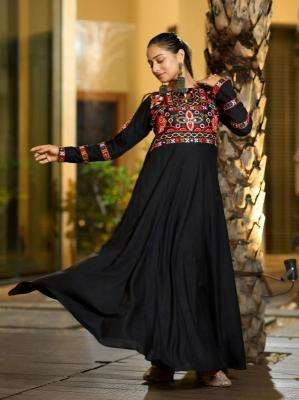
Festive Kurti Designs That Can Strengthen Retail Collections
Festivals create an important selling window for ethnic-wear retailers. Instead of waiting until customer demand has already peaked, wholesale buyers can plan festive inventory in advance. This is especially important for businesses purchasing from another city or country because transport, customs and local distribution can increase replenishment time.
Mirror Work and Embellished Styles
Mirror-inspired work, decorative embroidery and festive detailing can create strong visual appeal for Navratri, Diwali and other celebration-driven buying periods. Such styles can be particularly useful for boutiques, ethnic-wear stores and social-media sellers who depend on visually attractive products to generate enquiries.
Retailers should nevertheless maintain a practical balance. Heavily embellished merchandise may command a higher selling price but can also require a more specific customer. Combining statement designs with moderately decorated kurtis allows buyers to serve multiple budgets.
Anarkali and Flared Kurtis
Anarkali-inspired and flared kurtis can add movement and occasion appeal to a collection. These styles are especially suitable for buyers who want ethnic products that look more dressed-up than standard straight kurtis without moving completely into heavy occasion wear.
Retailers searching for trending kurti designs for retailers can test multiple lengths, prints and flare levels rather than committing their complete festive budget to one design. This helps identify which silhouettes customers respond to before the buyer places a repeat bulk order.
Surat Textile Market as a Kurti Sourcing Hub
The surat textile market gives wholesale buyers access to a broad textile and garment ecosystem. Areas around ring road and sahara darwaza are widely associated with Surat's textile trade, making the city relevant for retailers looking to compare suppliers, collections and price segments.
For a retailer, the advantage of sourcing from an established textile hub goes beyond variety. Access to suppliers, traders and manufacturing networks can make it easier to discover new catalogues and respond to changing fashion demand. Buyers searching for Surat kurti wholesale price should still compare the complete commercial offer rather than assuming that the lowest quoted rate automatically represents the best purchase.
Product quality, quantity requirements, dispatch reliability, size assortment and supplier communication can have a bigger effect on profitability than a small difference in per-piece cost. This becomes even more important when buying for export, where mistakes can involve additional freight and longer replacement cycles.
How Retailers Can Select Profitable Kurti Stock
A good-looking catalogue does not automatically become profitable inventory. Retailers should approach wholesale buying with a clear understanding of their customer base, average selling price and expected stock rotation. The best collection is one that customers are willing to purchase at a price that leaves the retailer a healthy margin.
Build Multiple Price Levels
Instead of buying everything within one narrow price bracket, retailers can create entry, mid-range and premium options. Value-conscious customers can be served with simpler products, while buyers looking for stronger detailing or premium fabrics have an upgrade choice. This strategy can also help showroom staff convert customers without immediately losing a sale because one collection is outside the shopper's budget.
Products starting from ₹299 can be useful for selected value-focused wholesale requirements, while more detailed designs naturally move into higher ranges according to fabric, work, brand and construction. Buyers should confirm the current product-wise rate before ordering because wholesale prices can differ between catalogues.
Choose Sizes According to Real Customer Demand
Size planning has become increasingly important. A retailer may have the right colour and design but still lose a sale if the customer's required size is unavailable. Buyers should analyse which sizes move fastest in their own business and maintain an appropriate mix rather than purchasing every size in equal quantity without sales data.
Plus size kurtis wholesale can also expand the addressable customer base for shops and resellers. Instead of treating extended sizes as an afterthought, retailers can build a planned assortment where suitable designs are available across a practical size range.
Use Small Tests Before Scaling New Trends
Fashion trends can rise quickly and sometimes disappear just as fast. Retailers can reduce risk by testing new silhouettes, colours and patterns in smaller quantities. Products that generate fast enquiries or repeat sales can then be reordered in larger quantities when stock remains available.
This approach is particularly useful for home-based sellers and social-media resellers because they can measure customer response from WhatsApp, Instagram or existing buyer groups before committing more working capital.
Wholesale Kurti Buying for India and Export Markets
Wholesale requirements can change significantly by location. A retailer selling in India may be able to replenish stock relatively quickly, while an overseas buyer must consider freight, customs requirements and longer lead times. For that reason, export buyers often benefit from planning their assortment more carefully before dispatch.
Businesses in Nepal, Australia and Canada can source Indian ethnic-wear collections according to their local customer profile. Climate, Indian-origin customer communities, festival calendars and local retail positioning can all influence which designs and fabrics deserve a larger share of the order.
For buyers looking to purchase designer kurtis wholesale, product selection should account for both visual appeal and landed cost. Retailers expanding beyond kurtis can also explore wholesale Pakistani suits online to create a broader ethnic-wear assortment for their customers.
Vastralife's wholesale and export experience since 2017 supports an understanding of how domestic and international buyers can have different sourcing requirements. Product selection, quality checking, packaging and dispatch planning become especially important when orders are travelling longer distances.
Kurti Colour Trends Retailers Can Stock in 2026
Colour selection plays a major role in how quickly a kurti attracts attention on a shop rack, showroom display or social-media catalogue. Retailers purchasing trending kurti designs for retailers should avoid building an entire order around one colour family. A balanced assortment can include dependable shades alongside fresh seasonal colours so that different customer preferences are covered.
Earthy tones, maroon, wine, bottle green, navy, rust, mustard and black can provide depth to a collection, while pink, lavender, peach, sky blue, mint and other softer shades can add freshness. Festive periods may support richer combinations and stronger embroidery, whereas everyday customers may prefer wearable colours that can be styled repeatedly.
Use Colour Assortments Instead of Single-Colour Dependence
For wholesale buyers, assorted colours can help test demand without placing too much inventory risk on one shade. If a particular colour sells faster, retailers can consider repeating it when the supplier has stock available. This approach can be particularly valuable for boutique owners and resellers who work with limited inventory budgets.
Online sellers should also remember that colour presentation can vary between screens. Accurate catalogue images and clear product information help customers make better purchase decisions and can reduce avoidable disputes regarding shades.
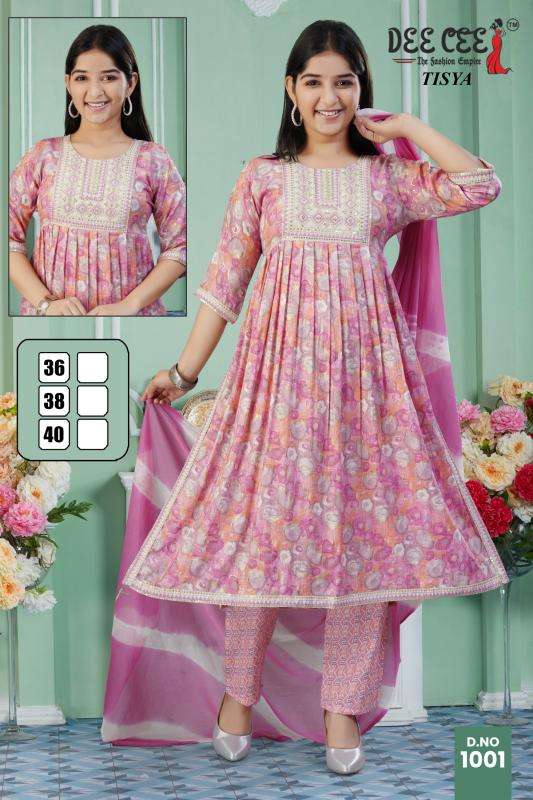
How Different Retail Buyers Can Plan Their Kurti Orders
Not every wholesale buyer needs the same inventory strategy. A boutique, large showroom, neighbourhood shop and home-based reseller can all purchase kurtis, but their ideal assortment and quantities may be very different. Buyers should therefore build orders around their own selling model instead of copying another retailer's stock plan.
Home-Based Sellers and Resellers
Home-based sellers usually benefit from manageable assortments with attractive catalogue presentation and practical selling prices. Products that customers can understand quickly through photos and videos are useful for WhatsApp and social-media selling. A combination of everyday styles and selected fashionable pieces can keep the catalogue active without unnecessarily locking capital into slow-moving inventory.
Resellers looking for latest kurti designs wholesale can regularly refresh their product presentation instead of uploading a very large collection at once. New arrivals can create repeated customer engagement and give sellers more reasons to reconnect with existing buyers.
Boutique Owners
Boutiques can concentrate more heavily on design differentiation. Rather than competing only on the lowest price, they can select interesting fabrics, embroidery, silhouettes and coordinated styling that fit their brand positioning. Carefully chosen designer kurtis wholesale can support better perceived value when the product quality and presentation justify the selling price.
Shop and Showroom Owners
Physical stores generally need greater assortment depth because customers expect immediate choice in colours, sizes and price ranges. Showroom owners can divide displays into everyday, office, festive and premium sections, making it easier for customers to identify suitable merchandise.
A larger buyer should also track sell-through rather than purchasing repeatedly according to personal taste. Sales records can reveal which sizes, colours, fabrics and price bands actually generate revenue. That information can make the next wholesale order considerably more efficient.
Why Product Quality Matters in Wholesale Kurti Buying
A retailer's reputation ultimately depends on the product received by the end customer. Attractive catalogue photography may generate the first sale, but fabric quality, stitching, fitting and finishing influence repeat business. For this reason, wholesale buyers should consider product quality alongside design and rate.
When evaluating a kurti wholesale collection, buyers can check stitching consistency, finishing around necklines and sleeves, fabric feel, embellishment attachment, measurements and overall presentation. For coordinated products, colour and construction across the pieces should also be checked.
Premium product quality does not necessarily mean every item must be expensive. It means the quality should be appropriate for the product's stated category and price. A value-range kurti and a premium embroidered kurti serve different customers, but both should deliver what the retailer has been promised.
Quality Becomes Even More Important for Export Orders
For an export buyer, resolving a product problem after delivery can be more difficult than for a local buyer. International freight and longer transit times make careful sourcing important. Overseas retailers should confirm product details and commercial terms before finalising larger orders.
This is one reason industry expertise and experience in wholesale supply matter. Vastralife has been working in wholesale and export since 2017, serving businesses that require Indian ethnic wear for resale. Buyers can use kapdathread.com to explore sourcing options while planning collections around their market and customer requirements.
Planning Wholesale Kurti Inventory Around Seasons
Retail buying becomes more effective when inventory is planned ahead of customer demand. Retailers should consider local festivals, wedding periods, weather and their own previous sales patterns when deciding what to order.
Summer-oriented markets may require more breathable and lightweight merchandise, while festive periods can support embroidery, mirror-inspired detailing, richer colours and more elaborate silhouettes. Retailers buying from the surat textile market can plan these changes before peak demand instead of searching for stock only when customers have already started asking for it.
Plan Festive Purchases Before Demand Peaks
Wholesale buyers should account for supplier processing and transportation time. This becomes particularly important for overseas orders and businesses located far from Surat. Early planning provides more time to receive the stock, prepare photography, promote the collection and begin selling before the strongest shopping period.
Retailers near ring road or sahara darwaza may have easier access to Surat's textile ecosystem, but buyers from other regions can increasingly source collections remotely. Clear product details, catalogue images and dependable communication are especially valuable when the buyer cannot inspect every piece personally before placing an order.
Wholesale Price and Margin Planning for Retailers
Retailers should look beyond the purchase rate and calculate the complete cost of bringing a product into saleable inventory. Freight, packaging, payment costs, local delivery, taxes where applicable and other business expenses can affect the final margin.
A low wholesale price can appear attractive, but poor product movement can make cheap inventory expensive in practice. Conversely, a slightly higher-cost design may generate better turnover when its fabric, fitting and presentation match customer expectations.
Calculate Margin Before Placing a Bulk Order
Before increasing order quantity, buyers can estimate the landed cost and realistic retail selling price. This makes it easier to compare different products objectively. The calculation is particularly important for bulk kurti orders, where even a small difference per piece becomes significant across a larger quantity.
Buyers exploring Surat kurti wholesale price should also check whether the quoted amount applies to a particular catalogue, quantity or assortment. Wholesale terms can vary between products, so the current rate should always be confirmed before payment.
2026 Kurti Sourcing Strategy for Growing Retail Businesses
Retail businesses that want to scale in 2026 can treat sourcing as an ongoing process rather than an occasional purchase. New collections, customer feedback and actual sales data can guide each buying cycle. The goal is to improve the percentage of inventory that sells quickly while reducing capital tied up in products with weak demand.
A practical assortment can combine everyday straight kurtis, A-line designs, selected flared pieces, premium styles, festive products and plus size kurtis wholesale according to customer demand. This creates enough variety without making the inventory unnecessarily complicated.
Work With Suppliers Who Can Support Repeat Buying
Finding a successful product is valuable, but being able to source fresh merchandise consistently is even more useful for a growing retailer. Supplier communication, product information, dispatch handling and access to new collections can therefore become important parts of a long-term sourcing relationship.
The connection between Surat's manufacturing ecosystem and wholesale distribution allows retailers to explore frequent design updates. Through kapdathread.com, wholesale buyers can discover ethnic-wear sourcing options for boutiques, stores, showrooms and resale businesses.
Internal Linking – Explore More Wholesale Ethnic Wear
Retailers do not need to depend on a single product category. Once a customer base has been established for kurtis, complementary ethnic-wear categories can help increase choice and average order value. A boutique might combine kurtis with suit sets, while a multi-category store can create separate sections for everyday and festive merchandise.
When exploring kapdathread.com, buyers can compare collections according to fabric, styling, customer segment and expected selling price. The objective should be to create a coordinated product mix rather than adding unrelated stock simply to increase the number of designs.
For retailers sourcing from India for overseas markets, assortment planning becomes particularly useful because multiple suitable products can potentially be consolidated into a better-planned shipment. Buyers should confirm applicable shipping, documentation, payment and order conditions according to their destination before finalising an export purchase.
Customer FAQs
1. Which kurti designs are suitable for retailers in 2026?
Straight-cut, A-line, flared, printed, embroidered, festive and selected designer styles can all form part of a 2026 retail assortment. The ideal mix depends on the retailer's customer profile, local demand, average selling price and season. Instead of following only one trend, retailers can combine dependable everyday designs with selected fashion-led pieces.
2. Where can retailers buy wholesale kurtis from Surat?
Surat has an extensive textile trading and garment supply ecosystem, including markets around Ring Road and Sahara Darwaza. Retailers can also explore online sourcing through kapdathread.com, particularly when they are unable to visit Surat personally. Buyers should confirm current catalogue availability, quantities, product details and rates before ordering.
3. Can boutique owners order designer kurtis at wholesale prices?
Yes. Boutique owners can source designer and premium-looking kurtis for resale. The actual wholesale rate depends on factors such as fabric, embroidery, detailing, construction, catalogue and order quantity. Selecting products that match the boutique's customer profile is generally more useful than choosing only according to the lowest purchase rate.
4. Are wholesale kurtis available for international buyers?
Wholesale and export requirements can be handled for international business buyers subject to the applicable product, payment, shipping and destination conditions. Buyers should confirm freight and other order details before purchasing. Vastralife brings wholesale and export experience since 2017, which is relevant for retailers sourcing Indian ethnic wear for resale outside India.
5. Are plus-size kurtis suitable for retail stock?
Yes. A planned plus-size assortment can help retailers serve a broader customer base. Buyers should verify actual measurements and size charts because sizing can vary between brands, manufacturers and designs. Stock quantities should ideally reflect the retailer's previous sales data and local demand.
6. What should a retailer check before placing a bulk kurti order?
Retailers should review fabric, size range, design, product finishing, wholesale price, minimum quantity, stock availability, dispatch terms and expected selling margin. For larger or export orders, shipping time and landed cost should also be considered before confirming the purchase.
7. What is the starting wholesale price for ethnic-wear products?
Selected quality products can start from ₹299, while actual prices vary according to product category, fabric, design, work, catalogue and quantity. Buyers should confirm the current product-specific rate at the time of ordering rather than treating one starting price as the price of every item.
8. Can home-based sellers source kurtis for resale?
Yes. Home-based sellers can build collections around manageable quantities and use catalogue images, WhatsApp and social platforms to reach customers. Starting with commercially practical designs and monitoring actual enquiries can help sellers decide which products deserve repeat orders.
Order Trending Wholesale Kurtis for Your Retail Business
If you are a shop owner, boutique owner, showroom owner, reseller, home-based seller or wholesale buyer looking for fresh ethnic-wear stock, explore collections suited to your target market and budget. Choose products based on customer demand, quality, size requirements and realistic resale potential rather than simply filling inventory.
Explore Latest Collections, competitive Wholesale Pricing, Trendy Ethnic Wear, Fast Shipping, available COD Support according to applicable order terms, Bulk Order Deals and Quality Products Starting From ₹299.
With Vastralife's wholesale and export experience since 2017, industry knowledge and focus on premium product quality, wholesale buyers can source collections for retail and resale requirements in India as well as selected international markets.
Contact: +91 9712582172
Website: kapdathread.com
Build your 2026 collection with products selected for real retail demand, practical margins and changing fashion preferences. Whether you are adding a few new designs or planning a larger wholesale purchase, thoughtful sourcing can help turn trending kurti designs for retailers into a stronger and more commercially useful ethnic-wear collection.