
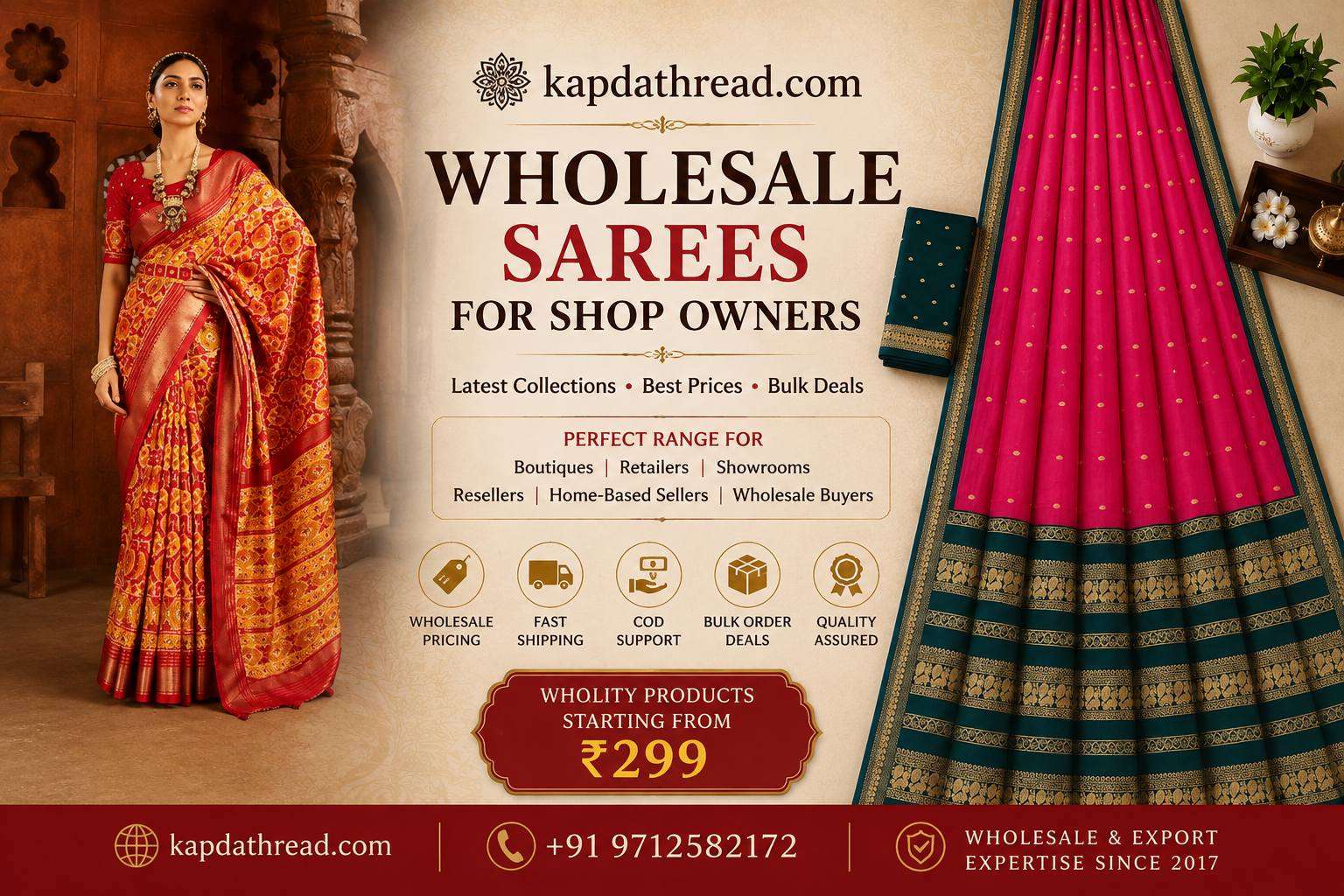
Wholesale sarees for shop owners
Wholesale Sarees for Shop Owners in 2026 – Buy Latest Saree Collections at Wholesale Price
Running a profitable saree shop depends heavily on buying the right designs at the right cost and refreshing inventory before customers lose interest. Retailers today need more than basic stock; they need attractive colours, fast-moving fabrics, dependable quality and collections that fit multiple customer budgets. Through kapdathread.com, shop owners, boutiques, resellers and wholesale buyers can source sarees connected with Surat's textile ecosystem while managing purchases online from their own city or country.
Introduction
For a saree retailer, purchasing is where profit begins. Choosing the right wholesale sarees for shop owners can improve stock rotation, give customers more variety and create better margins at the retail counter. Choosing the wrong mix can leave capital blocked in slow-moving designs. That is why professional buyers in 2026 are becoming more selective about wholesale sourcing, product quality and the final buying price.
Shop owners no longer have to depend entirely on occasional visits to physical markets. Digital wholesale platforms allow buyers to check new saree collections, compare price ranges and plan stock according to local customer demand. This is especially useful for retailers operating far from Surat who still want access to products sourced through one of India's strongest textile trading and manufacturing centres.
The areas around the surat textile market, ring road and sahara darwaza remain highly relevant for ethnic-wear sourcing. These markets connect manufacturers, traders, wholesalers and distributors with buyers from across India and overseas. An online sourcing platform gives retailers another way to tap into this ecosystem without making a physical market trip every time new stock is required.
Whether you operate a traditional saree store, boutique, showroom, home-based business or social-commerce page, profitable purchasing requires a clear understanding of your customer segment. Economy sarees, daily wear, printed sarees, silk-look collections, festive designs and premium designer sarees all serve different customers. The strongest retail assortment is usually the one built around actual demand rather than simply buying whatever appears new.
Why Shop Owners Need the Right Wholesale Saree Supplier
A saree shop can carry hundreds of products, but variety alone does not guarantee sales. Successful retailers need a dependable wholesale saree supplier who can provide attractive designs, practical wholesale rates and product categories suitable for recurring purchases.
The relationship between the wholesaler and retailer becomes especially important when a shop begins ordering frequently. A dependable sourcing channel reduces the time required to search for new suppliers and allows the retailer to concentrate on customer service, promotion and sales.
Better Buying Price Creates Better Retail Flexibility
The purchase price affects almost every important decision in a saree business. If a shop owner buys too high, the final retail price may become difficult to compete with. If the buyer selects products only because they are extremely cheap, fabric quality, finishing or customer appeal may suffer.
The objective should therefore be to find sarees at wholesale price that offer an appropriate balance between quality and resale potential. A product that sells quickly at a healthy margin can be more profitable than a cheaper saree that remains on the shelf for months.
Regular New Collections Encourage Repeat Customers
Customers often return to saree shops because they expect to see something new. If the same designs remain displayed for long periods, even loyal customers may stop visiting frequently. Retailers therefore benefit from maintaining access to latest saree collections wholesale and introducing new designs at regular intervals.
Fresh arrivals also create marketing opportunities. Shop owners can share new products through WhatsApp, Instagram, Facebook, short videos and customer groups, generating inquiries before customers physically visit the store.
Reliable Quality Protects Your Shop Reputation
Retail customers usually remember quality issues more strongly than small differences in price. Poor fabric, weak finishing or inconsistent products can affect a shop's reputation and reduce repeat business.
For this reason, experienced buyers look beyond catalogue photographs. They consider product category, material, finishing, design appeal and supplier reliability before committing a large portion of their inventory budget.
Best Wholesale Saree Categories for Retail Shops in 2026
The best saree inventory is rarely built around a single category. Most shop owners can serve more customers by combining affordable everyday products with mid-range fashionable sarees and selected premium or festive collections. This makes wholesale sarees for shop owners more commercially useful across different customer budgets.
Daily Wear Sarees for Regular Sales
Daily wear sarees wholesale can provide consistent turnover because they serve customers looking for comfortable and practical ethnic wear. Lightweight fabrics, easy drape, wearable colours and simple prints can work well for office use, household wear and everyday occasions.
These products are especially relevant for retailers serving value-focused markets. Shop owners can keep multiple colours and patterns available without pushing customers into a high selling-price category.
Printed Sarees for Fast-Moving Retail Counters
Printed sarees wholesale offer wide variety and can appeal to different age groups depending on the print style and fabric. Floral patterns, geometric designs, ethnic motifs, digital prints and contemporary combinations can help retailers refresh their display regularly.
Printed sarees are also visually effective for online promotion. Sellers can photograph or share catalogue images with customers and quickly identify which designs are generating the most inquiries.
Designer Sarees for Higher-Value Customers
Designer sarees wholesale are useful for boutiques, showrooms and shops targeting weddings, parties, festive functions and premium buyers. Attractive borders, embroidery, embellishment, unique colour combinations and premium-looking fabrics can create stronger perceived value.
Shop owners should choose designer sarees carefully rather than purchasing large quantities simply because the designs look impressive. The best selections are those that match local customer taste and the expected retail price range.
Silk and Traditional Sarees for Festive Demand
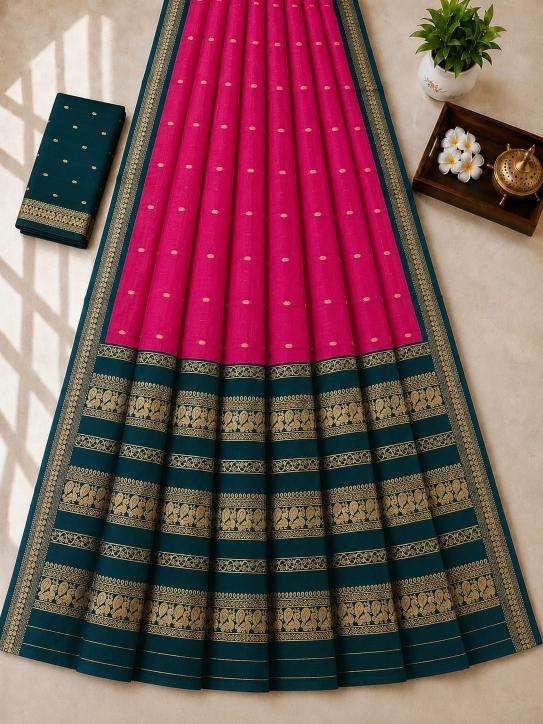
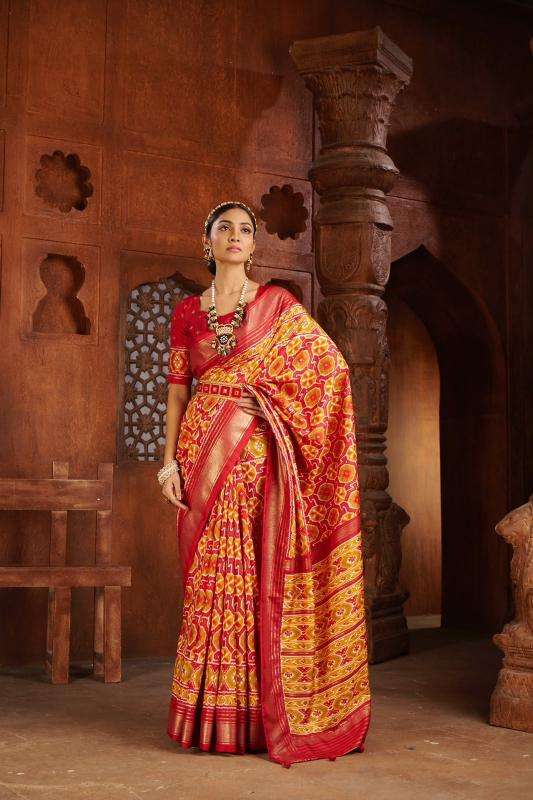
Silk sarees wholesale and traditional-looking collections remain important for festive periods, weddings and cultural occasions. Stores serving families and occasion-wear customers can maintain a focused selection of richer fabrics, traditional motifs and elegant borders.
During peak wedding and festival seasons, buyers can increase the share of such collections while keeping enough everyday stock for regular customers.
How Shop Owners Can Build a Profitable Saree Inventory
Buying more stock does not automatically create more sales. Retailers need to divide their inventory budget according to the demand they actually see at the counter. A simple, well-planned product mix can often perform better than an oversized assortment purchased without a clear strategy.
Divide Stock by Customer Price Range
One practical approach is to create separate buying segments. A shop can maintain entry-level sarees for budget customers, mid-range products for regular buyers and premium selections for customers seeking wedding or occasion wear.
This allows the shop owner to serve customers with different budgets without depending on a single retail price point. It can also help sales staff recommend alternatives when a customer likes a design but wants a different price range.
Use Past Sales to Guide Your Next Wholesale Order
Retail sales history is one of the most valuable purchasing tools available to a shop owner. If certain fabrics, colours or styles repeatedly sell faster than others, those products deserve greater attention during the next wholesale purchase.
Similarly, slow-moving stock should influence future decisions. Instead of repeatedly buying similar designs, the retailer can shift the budget toward categories producing better rotation.
Keep Both Evergreen and Trending Sarees
Trendy designs attract attention, while evergreen sarees provide stability. A balanced shop can carry both. Trend-led pieces can be promoted as fresh arrivals, while traditional or regularly demanded styles continue serving customers who prefer familiar designs.
This approach becomes especially valuable in 2026, when social media can make fashion trends move quickly. Retailers should participate in trends without putting their complete inventory budget into short-lived styles.
Why Surat Remains Important for Wholesale Saree Buyers
Surat's long-established textile infrastructure makes it an important sourcing destination for sarees and other women's ethnic wear. The network surrounding the surat textile market, ring road and sahara darwaza includes businesses involved in trading, distribution, fabric processing and manufacturing.
For shop owners across India, this concentration of textile activity provides access to broad product variety and frequent new collections. Buyers in other regions can source Surat-connected stock and introduce it into their own local markets.
Wholesale Sourcing Without Frequent Surat Travel
A physical visit to Surat can be valuable for large buying trips, but frequent travel adds transportation, accommodation and time costs. Online sourcing helps retailers supplement market visits by allowing them to review and purchase selected collections remotely.
This is particularly valuable for buyers located far from Gujarat and for international businesses that cannot visit the market whenever fresh inventory is needed.
Access to a Wider Manufacturing and Supplier Network
Surat's strength is not based on one product or one wholesaler. It comes from a much broader textile ecosystem. Retailers connected to this network can discover products across different fabrics, patterns and price segments.
Through kapdathread.com, shop owners can use digital sourcing as part of their purchasing process while staying connected with product opportunities linked to Surat's wholesale textile trade.
Wholesale Saree Buying for Boutiques, Resellers and Showrooms
Although the main focus is wholesale sarees for shop owners, the same sourcing model can work for several other types of ethnic-wear businesses. The important difference is how each buyer selects quantity, product category and final selling price.
Boutique Owners
Boutique owners often need products that look distinctive rather than completely mass-market. Designer borders, fashionable colours, attractive textures and carefully selected premium sarees can help boutiques create a more curated identity.
Instead of carrying excessive quantities, a boutique may focus on smaller but more differentiated assortments that support stronger retail presentation.
Home-Based Sellers and Resellers
Home-based sellers usually need products that can be marketed effectively through digital channels. Their buying strategy may focus on visually attractive designs, manageable order sizes and competitive wholesale rates.
Regular access to fresh saree collections allows resellers to keep their WhatsApp and social-media catalogues active without maintaining the overhead of a large showroom.
Showroom Owners and Bulk Buyers
Large showrooms require broader inventory and may purchase across multiple product categories in the same buying cycle. These buyers generally benefit from planning larger wholesale orders around established customer demand, seasonal buying periods and promotional campaigns.
When the demand for particular designs is already proven, bulk sarees wholesale can support higher-volume retail operations more efficiently.
Wholesale Saree Opportunities for India, Nepal and Singapore
Saree demand extends beyond local Indian retail markets. Businesses serving customers in India, Nepal and Singapore can source Indian ethnic wear according to regional preferences, festive occasions and community demand.
Domestic and international buyers should plan product selection differently. Indian retailers may source more frequently because transportation is easier, while an overseas buyer may prefer consolidated orders that make the overall export and shipping cost more practical.
Wholesale Sarees for Indian Retail Markets
India has enormous variation in saree preferences. A collection that performs strongly in one state may have different demand in another. Shop owners should therefore combine national trends with local buying behaviour when placing their wholesale orders.
Retailers operating in smaller cities can also use online sourcing to access designs that may not yet be widely available through their local wholesale market.
Saree Wholesale Supply for Nepal
Nepal has a strong market for Indian ethnic wear across boutiques, retail shops and reselling businesses. Buyers can select products according to local festive demand, price sensitivity and style preferences while planning quantities suitable for their own customer base.
Saree Export Opportunities for Singapore
Retailers and ethnic-wear businesses in Singapore can source Indian sarees for festivals, weddings, cultural events and South Asian customers. International buyers should evaluate product cost along with freight, applicable charges and final selling margins before confirming an export purchase.
Vastralife Wholesale and Export Experience Since 2017
Wholesale purchasing becomes easier when buyers work with businesses that understand both products and the practical requirements of retailers. Vastralife brings wholesale and export experience since 2017, along with textile-industry expertise developed through regular sourcing and interaction with wholesale customers.
This background helps in understanding the requirements of shop owners, boutiques, resellers, showroom operators and international buyers. Instead of looking only at designs, professional sourcing considers product quality, market suitability, purchasing range and the ability of the retailer to resell the stock successfully.
Attention to premium product quality remains especially important because the wholesale buyer ultimately depends on the satisfaction of the retail customer. Better product selection can contribute to repeat purchases, referrals and stronger long-term relationships.
How to Choose Wholesale Sarees That Sell Faster
A profitable saree shop needs more than a large inventory. Products must move from the shelf to the customer at a reasonable speed. For that reason, shop owners should evaluate every wholesale purchase from the customer's point of view. Fabric preference, colour, occasion, design, expected retail price and local fashion demand all influence whether a saree becomes a fast-moving product.
When selecting wholesale sarees for shop owners, retailers should avoid putting too much capital into one design simply because it looks attractive. A more practical strategy is to maintain variety across several proven categories and gradually increase quantities for products that generate repeat demand.
Choose Colours According to Your Customer Base
Colour preferences can differ according to season, region, age group and occasion. Bright shades may perform strongly during festivals and weddings, while subtle colours can appeal to office-wear and everyday customers. Maintaining a balanced colour assortment gives sales staff more options when serving different buyers.
Match Fabric With the Intended Occasion
A customer buying an everyday saree usually has different expectations from someone shopping for a wedding. Daily-wear buyers may prioritise comfort and easy maintenance, whereas occasion-wear customers may focus more on richness, border design and overall presentation.
Shop owners can therefore improve inventory performance by matching fabric categories with the occasions their customers most frequently shop for.
Test New Designs Before Increasing Quantity
Fashion trends can change quickly. Instead of making a very large commitment to an unfamiliar design, retailers can introduce a selected quantity, display it prominently and monitor customer response.
When a design generates strong sales, the next purchase can be planned with greater confidence. This helps reduce the risk of unsold inventory while allowing the store to keep introducing fresh products.
Wholesale Saree Price Planning for Better Retail Margins
A strong buying strategy considers the complete cost of getting the saree ready for sale. The supplier's quoted price is important, but retailers should also account for applicable taxes, transportation and other operational expenses before calculating the final selling rate.
For overseas orders, freight and relevant export expenses can affect the landed cost significantly. International buyers should therefore calculate the complete order economics rather than comparing only the basic product rate.
Keep Different Buying Price Segments
Retailers can create an inventory structure that includes economical, mid-range and premium products. This gives customers options and allows the shop to serve different spending levels.
A buyer entering the store with a limited budget should still find attractive choices, while a customer shopping for a special function should have access to higher-value designs. This broader assortment can increase the number of customers the shop is able to convert.
Protect Margin Without Compromising Quality
Reducing product quality simply to achieve a lower buying rate can create problems later. Customer dissatisfaction, exchanges and damage to the store's reputation can outweigh the initial saving.
Professional retailers instead look for products that offer a practical combination of wholesale pricing, quality and saleability. A saree with strong customer appeal and reliable finishing can justify a better retail price and support repeat business.
Digital Wholesale Buying for Modern Saree Retailers
Digital sourcing has changed the way retailers manage new arrivals. Shop owners can now review products, shortlist suitable collections and coordinate purchases without depending entirely on physical wholesale-market visits.
This does not eliminate the importance of traditional markets. Instead, online buying creates an additional sourcing channel that can save time between major buying trips. A retailer can use physical market visits for broader sourcing while using kapdathread.com to explore relevant wholesale opportunities online.
Make Product Discovery Faster
When retailers can check collections digitally, they can focus on the products most relevant to their customers. This is particularly useful when a shop urgently needs new designs before a festival, wedding period or promotional campaign.
Instead of waiting for the next market trip, the retailer can evaluate suitable stock and plan a purchase according to current demand.
Use New Arrivals for WhatsApp and Social Selling
New inventory is also marketing content. Every fresh collection gives a retailer something new to share through WhatsApp groups, Instagram, Facebook and customer broadcasts.
This can help generate inquiries even before products reach the main display counter. For home-based sellers and resellers, regular digital promotion may become one of the primary methods of generating orders.
Expand Your Saree Business Beyond One Product Segment
Once a retailer develops a stable saree customer base, related ethnic-wear categories can create additional selling opportunities. The expansion should be gradual and based on customer requests rather than simply increasing inventory for the sake of variety.
For example, retailers searching for a dependable saree manufacturer in Surat can explore sourcing opportunities connected with Surat's textile ecosystem. Shops receiving demand for broader sizing and ready-to-wear ethnic fashion can also explore plus size kurtis wholesale as a complementary category.
Add Complementary Ethnic Wear According to Demand
A customer visiting a saree store may also be interested in kurtis, dress materials, kurti sets or other ethnic-wear products. Introducing selected complementary categories can help retailers increase the value generated from their existing customer base.
The important point is to avoid uncontrolled expansion. Shop owners should test new categories, measure sales and increase purchasing only when demand supports it.
Buying Strategy for Festival and Wedding Saree Stock
Festival and wedding periods can create some of the strongest sales opportunities for saree retailers. However, peak-season success depends on purchasing early enough and selecting products that fit the expected customer budget.
Purchase Seasonal Collections in Advance
Waiting until demand reaches its peak can reduce the time available for promotion and customer selling. Shop owners can plan festival and wedding inventory in advance, giving themselves time to display products, create online promotions and contact regular customers.
During these periods, retailers can increase their focus on silk-look sarees, festive colours, designer borders, traditional styles and occasion-focused products while continuing to maintain regular daily-wear inventory.
Use Festive Stock to Increase Average Order Value
Customers shopping for weddings or festivals may purchase for multiple family members or several occasions. A retailer with enough variety across price ranges can potentially convert a single inquiry into a larger sale.
This makes assortment planning particularly important. Providing budget, mid-range and premium options gives customers the ability to select several products without leaving the store to search elsewhere.
Internal Linking – Explore More Wholesale Ethnic Wear
Retail businesses can become stronger when product expansion follows actual customer demand. Saree shop owners who already have a regular customer base can evaluate related categories and gradually create a broader ethnic-wear assortment.
Through kapdathread.com, wholesale buyers can explore different sourcing opportunities while keeping their primary purchasing strategy focused on products suitable for their market. This approach is useful for Shop Owners, Boutique Owners, Showroom Owners, Home-Based Sellers, Resellers and professional Wholesale Buyers.
A planned multi-category inventory can also reduce dependence on one selling season. Sarees may remain the core category, while selected complementary ethnic-wear products provide additional sales opportunities throughout the year.
Customer FAQs
1. Where can shop owners buy wholesale sarees online?
Shop owners can explore wholesale saree collections through kapdathread.com and select products according to their customer segment, budget and inventory requirements. Online sourcing can be especially useful for buyers who want access to Surat-connected textile collections without travelling for every purchase.
2. What types of sarees should a retail shop stock in 2026?
A balanced shop can consider daily-wear sarees, printed collections, designer sarees, silk-look products, traditional designs, festive sarees and party-wear styles. The final selection should depend on the shop's local customer demand and target retail price range.
3. How can shop owners get better margins on wholesale sarees?
Better margins begin with disciplined purchasing. Retailers should compare product quality with the buying rate, calculate applicable shipping and other costs and choose stock according to proven customer demand. Faster inventory rotation can be just as important as the percentage margin on an individual product.
4. Can small shop owners and home-based sellers buy wholesale sarees?
Yes. Small retailers, resellers and home-based sellers can source wholesale products according to the applicable order requirements of each collection. Starting with a controlled assortment can help new sellers test customer demand before increasing their purchasing volume.
5. Why do retailers source sarees from Surat?
Surat has a large textile trading and manufacturing ecosystem with extensive product variety. Areas around ring road, sahara darwaza and the wider surat textile market connect numerous textile businesses and wholesale buyers.
6. Can boutique owners source premium sarees wholesale?
Yes. Boutique owners can focus on designer sarees, premium-looking fabrics, distinctive colour combinations, attractive borders and occasion-wear products. The selected designs should match the boutique's customer profile and intended selling range.
7. Are wholesale sarees available for international buyers?
International businesses can enquire about wholesale and export requirements according to their destination and order quantity. Buyers should confirm current shipping conditions, applicable charges and product availability before placing an international order.
8. How frequently should a saree shop add new stock?
The ideal frequency depends on sales volume, but regular new arrivals help maintain customer interest. Retailers can monitor stock rotation and reorder fast-moving categories while gradually replacing designs that have been on display for longer periods.
9. Is buying the cheapest wholesale saree always more profitable?
No. Profitability depends on the relationship between buying cost, product quality, customer appeal, retail price and selling speed. A slightly higher-quality product that sells faster and creates repeat customers may deliver better overall business value than the cheapest available option.
10. Can saree shops purchase stock for festival and wedding seasons?
Yes. Retailers can plan seasonal purchases in advance and select richer fabrics, festive colours, designer patterns and traditional collections according to their market. Early buying also gives the shop more time to promote the products before peak demand begins.
Start Buying Wholesale Sarees for Your Shop
If you are planning your next inventory purchase, explore Latest Collections suitable for different customer segments and discover Wholesale Pricing designed for business buyers. Shop owners can select Trendy Ethnic Wear according to their local demand instead of relying on a one-size-fits-all inventory strategy.
Wholesale buyers can also enquire about Fast Shipping, available COD Support, Bulk Order Deals and Quality Products Starting From ₹299. Prices, minimum quantities, product availability, COD eligibility and delivery conditions can vary by collection and destination, so buyers should confirm current details before ordering.
With Vastralife's wholesale and export experience since 2017, industry expertise and focus on premium product quality, buyers can approach their purchasing with a stronger emphasis on long-term retail value rather than simply filling shelves.
Whether you run a small local saree store, an established showroom, a boutique, an online reselling business or a home-based ethnic-wear operation, the goal remains the same: purchase products your customers want at a cost that gives your business room to grow.
Contact Number: +91 9712582172
Website: kapdathread.com
Explore your next wholesale saree collection, compare the right price segment for your customers and build a fresher, more profitable retail inventory for 2026.